

The realities of 2026 are not the realities of 1993. The war changed the emotional architecture of the conflict. History has already buried political formulas that failed to protect the people they claimed to govern. And the tragedy for Cameroon is that many still believe time can reverse what blood has already rewritten.
By Ali Dan Ismael Editor-in-Chief, The Independentist News
A Movement Entering a New Phase
For nearly a decade, the Ambazonian struggle has been defined through the language of resistance, sacrifice, survival, and liberation. Villages have burned. Families have been displaced. Thousands have perished. Entire communities across the former British Southern Cameroons have lived under militarisation, fear, and uncertainty.
Yet beneath the visible war lies another conflict that many Ambazonians are increasingly reluctant to discuss openly: the growing internal debate over what political future remains possible after ten years of bloodshed. Recent exchanges among Southern Cameroonian voices have once again exposed this uncomfortable but unavoidable reality.
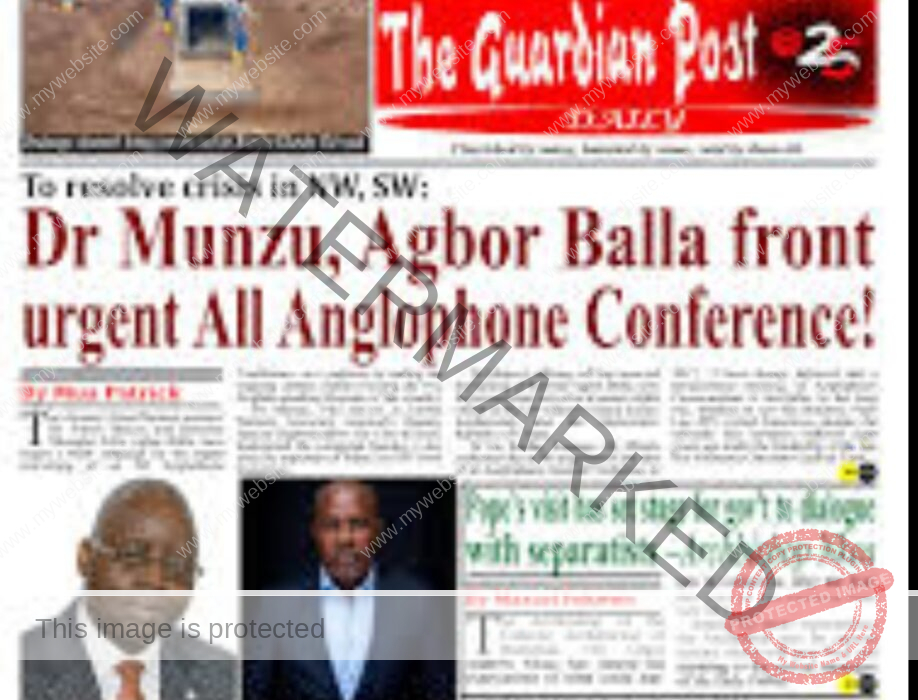
At the centre of the discussion lies a growing disagreement over whether political frameworks associated with the earlier All Anglophone Conferences, commonly known as AAC I and AAC II, still correspond to the realities created by nearly a decade of conflict. Those conferences emerged during an era when many Southern Cameroonians still believed constitutional negotiation within Cameroon remained achievable through peaceful political engagement.
But perhaps more important than the disagreement itself is what the debate reveals about the present state of Southern Cameroons society. The debate is no longer simply between Yaoundé and Ambazonia. It is now increasingly a debate among Southern Cameroonians themselves about memory, justice, reconciliation, political realism, and the limits of coexistence after prolonged violence.
The Voice of Restraint and Political Maturity
One side of the debate attempts to defend a principle that many liberation movements throughout history have struggled to preserve: the ability to tolerate internal disagreement without destroying communal bonds. The argument is simple but profound.Southern Cameroonians may hold different political visions while still recognising one another’s humanity and dignity.
Those advocating independence believe they are defending the survival and future of their people. Those still advocating federalism believe they are pursuing another pathway toward peace and coexistence. Neither position, in itself, should justify harassment, intimidation, or dehumanisation. That position carries strategic importance far beyond internal movement politics.
The international community often measures liberation movements not only by the legitimacy of their grievances, but also by their ability to tolerate dissent, protect civil discourse, and demonstrate political maturity under pressure. A movement that cannot accommodate differing opinions risks appearing authoritarian before it has even achieved statehood.
That concern is not theoretical. It is historical. Many post-colonial struggles across Africa collapsed internally because ideological disagreement eventually transformed into mutual destruction. Ambazonia must avoid that trap.
The Psychological Transformation of the Conflict
Yet the opposing side of the debate also reflects a political and emotional reality that cannot simply be dismissed. For many Ambazonians, the events since 2016 fundamentally shattered the possibility of returning to earlier political formulas. Before the war escalated, federalism could still be discussed as a realistic constitutional arrangement within a united Cameroon. But years of military operations, civilian killings, displacement, village destruction, arrests, torture allegations, and collective trauma have transformed perceptions across large sections of the population.
To many families who lost relatives, homes, or livelihoods, the conflict is no longer viewed merely as a constitutional disagreement over decentralisation or governance. It is now understood as a struggle tied to survival, identity, historical dignity, and collective security. That psychological transformation matters enormously.
Political conflicts are not governed only by constitutions or diplomatic formulas. They are also governed by memory. And memory changes societies permanently. This is precisely why some Ambazonian voices now argue that proposals associated with the old AAC framework no longer correspond to realities on the ground.
AAC I and AAC II emerged during a completely different historical period: before large-scale armed conflict, before militarisation, before widespread displacement, and before the collapse of trust now visible between large segments of the population and the state. Attempting to revisit those frameworks without acknowledging the transformation caused by the war increasingly appears disconnected from the emotional and political realities many people now live with daily. That is the core of the present disagreement. Not merely politics. But psychology.
The Dangerous Temptation of Internal Purification
However, while the frustrations are understandable, liberation movements must also confront a dangerous temptation: the belief that ideological disagreement automatically equals betrayal. This is where the Ambazonian movement faces one of its greatest tests.
History shows that movements often weaken themselves when they begin policing thought more aggressively than they confront their adversaries. Terms such as “traitor,” “blackleg,” or “enemy of the people” may energise sections of the base emotionally, but they rarely strengthen political legitimacy internationally.
In fact, they often create the impression of a movement increasingly consumed by internal purification rather than strategic statecraft.That perception can become politically costly.
Diplomatic actors, mediators, churches, academics, and international observers generally look for signs that future political actors can manage disagreement peacefully. They ask difficult questions. Can opposition voices exist safely? Can competing political visions coexist? Can future institutions tolerate dissent? Can reconciliation occur after conflict? These questions matter because every liberation struggle eventually transitions from resistance to governance. And governance requires more than passion. It requires discipline. It requires maturity. It requires restraint.
Why AAC III Has Become So Controversial
The current disagreement surrounding AAC III is therefore not merely about one conference or one political personality. It reflects a deeper unresolved question facing Southern Cameroons society: Has the conflict reached a point where coexistence within Cameroon remains psychologically and politically possible for a significant portion of the population? For federalists, the answer may still be yes. For many independentists, the answer increasingly appears to be no. That divide cannot simply be erased through slogans or emotional appeals. It must eventually be confronted honestly, maturely, and politically.
Those advocating a renewed federal arrangement argue that dialogue remains preferable to endless war and fragmentation. Those advocating outright independence increasingly respond that the scale of violence since 2016 fundamentally altered the moral and political equation. That argument cannot simply be dismissed as emotional radicalism. Wars transform societies. Blood changes political imagination. And prolonged violence often destroys the emotional foundations upon which coexistence depends.
The International Community Cannot Ignore Reality Forever
One reality now becoming increasingly clear is that the Ambazonian conflict can no longer be analysed solely through the political assumptions of the 1990s. The war changed everything. International actors may continue to advocate dialogue, decentralisation, or federalism as pathways toward stability. But they will eventually have to recognise that prolonged violence transforms political psychology in ways that cannot easily be reversed. Trust, once destroyed through bloodshed, is extraordinarily difficult to rebuild.
This is why many Ambazonians now argue that any future negotiations must go far beyond cosmetic constitutional reforms. For them, the question is no longer simply administrative. It is existential. No population emerges from years of displacement, military occupation, village destruction, and generational trauma psychologically unchanged. That reality must be understood if any serious political process is ever to succeed. History Has Already Moved Forward
The ongoing debate ultimately reveals both the strength and fragility of the Ambazonian movement. Its strength lies in the fact that difficult debates are still occurring openly. Its fragility lies in the growing emotional exhaustion, bitterness, and distrust produced by nearly a decade of war. If the movement is to maintain moral legitimacy internationally, it must preserve the ability to disagree internally without descending into personal destruction.
At the same time, those still advocating older political frameworks must recognise that the realities of 2026 are not the realities of 1993. The war changed the emotional architecture of the conflict. History has already buried political formulas that failed to protect the people they claimed to govern. And the tragedy for Cameroon is that many still believe time can reverse what blood has already rewritten.
Ali Dan Ismael Editor-in-Chief, The Independentist News