

And until Cameroon honestly confronts that inheritance, recognizes the distinct historical experiences within its borders, and replaces coercion with genuine political dialogue, the cycle of mistrust, militarization, and political fragmentation may continue to reproduce itself under new names and in new regions. That past never truly disappeared. It simply changed uniforms.
By Ali Dan Ismael
Editor-in-Chief, The Independentist News
Long before the present conflict in Ambazonia, before the burning villages, military raids, disappearances, prison deaths, and mass displacement that dominate today’s headlines, Cameroon had already been shaped by another war — a war many outside the country barely know existed.
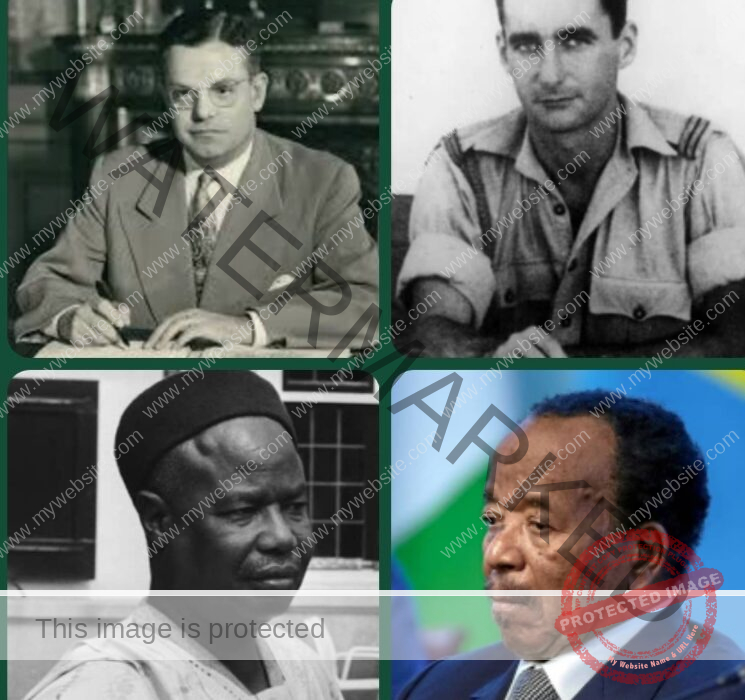
The modern Cameroonian state did not emerge peacefully from independence. It emerged through counterinsurgency. To understand the political culture of contemporary Cameroon, one must return to the 1950s, when France confronted the rise of the Union des Populations du Cameroun (UPC), a nationalist movement demanding genuine independence and political sovereignty. It was during this period that the architecture of militarized governance, centralized authority, emergency administration, and political repression took root. And among the most important architects of that system was Louis-Paul Aujoulat.
The Colonial Foundation
Louis-Paul Aujoulat arrived in Cameroon in 1936 as a medical missionary associated with the Ad Lucem network. Over time, however, he evolved into far more than a doctor. He became one of the central political instruments of French colonial influence in Cameroon.
By the 1950s, Aujoulat embodied the paternalistic colonial order France sought to preserve across Africa. He cultivated deep political, administrative, and religious influence while positioning himself as a defender of “stability” against the growing tide of anti-colonial nationalism.
When Ruben Um Nyobè and the UPC began mobilizing mass support for independence, France increasingly viewed the movement not as a political challenge to negotiate with, but as a security threat to eliminate. Aujoulat helped build the political machinery designed to stop that movement.
Through the Bloc Démocratique Camerounais (BDC), founded in 1951, colonial authorities attempted to construct a loyal political alternative capable of containing nationalist momentum while preserving French strategic control. Backed by sections of the colonial administration and influential religious institutions, the BDC represented not simply a party, but an anti-nationalist political system.
The UPC was increasingly portrayed as dangerous, extremist, destabilizing, and subversive. The language mirrored the Cold War vocabulary of the era, where nationalist movements could easily be labeled communist threats. The objective was clear: delegitimize nationalist aspirations before they became electorally irreversible.
The Criminalization of Political Opposition
As UPC influence expanded, the colonial administration shifted from political containment to outright repression. Harassment of activists intensified. Meetings were disrupted. Supporters were monitored. Opposition figures were arrested.
Electoral manipulation became increasingly common.
The decisive rupture came in 1955. Following unrest and protests, French authorities dissolved the UPC altogether under the authority of Roland Pré. The decision shattered hopes for legal political participation and pushed many nationalist leaders underground. This moment would prove catastrophic for Cameroon’s future.
The banning of the UPC transformed a political crisis into an armed conflict. It established a dangerous precedent that would echo through later decades: when political opposition becomes too threatening, eliminate it administratively first and militarily later. That doctrine would survive independence.
Pierre Messmer and the Logic of Counterinsurgency
If Aujoulat helped design the political framework of repression, Pierre Messmer helped militarize it. Appointed High Commissioner in 1956, Messmer brought with him the methods of French imperial warfare developed in Indochina and Algeria. Under his administration, counterinsurgency operations expanded dramatically.
Entire populations in Sanaga-Maritime and other regions were relocated into tightly controlled regroupment camps surrounded by military surveillance. Villages suspected of aiding rebels faced collective punishment. Reports of torture, disappearances, and summary executions became widespread features of the campaign.
The objective was not merely military victory. It was the destruction of the social ecosystem capable of sustaining resistance. This distinction is critical.
Counterinsurgency is not simply warfare against armed groups. It is warfare against political legitimacy, community structures, memory, and civilian support systems. In Cameroon, this strategy left deep scars that independence itself never healed.
Independence Without Transformation
When Cameroon formally achieved independence in 1960, the coercive machinery built during the anti-UPC war did not disappear. It was inherited. The administrative logic of emergency rule, centralized executive power, intelligence surveillance, territorial control, and military suppression transitioned from colonial authorities to the postcolonial state.
Under Ahmadou Ahidjo, and later under Paul Biya, the state preserved many of the same governing instincts: maintain unity through centralization,
manage dissent through security structures,
and treat major political challenges primarily as stability threats rather than constitutional questions. This continuity remains one of the least discussed realities in Cameroon’s political history. The postcolonial state inherited not only colonial borders, but also colonial methods.
The Southern Cameroons Miscalculation
One of the great historical ironies of the Southern Cameroons experience is that many of its political elites failed to fully appreciate the deeper character of the political system emerging in French Cameroon during the 1950s.
At the time, much of the political debate in British Southern Cameroons focused primarily on constitutional anxieties within the Nigerian federation. Questions of regional influence, fears of political marginalization, economic competition, administrative neglect, and uncertainty about long-term autonomy shaped public opinion ahead of the 1961 plebiscite.
For many Southern Cameroons leaders, reunification with French Cameroon appeared emotionally attractive under the language of African unity and reunification of separated peoples. Yet insufficient attention was paid to the political transformation already underway inside French Cameroon itself.
While British Southern Cameroons evolved under a more pluralistic Anglo-Saxon administrative culture that tolerated opposition politics, parliamentary contestation, trade union activism, and regional autonomy, French Cameroon was simultaneously emerging from a violent counterinsurgency environment shaped by centralized command structures and security-driven governance. The implications of that divergence were not fully understood.
Many Southern Cameroons elites viewed reunification primarily through the lens of anti-colonial solidarity and African nationalism, but underestimated how deeply the institutions of the French-administered state had already been shaped by emergency rule, militarized administration, intelligence surveillance, and centralized executive control during the UPC conflict.
The tragedy of 1961 may therefore not lie only in constitutional miscalculations, but also in a profound underestimation of the political culture that the Southern Cameroons was entering.
Over time, many of the protections Southern Cameroonians believed would be preserved — federalism, legal distinctiveness, educational autonomy, regional self-governance, and administrative balance — became recurring sources of political tension.
In retrospect, the failure to fully study the political consequences of the anti-UPC period left portions of the Southern Cameroons political class dangerously unprepared for the centralized postcolonial state that eventually emerged under Ahidjo and later consolidated under Biya. History often punishes not only aggression, but misreading.
The Unfinished Trusteeship Question
The anxieties surrounding the future of Southern Cameroons were not entirely absent from international discussions before the 1961 plebiscite.
Within diplomatic and political circles of the era, concerns existed about whether the hurried reunification process had adequately addressed the profound constitutional, administrative, linguistic, and political differences separating British Southern Cameroons from French Cameroon.
Some observers feared that the union risked merging two territories shaped by fundamentally different colonial systems without sufficiently negotiated constitutional guarantees or neutral international safeguards.
In retrospect, many Ambazonian scholars and political thinkers now argue that the failure to grant Southern Cameroons a clearer path toward fully independent statehood before reunification created structural tensions that would later destabilize the union itself. To them, the federation increasingly resembled not a negotiated partnership between equals, but the gradual absorption of one political culture into another.
Critics of British policy have also questioned whether London prioritized geopolitical expediency and postcolonial strategic interests over the long-term stability of the peoples involved. Across parts of Africa, the Middle East, and Asia, colonial withdrawals often left behind fragile political arrangements, disputed unions, artificial borders, and unresolved constitutional contradictions whose consequences continue to shape global instability today.
Within this interpretation, Southern Cameroons became another example of decolonization managed for strategic convenience rather than sustainable constitutional equilibrium.
For many Ambazonians, the present crisis is therefore viewed not merely as a contemporary political dispute, but as the delayed consequence of unresolved trusteeship decisions made during the final years of British and French colonial administration.
In recent years, some analysts have argued that changing global political currents — including growing resistance to older interventionist geopolitical models and renewed emphasis on sovereignty, borders, and national self-determination in parts of the West — may gradually reopen international discussions about unresolved historical conflicts previously considered frozen or strategically inconvenient.
Whether such shifts ultimately reshape international engagement with the Ambazonian question remains uncertain. What is increasingly difficult to deny, however, is that the constitutional contradictions left unresolved in 1961 continue to cast a long shadow over Cameroon’s political future.
The Crisis of National Identity and Belonging
One of the enduring grievances among many Southern Cameroonians has been the perception that the post-independence state failed to build a genuinely inclusive national identity. For decades, critics of the centralized system have argued that official state narratives increasingly reflected the political culture and historical experience of La République du Cameroun while marginalizing the distinct historical identity of the former British Southern Cameroons. Even national symbols became sources of controversy.
To many Ambazonians, the repeated emphasis on a highly centralized state ideology, combined with patriotic messaging that often ignored the historical foundations of the 1961 federal arrangement, reinforced the perception that Southern Cameroonians were expected not to participate as equal partners, but to assimilate into an already defined political order.
This perception deepened as grievances over language rights, legal systems, educational structures, political representation, administrative appointments, and military conduct accumulated over decades.
The treatment of civilians during the Anglophone crisis further intensified international scrutiny. Reports of village burnings, arbitrary arrests, prolonged detentions, abuses against detainees, and heavy militarization damaged Cameroon’s international image and raised serious questions about governance, constitutional legitimacy, and the state’s relationship with dissenting populations.
For many observers, the tragedy is not simply the existence of conflict, but the persistence of governing methods that appear rooted more in colonial-era counterinsurgency doctrine than in modern democratic accommodation.
In the eyes of the international community, a state is judged not merely by its anthem, flags, or declarations of unity, but by how it treats minorities, dissenting voices, prisoners, journalists, and vulnerable civilian populations. Civilization is ultimately measured by the dignity a society extends even to those with whom it disagrees politically.
The Long Shadow of Colonial Governance
The tragedy of Cameroon is not simply that violence occurred during colonialism. Many African societies endured colonial violence. The deeper tragedy is that the governing philosophy of wartime colonial administration was never fully dismantled after independence.
The security state survived. The centralized command culture survived. The suspicion of decentralization survived. The reflex of treating dissent as destabilization survived. From Aujoulat to Roland Pré. From Pierre Messmer to Ahidjo. From Ahidjo to Biya. The institutional chain remained remarkably intact.
This is why Cameroon’s crises often appear cyclical rather than resolved. The political system repeatedly returns to the same methods because the foundational logic of governance has remained largely unchanged.
History as Warning
History matters not because societies must live forever inside grievance, but because unresolved structures continue to shape the present. The UPC war was not merely an isolated anti-colonial conflict buried in the archives of the 1950s. It was the laboratory in which the modern Cameroonian security state was forged.
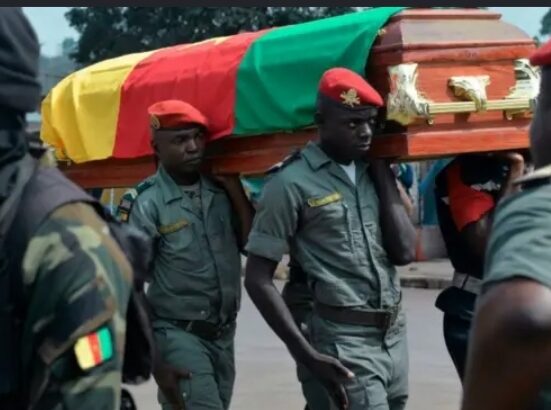
And until Cameroon honestly confronts that inheritance, recognizes the distinct historical experiences within its borders, and replaces coercion with genuine political dialogue, the cycle of mistrust, militarization, and political fragmentation may continue to reproduce itself under new names and in new regions. That past never truly disappeared. It simply changed uniforms.
Ali Dan Ismael Ediror – in – chief The Independentist News