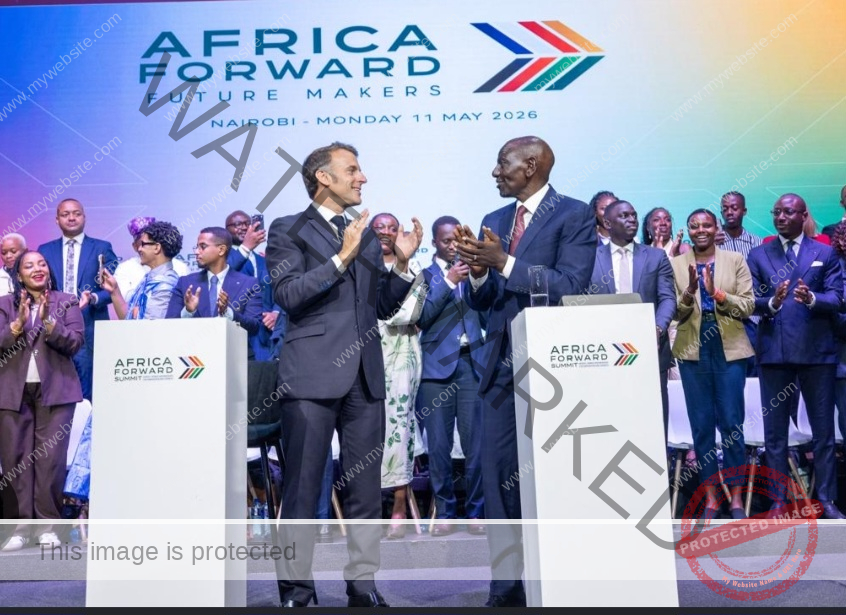


President Macron’s interview in Nairobi was intended as a reflection on France’s evolving relationship with Africa. But history may judge his African legacy less by his speeches and more by the contradictions left unresolved. The crisis of French influence in Africa is no longer merely military or economic. It is moral. And nowhere is that contradiction more visible than in the silence surrounding Ambazonia.
By Ali Dan Ismael
Editor-in-Chief, The Independentist News
From Nairobi to Yaoundé, from Dakar to Bamako, a growing number of Africans are beginning to ask a difficult question: What exactly has changed in France’s relationship with Africa under President Emmanuel Macron?
During his recent interview with France 24
, RFI, and Le Monde at the Africa Forward Summit in Kenya, Macron reflected on nearly a decade of engagement with the African continent. The interview was presented as an opportunity to evaluate France’s evolving relationship with Africa since his rise to power in 2017.
But beyond the carefully crafted language of partnership, modernization, and cooperation lies a more uncomfortable reality confronting France across the continent. France is losing Africa. Not merely militarily. Not merely economically. But morally and psychologically.
Across the Sahel, French troops have been expelled. In several former colonies, anti-French sentiment has transformed from fringe activism into mainstream political energy. African youth increasingly view the old Françafrique order not as a partnership, but as a system of managed dependency maintained through political influence, military arrangements, economic leverage, and elite networks loyal to Paris.
Macron inherited this crisis. But despite promises of reform, many Africans now believe he failed to fundamentally change it. And nowhere is this contradiction more visible than in the silence surrounding Ambazonia.
The Shadow of Françafrique
To understand the present, one must first understand the architecture of the system France built after formal colonialism began to collapse.
At the center of that history stands Louis-Paul Aujoulat, one of the most influential yet least discussed architects of French political influence in Cameroon and wider Africa. Aujoulat was not merely a politician. He was a strategist of influence. Operating through religious networks, political structures, colonial administration, and elite patronage systems, Aujoulat helped lay the intellectual and operational foundations of what later became known as Françafrique — a system designed to preserve French strategic control in Africa even after official independence.
In Cameroon, his political activities were particularly consequential. Through organizations linked to French Catholic and colonial interests, Aujoulat cultivated loyal political networks intended to counter nationalist movements demanding genuine sovereignty. His influence extended deep into the emerging political order of French Cameroon during the decolonization period.
Many African historians argue that France’s approach in Cameroon was never simply administrative. It was strategic containment. Nationalist leaders who challenged French influence were marginalized, hunted, imprisoned, exiled, or eliminated. Meanwhile, political structures favorable to French interests were strengthened and institutionalized.
This was the environment from which post-independence Cameroon emerged. For many critics of Françafrique, the system did not disappear after independence. It merely evolved. And the consequences of that evolution continue to shape modern Cameroon today.
Cameroon and the Inheritance of Françafrique
The modern Cameroonian state cannot be fully understood without recognizing the long shadow cast by these early French political engineering efforts. Following independence, centralized authority became increasingly entrenched. Political loyalty often outweighed institutional accountability. Security structures expanded. Opposition movements were neutralized. Strategic relations with Paris remained intact.
For Ambazonians, this history matters profoundly.
The former British Southern Cameroons entered into union with French Cameroon in 1961 under promises of coexistence and federal protection. Yet many English-speaking Cameroonians later came to believe that they had entered not into an equal partnership, but into a state structure already deeply shaped by French centralized political doctrine. Over time, federalism was dismantled.
Centralization intensified. Assimilation fears deepened. Political frustration accumulated. The result was the crisis now known internationally as the Ambazonian conflict. To many Ambazonians, the issue is therefore larger than the current government in Yaoundé. It concerns the very political architecture inherited from the colonial era itself.
The Contradiction at the Heart of French Policy
France often presents itself internationally as a defender of democracy, human rights, constitutional order, and African stability. Yet many Africans observe a different reality on the ground.
In Cameroon, President Paul Biya has remained in power for more than four decades. During that period, allegations of political repression, democratic stagnation, corruption, arbitrary arrests, and military abuses have repeatedly surfaced. Yet throughout much of this crisis, France has remained firmly aligned with Yaoundé. This is the contradiction many Africans increasingly struggle to ignore. How can France speak of democratic renewal in Africa while maintaining strategic loyalty to one of the continent’s longest-standing centralized regimes?
Macron’s New Africa Vision Meets Old African Realities
To his credit, Macron attempted to rebrand France’s African policy. He spoke openly about colonial memory, cultural restitution, African entrepreneurship, and the need for a more equal partnership. In another era, such language might have been sufficient. Today, it is not. African populations increasingly judge foreign powers not by speeches, but by consistency. And consistency remains France’s greatest challenge.
While Paris speaks of democratic transition, many Africans see continued strategic cooperation with entrenched political systems. While France promotes sovereignty abroad, critics question whether African sovereignty is truly respected when local populations demand structural political change. While France emphasizes modernization, many young Africans still associate French influence with the preservation of old political orders. The gap between rhetoric and reality continues to widen.
The Geopolitical Shift France Cannot Ignore
The world Macron inherited in 2017 is not the same world he faces today. Global power is fragmenting.
African states are diversifying alliances. Russia, China, Turkey, Gulf states, and other actors are expanding their influence. African youth are more connected, more vocal, and more politically conscious than previous generations. Information no longer flows only through state media or diplomatic channels. Conflicts once ignored internationally now circulate instantly across digital platforms. In this new environment, silence itself becomes political. And France’s silence on the deeper roots of the Ambazonian conflict has increasingly become part of the story.
Beyond Military Influence
France’s challenge in Africa is no longer simply about military bases or commercial contracts. It is about legitimacy. Can France genuinely redefine its relationship with Africa while continuing to support political systems many Africans associate with exclusion, centralization, and democratic stagnation? Can Paris truly speak the language of partnership while avoiding difficult conversations about historical responsibility and unresolved post-colonial fractures? These questions will define France’s future influence on the continent far more than summit speeches or diplomatic communiqués.
Conclusion
President Macron’s interview in Nairobi was intended as a reflection on France’s evolving relationship with Africa. But history may judge his African legacy less by his speeches and more by the contradictions left unresolved. The crisis of French influence in Africa is no longer merely military or economic. It is moral. And nowhere is that contradiction more visible than in the silence surrounding Ambazonia.
Ali Dan Ismael
Editor-in-Chief, The Independentist News