

The old imperial architecture is no longer as stable as it once appeared. And as global power structures evolve, the unresolved question of Southern Cameroons may increasingly re-emerge not merely as a forgotten colonial dispute, but as one of the unfinished constitutional crises inherited from the collapse of empire itself.
By Ali Dan Ismael
Editor-in-Chief, The Independentist News
History often remembers empires through monuments, ceremonies, and carefully crafted myths of civilisation. But the true measure of empire is not found in statues or speeches. It is found in the broken territories left behind, the fractured peoples abandoned to conflict, and the constitutional traps whose consequences continue long after colonial administrators have disappeared into history books.
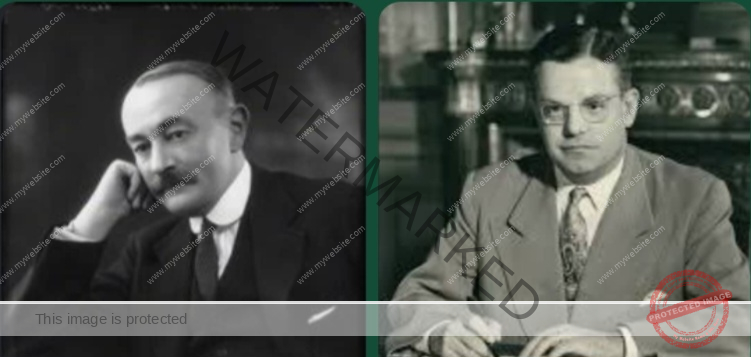
Few colonial figures embody that tragedy more profoundly than Sir John Stuart Macpherson. To British historians, Macpherson is frequently portrayed as a constitutional reformer — a sophisticated administrator who attempted to modernise governance in colonial Nigeria through the Macpherson Constitution of 1951. In official imperial memory, he was part of Britain’s “managed transition” toward African self-government.
But in the history of Southern Cameroons, another interpretation survives. A darker one. For many Southern Cameroonians, Macpherson’s legacy was not constitutional enlightenment, but constitutional entrapment. His policies did not merely administer a territory. They helped construct a political architecture of dependency and ambiguity that would eventually contribute to one of Africa’s most unresolved postcolonial crises.
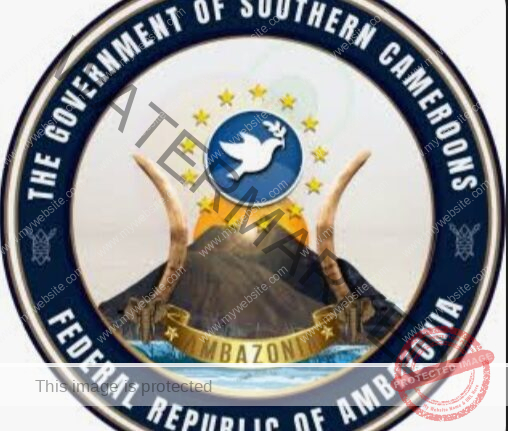
The tragedy did not begin with Macpherson alone. Britain had already made a fateful decision years earlier: to govern Southern Cameroons not as a fully distinct political entity under the United Nations Trust system, but as an appendage attached administratively to colonial Nigeria. This decision would prove catastrophic.
Rather than preparing Southern Cameroons for viable independent statehood, British authorities subordinated the territory to Nigerian regional politics for administrative convenience. Under Macpherson’s constitutional arrangements, Southern Cameroons remained tied to the Eastern Region of Nigeria, where it was politically dwarfed by larger demographic and economic forces. The imbalance was immediate and obvious.
Southern Cameroonians increasingly feared political absorption. Many believed their educational traditions, legal system, and Anglo-Saxon administrative culture were being diluted inside a structure they neither controlled nor fully trusted. Economic grievances deepened as resources and opportunities appeared concentrated elsewhere. Political frustrations intensified as Southern Cameroonians realised that their future could be decided by larger external forces beyond their control.
It was during this period that modern Southern Cameroons nationalism truly began to crystallise. Leaders such as Dr. Emmanuel Mbela Lifafe Endeley, John Ngu Foncha, and Solomon Tandeng Muna emerged within a growing climate of constitutional anxiety and political insecurity.
But while Britain was constructing one side of the future crisis through constitutional ambiguity, another force was simultaneously emerging from French Cameroun. That force was the ideological doctrine associated with Louis-Paul Aujoulat and the wider Françafrique system.
If Macpherson represented Britain’s constitutional manipulation, Aujoulat represented France’s doctrine of centralised assimilation, militarised state control, and political domination through a highly centralised Francophone administrative machine. The collision between these two incompatible colonial systems would eventually become explosive.
Aujoulat was not merely a colonial politician. He was one of the principal architects of postwar French influence in Cameroon and a major defender of France’s strategic interests in Central Africa. Through political organisations, administrative structures, missionary networks, and elite patronage systems, Aujoulat helped lay the ideological foundations for a deeply centralised postcolonial state loyal to Paris and hostile to decentralised autonomy movements.
His political philosophy differed fundamentally from the Anglo-Saxon legal and administrative traditions that had developed in Southern Cameroons under British rule. Under the French colonial doctrine: Central authority dominated regional autonomy. Assimilation replaced pluralism. Administrative obedience replaced local constitutional balance. Security doctrine prioritised force and internal suppression.
These two systems — British indirect constitutionalism and French centralised assimilation — were historically incompatible from the beginning. Yet Britain and the United Nations ultimately pushed Southern Cameroons into political union with French Cameroun in 1961 without fully resolving those contradictions. That decision may now rank among the most reckless constitutional experiments of twentieth-century African decolonisation.
Southern Cameroons entered reunification expecting a federal partnership between equals. But the postcolonial machinery inherited from the French system increasingly moved toward centralisation, absorption, and consolidation of power. Over time, many Southern Cameroonians came to believe that the federal guarantees protecting their identity, legal traditions, educational systems, and regional autonomy were being systematically dismantled. The federal state weakened. Centralisation intensified. Political distrust deepened.
By 1972, the federal arrangement itself had effectively collapsed into a unitary state structure dominated by the political traditions inherited from French Cameroun and reinforced through Françafrique networks. This is where the historical collision between Macpherson and Aujoulat becomes deadly. Macpherson’s constitutional dependency left Southern Cameroons structurally vulnerable before reunification. Aujoulat’s centralised doctrine provided the machinery through which that vulnerability could later be politically absorbed and militarily controlled. Together, these colonial legacies produced the fault lines that continue to define the present conflict.
The current war in the former Southern Cameroons did not emerge in a vacuum. It evolved from decades of unresolved constitutional contradictions, mutual distrust, political centralisation, failed federalism, identity suppression, and increasingly militarised responses to dissent.
Some scholars and international observers reject the use of the term genocide regarding the current conflict, while others — including many Ambazonian activists, survivors, and advocacy organisations — argue that patterns of village destruction, mass displacement, extrajudicial killings, and systemic violence against civilian populations amount to genocidal practices or crimes against humanity.
What cannot honestly be denied is that the territory has suffered catastrophic human devastation. Entire villages have been burned. Thousands have died. Communities have been displaced across forests and international borders. A generation has grown up under militarisation, fear, and political trauma. And beneath this modern catastrophe still lies the unresolved colonial architecture constructed decades earlier.
But perhaps the darkest irony is this: Once the British empire completed the constitutional weakening of Southern Cameroons, the old world order merely changed hands. British imperial management gradually gave way to French geopolitical domination. London retreated. Paris advanced. And through the Françafrique system, French strategic influence increasingly shaped the political, military, economic, and diplomatic direction of the postcolonial Cameroonian state. The old colonial order did not disappear. It evolved. The flag changed. The system remained.
For decades, Africa became a chessboard of competing imperial networks operating behind the language of sovereignty, democracy, counterterrorism, and international partnership. Southern Cameroons became trapped inside that machinery.
To many critics of the old international order, Western powers often defended “stability” even when that stability masked unresolved historical injustice, authoritarian centralisation, and violent suppression of dissent. International institutions frequently appeared more concerned with preserving inherited borders than confronting the historical contradictions embedded within them.
Trump’s Transactional New World Order
But global geopolitics may now be entering another transition. The emergence of Donald Trump and the rise of an increasingly transactional American foreign policy philosophy has introduced a potential challenge to aspects of the old postwar international order. Unlike the traditional Anglo-French imperial framework that often relied upon permanent strategic influence, ideological alliances, and long-term geopolitical management, Trump’s worldview has frequently approached international relations through direct national interest, economic leverage, burden-sharing, and transactional negotiation.
Supporters argue that this approach weakens entrenched global bureaucracies and old imperial influence networks. Critics argue that it risks unpredictability and the erosion of traditional diplomatic structures. But regardless of political opinion, the emergence of this “transactional new world order” reflects a broader global shift: the weakening of the old European imperial consensus that shaped much of postcolonial Africa.
For territories like Southern Cameroons, that shift carries profound implications. If the old order helped create and sustain the constitutional contradictions underlying the conflict, then the collapse or transformation of that order may eventually open new geopolitical possibilities that were once considered impossible.
History is moving again.
The old imperial architecture is no longer as stable as it once appeared. And as global power structures evolve, the unresolved question of Southern Cameroons may increasingly re-emerge not merely as a forgotten colonial dispute, but as one of the unfinished constitutional crises inherited from the collapse of empire itself.
The British empire is gone. French colonial rule formally ended decades ago. But their shadows still shape the battlefield. The shadow of Macpherson remains trapped inside the constitutional question. The shadow of Aujoulat remains embedded inside the machinery of centralised power. Together, they helped shape one of Africa’s most painful unfinished tragedies. And now, as the old world order begins to fracture, history may once again reopen the question they tried to bury.
Ali Dan Ismael
Editor-in-Chief, The Independentist News