




You cannot force a people shaped by common law into a civil law structure and expect legitimacy. Not through conferences. Not through administrative adjustments. Not through political messaging. Because this is not a policy disagreement. It is a structural incompatibility.
By Ali Dan Ismael, Editor-in-Chief, The Independentistnews
For those who still insist that the crisis in Southern Cameroons is merely a “language problem,” let us begin with a correction that can no longer be postponed: This was never about English versus French. It is about law. It is about power. It is about the structure of justice itself.
Two Systems, Two Philosophies
At the heart of the conflict lies a fundamental incompatibility between two legal traditions: The Common law — built on precedent, adversarial process, and the protection of the individual, where the principle stands: you are innocent until proven guilty. The Civil law — grounded in codified statutes, inquisitorial procedure, and a stronger orientation toward the authority of the state in structuring justice. These are not stylistic differences. They are philosophical opposites. They determine: Who holds power in the courtroom. How rights are protected. Whether the individual stands shielded from the state—or exposed to it
The Illusion of Harmonization
For decades, Cameroon has presented these two systems as harmonized within a single national framework. But systems are not merged by decree. You cannot sustainably combine: A tradition designed to limit state power with A tradition designed to organize and centralize it without producing distortion.
What follows is predictable: Legal confusion, Institutional imbalance and ultimately, loss of trust That loss of trust is no longer theoretical. It is lived.
From Legal Difference to Political Crisis
In the former British Southern Cameroons, expectations were shaped by a common law heritage: Courts that test evidence openly
Procedures that protect the accused. Institutions that restrain arbitrary authority
Over time, many have perceived a steady shift away from those expectations—toward structures that feel centralized, distant, and less responsive to individual protections. The result is not just disagreement. It is legal alienation. And when a people begin to feel that the system of justice no longer reflects their legal identity, the crisis deepens beyond politics. It becomes structural.
The Voice That Warned Early
Long before the present crisis hardened into its current form, voices within the Church had already recognized the danger of ignoring legal identity and moral responsibility. Among them was Christian Cardinal Tumi—a man many regarded not as a prince of the Church, but as a servant of the people.
Cardinal Tumi consistently warned that peace without justice is illusion, and that governance detached from the lived realities of the people cannot endure. He understood something fundamental: When institutions fail to reflect the legal and moral expectations of a people, stability becomes temporary—and unrest becomes inevitable. His voice was not radical. It was prophetic.
The Silence Where a Voice Once Stood
History has already shown what moral leadership looks like in times of structural injustice. Figures such as Desmond Tutu did not hide behind caution. They did not confuse neutrality with prudence. They understood that when a system diminishes the dignity of a people, the role of the Church is not to balance—it is to bear witness. In Cameroon, that tradition once had a voice. Christian Cardinal Tumi stood not as an observer, but as a servant of the people—speaking with clarity when silence would have been easier.
That standard now hangs over the present.
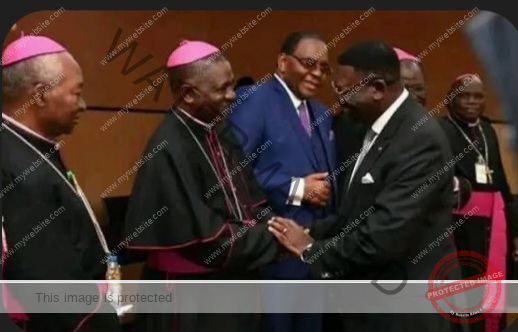
Today, many among the faithful are asking—quietly, but persistently—whether the same moral clarity is still visible in Church leadership. Figures such as Andrew Nkea Fuanya are measured not only by words, but by perceived proximity to the suffering of their communities. The question is not whether leaders speak. It is whether they are seen to stand where their people stand when it matters most.
After the Papal Tour: A Harder Reading
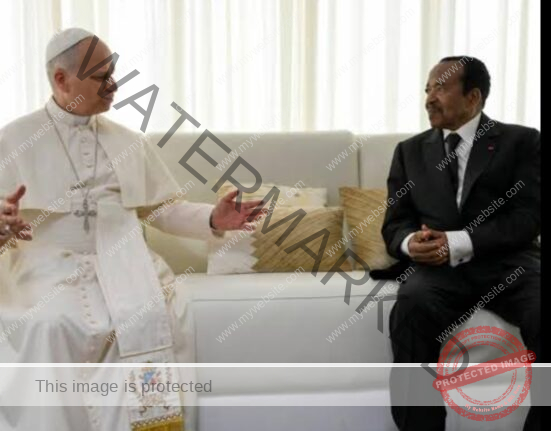
Following his African tour, Pope Leo XIV left behind more than messages of peace. He set a standard that invites a harder reading of realities on the ground. His call was unambiguous: shepherds must remain with their flock—especially the poor—and resist the pull of privilege and proximity to power.
Measured against that standard, an uncomfortable perception has taken hold among many in Southern Cameroons: That some shepherds appear closer to the powerful than to the people they are called to serve. Whether accepted or contested, that perception now shapes the moral landscape. Because in moments of sustained suffering, the Church is not judged by intention— but by visible alignment.
The Conference Question No One Wants to Answer
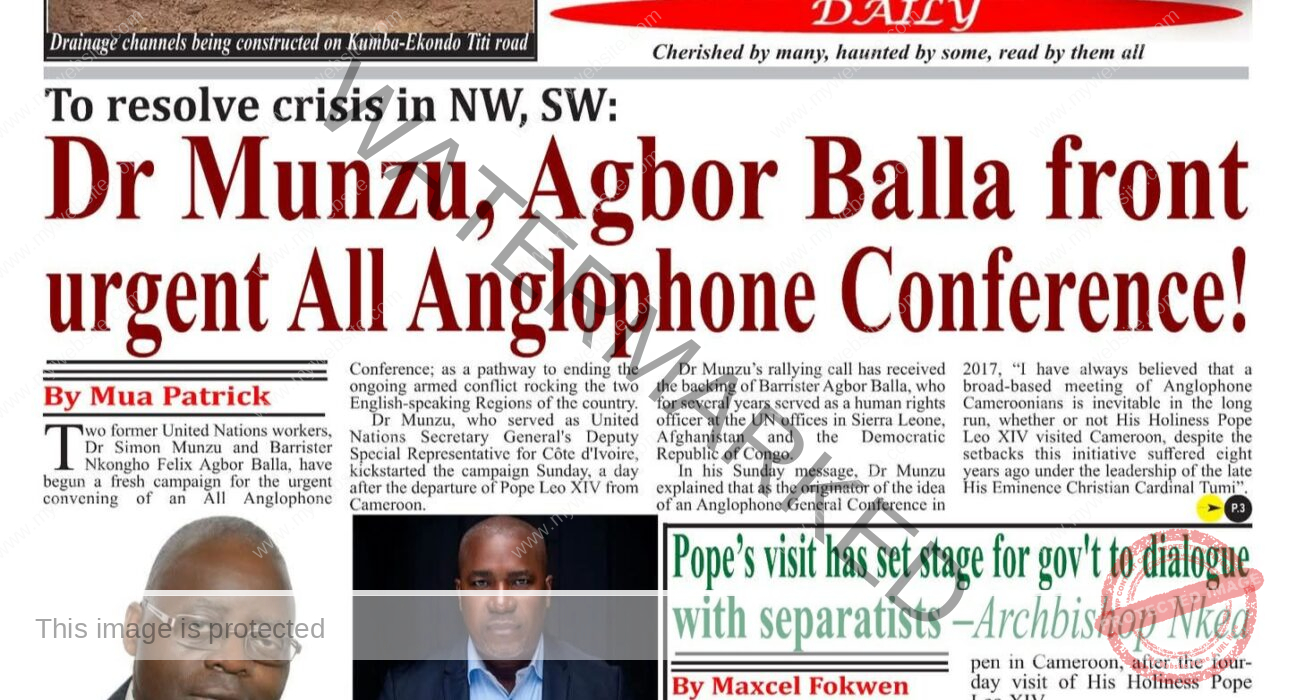
At the same moment this structural crisis persists, a familiar political reflex returns. As Simon Munzu calls for another All Anglophone Conference, a more fundamental question must now be asked—clearly, directly, and without evasion: What became of the previous ones?
The first and second All Anglophone Conferences were not symbolic gatherings. They were defining moments—articulating grievances, framing demands, and setting a collective direction. Yet today, the pattern appears unchanged: New conference, New resolutions, Renewed expectations. But no clear accounting of outcomes. That is not strategy. That is recurrence without resolution. Process Without Structural Change. The issue is not dialogue. The issue is credibility of process.
When conferences are convened without: Transparent follow-through, Measurable outcomes, institutional continuity, they risk becoming expressions of intent without instruments of change. And in a crisis rooted in legal structure, process alone cannot substitute for reform. Without structural change, process becomes performance.
The real test for leadership
The call for another conference inevitably places a responsibility on its convenors, including Simon Munzu: What specifically failed in previous conferences? What structural safeguards will ensure different outcomes this time? How will resolutions translate into enforceable change—not just declarations? These are not hostile questions. They are necessary questions. Because repetition, without accountability, risks eroding the very trust such conferences are meant to restore.
This Is Not About Superiority. Let us remove the noise. This is not a claim that one people are better than another. It is not a rejection of language or identity. It is a recognition that: Different legal systems produce fundamentally different relationships between citizens and the state. When those systems are forced into one framework without genuine accommodation, friction is inevitable. And over time, friction becomes rupture.
The Real Issue
The core issue is simple—and uncomfortable: Legal identity matters. Institutional culture matters. Systems of justice cannot be imposed without consequence. The attempt to override one legal tradition with another has produced a crisis that cannot be resolved by slogans, conferences, or temporary political arrangements. Because the problem is not surface-level. It is foundational.
Final Verdict
Ambazonia is not defined by language. It is defined by a legal tradition, a historical experience, and a people who understand the difference between systems that serve the state—and systems that are meant to serve them. That truth was understood by voices like Christian Tumi long before the crisis reached its present intensity. It is understood even more clearly today. And it leads to a conclusion that can no longer be softened, delayed, or disguised:
You cannot force a people shaped by common law into a civil law structure and expect legitimacy. Not through conferences. Not through administrative adjustments. Not through political messaging. Because this is not a policy disagreement. It is a structural incompatibility.
Until that reality is confronted honestly, every proposed solution will circle the same point, repeat the same language, and produce the same outcome. Not reconciliation. Not stability. But continued rupture.
Ali Dan Ismael, Editor-in-Chief, The Independentistnews