



How many more sons and daughters must die before the full human cost of this war receives the sustained attention it deserves? The question must remain before the public, not only when a prominent family is bereaved, but whenever another life is lost. Enough bloodshed. Enough grieving families. Let meaningful political negotiations begin.
By Timothy Enongene
Editor-in-Chief, The Independentist News
29 October 2026
As Amazon associate this site earns from qualifying purchases
Buy your copies of books on the Ambazonian revolution By Martin Mungwa on Amazon
The reported tragedy of a traditional ruler’s family raises urgent questions about military sacrifice, civilian suffering, political accountability, and the unresolved Southern Cameroons conflict.
A Father’s Grief and a Nation’s Unanswered Questions
There are tragedies that statistics cannot adequately describe. There are losses that no military communiqué, political speech, or expression of official condolence can fully explain. Consider the anguish of a father who reportedly loses one son in military service, only to confront the reported death of another six years later.
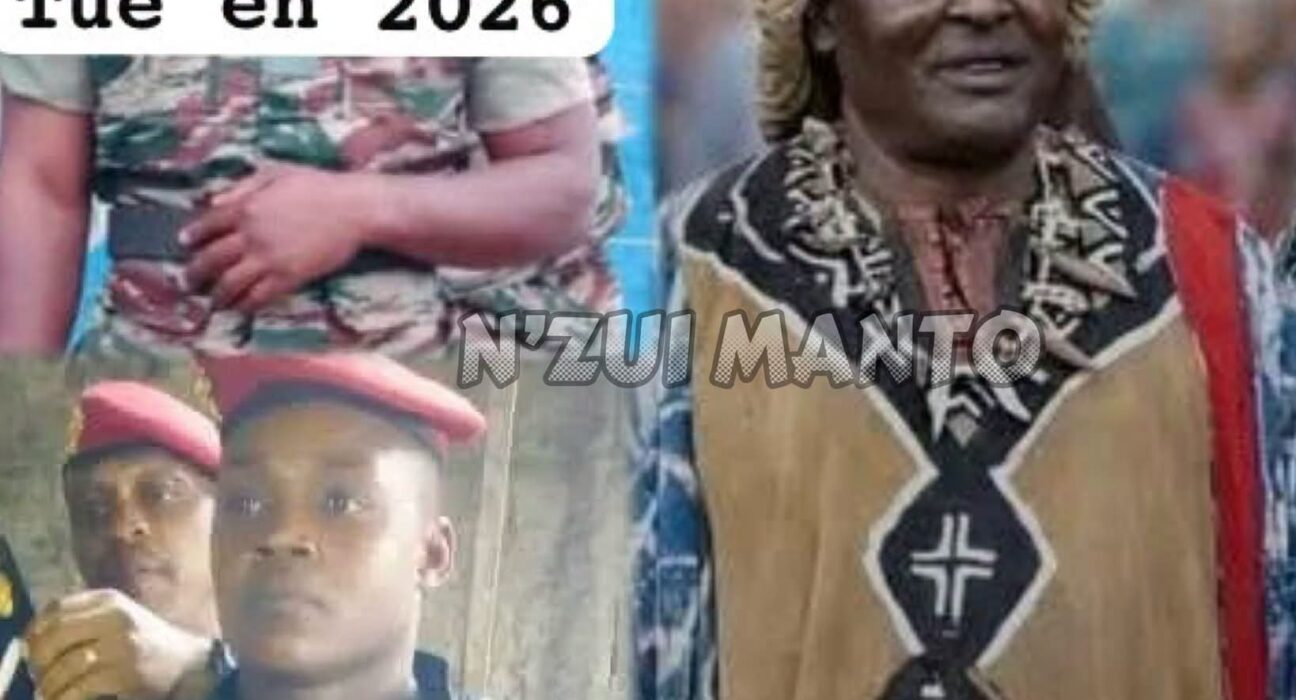
This is the disturbing account brought to public attention through a social media post attributed to N’Zui Manto, featuring Fo’o Tanefo Jean-Marie, the traditional ruler of Bamendjinda, alongside photographs of two young men described as his sons. According to the circulating account, the two men died in 2020 and 2026 while serving in the security forces of La République du Cameroun (LRC).
The Independentist News has not independently confirmed their identities, family relationships, dates of death, or the circumstances in which they reportedly died. These details require verification through reliable family, military, or other documentary sources.
Nevertheless, the report raises a legitimate question that extends far beyond one family: How should a society respond when the human costs of a prolonged conflict continue to mount without a mutually accepted political settlement? Behind every uniform is a person. Behind every casualty is a family. And behind every family shattered by war lies a human story that deserves more than a passing expression of sympathy.
The War That Continues to Consume Families
The conflict in the former British Southern Cameroons, known to independence advocates as Ambazonia, has persisted for nearly a decade. Its consequences have reached far beyond the battlefield.
Children have lost parents. Parents have buried children. Families have been separated by displacement. Communities have endured insecurity, interrupted education, restricted movement, economic hardship, and the destruction of livelihoods.
The scale of the humanitarian emergency is not merely a matter of partisan interpretation. According to United Nations humanitarian reporting, approximately 1.2 million people in Cameroon’s North-West and South-West regions were expected to require humanitarian assistance in 2026. Humanitarian agencies have also documented displacement, kidnappings, protection violations, and continuing insecurity.
These figures describe a crisis affecting ordinary people who did not necessarily choose the circumstances in which they now live. The dead include civilians, members of the LRC security forces, and members of Ambazonian armed groups.
Their experiences are not politically identical, and the responsibilities of the parties must be examined separately. Yet every death leaves an irreversible absence in a family and imposes a cost on the wider society. The persistence of these losses demands a serious accounting of the conflict’s political objectives, military conduct, humanitarian consequences, and available routes toward settlement.
When Mourning Becomes Routine
One of the most troubling consequences of prolonged conflict is the gradual normalisation of suffering. A soldier is reported dead. A photograph circulates. Relatives receive condolences. Political representatives issue statements. The public expresses sorrow, and attention eventually shifts to the next tragedy.
For those who have lost loved ones, however, the mourning does not end when public attention moves elsewhere. The empty chair remains. The missing voice remains. The children who will grow up without a parent remain.
And the questions remain. What has been achieved through years of fighting? What objectives remain unresolved? What measures are being taken to protect civilians and reduce casualties? What opportunities for political engagement have been explored, rejected, or neglected? These questions are not insults to soldiers, their families, or their sacrifices. They are legitimate questions of public accountability.
The Burden Carried by LRC Military Families
Military service places extraordinary demands upon individuals and the families who depend on them. Those who enter military service may do so from professional commitment, economic necessity, patriotism, family tradition, or a combination of motivations. Whatever their reasons, their families bear a substantial share of the risks.
A mother who loses a son does not experience bereavement as an abstract question of territorial sovereignty. A widow confronting the death of her husband must deal with practical and emotional consequences that extend far beyond the language of military operations.
This makes it essential to distinguish respect for those who serve from unquestioning approval of every political or military decision made by their superiors. Citizens may respect military personnel while scrutinising the policies under which they are deployed.
They may honour the dead while asking whether further deaths can be prevented. And they may demand transparency concerning casualties, compensation, assistance to bereaved families, and the broader strategy governing continued military operations.
A government’s obligation to military families does not end with ceremonial funerals or official condolences. It includes a continuing responsibility to explain the purposes, costs, and foreseeable consequences of its policies.
The Political Question That Military Operations Have Not Resolved
At the heart of the Southern Cameroons conflict lies a dispute over political identity, constitutional arrangements, historical agreements, governance, and self-determination.
Ambazonian independence advocates argue that the historical relationship between the former British Southern Cameroons and La République du Cameroun raises unresolved questions concerning the 1961 reunification process, subsequent constitutional transformations, and the political status of Southern Cameroons.
The government of Cameroon, by contrast, maintains the territorial unity and sovereignty of the state and has advanced decentralisation and special-status arrangements as elements of its response. These positions remain fundamentally contested.
The historical and legal issues require careful examination, rather than the assumption that either military superiority or the passage of time can resolve them automatically. For advocates of Ambazonian independence, the fundamental political question cannot be answered merely by restoring administrative arrangements that existed before the conflict.
For those defending Cameroon’s territorial integrity, any proposed settlement must address their concerns about constitutional order, national unity, and security. A credible negotiation process would have to acknowledge these competing positions without predetermining its outcome.
Independent facilitation, meaningful representation, civilian protection, and enforceable commitments would be important considerations in such a process. The existence of sharply opposed political objectives makes diplomacy difficult. It does not eliminate the need to explore it.
The Responsibility of Political and Military Leadership
Those exercising political and military authority carry particular responsibilities during armed conflict. They are responsible for decisions involving the deployment of personnel, the conduct of operations, the protection of civilians, and the pursuit or rejection of political initiatives.
International humanitarian law imposes obligations on all parties to an armed conflict, including the distinction between civilians and combatants, the prohibition of attacks directed against civilians, and the humane treatment of persons who are not or are no longer participating in hostilities. Accountability must therefore extend to violations committed by any party.
The Independentist News has consistently argued that the unresolved political status and aspirations of Southern Cameroons must form part of any lasting settlement. That position does not diminish the importance of civilian protection, humanitarian access, or accountability for abuses committed by armed actors claiming to represent any political cause.
A sustainable peace requires more than the cessation of gunfire. It requires political arrangements capable of addressing the grievances and fears that have sustained the conflict.
The Role of Citizens and Public Accountability
In any society, public discussion of war should involve more than official institutions. Families, journalists, religious leaders, veterans, educators, community organisations, and other members of civil society have legitimate interests in understanding the costs and purposes of continuing violence.
They can seek information about casualties, humanitarian conditions, military expenditures, legal obligations, and prospects for political negotiations. Such scrutiny is particularly important when fighting continues for years without a broadly accepted settlement.
Public authorities should be prepared to answer difficult questions without treating every expression of concern as hostility to the state. At the same time, civic participation must take account of the security risks and legal restrictions faced by citizens.
Peaceful civic engagement, independent journalism, humanitarian advocacy, and informed public debate are important channels through which societies can examine the conduct and consequences of war. The loss of life should never become so routine that questioning the necessity or direction of a conflict appears unreasonable.
Beyond Condolences: What a Credible Peace Process Requires
The Southern Cameroons conflict has produced competing proposals for resolving its underlying political dispute. Although the parties differ over the legitimacy of independence, federalism, decentralisation, and other constitutional arrangements, several issues demand serious consideration in any credible process.
First, the protection of civilians must remain a central obligation, regardless of the political claims advanced by the parties. Second, humanitarian organisations must be able to reach affected populations safely and impartially. Third, credible arrangements for dialogue require participants who can represent relevant interests and engage without being compelled to accept a predetermined political outcome. Fourth, questions of accountability, detention, displaced populations, local governance, and guarantees against renewed violence must be addressed.
Finally, a settlement requires mechanisms capable of implementing and monitoring any commitments that the parties reach. These are not substitutes for resolving the underlying dispute. They are among the practical conditions necessary for translating political agreement into lasting peace.
Every Life Must Count
If the circulating account concerning Fo’o Tanefo Jean-Marie and his reported sons is confirmed, it will add a deeply personal example to a much broader national tragedy. But even before those particular details are established, the central humanitarian question remains.
How does a society weigh the loss of young lives against the political objectives for which armed conflict continues? How should families obtain truthful information about the circumstances in which their loved ones died? What obligations do governments and armed movements owe to the communities whose lives are affected by their decisions? And what would constitute meaningful progress toward ending the violence? These questions deserve evidence, transparency, public scrutiny, and serious political engagement.
The suffering of one bereaved family should never be exploited to obscure the suffering of another. An Ambazonian mother mourning a civilian child and an LRC mother mourning a son in uniform may hold profoundly different political convictions. Neither family’s grief becomes less real because of that difference.
Their losses should remind every political and military authority that decisions made in the language of sovereignty, security, and liberation have consequences borne by human beings.
Conclusion: Enough Grieving Families
Nearly a decade of conflict has demonstrated the destructive capacity of prolonged political confrontation. The unresolved historical and constitutional dispute remains significant. So do the security concerns, political aspirations, and humanitarian needs of those affected.
A durable settlement cannot be built on the assumption that suffering will eventually cease to matter. Nor can grief alone determine the constitutional future of Southern Cameroons. What grief can do is remind those who exercise power of the urgency of examining alternatives to continued violence.
The reported tragedy associated with the traditional ruler of Bamendjinda deserves verification and, if confirmed, a respectful accounting of the lives lost. The wider tragedy of the Southern Cameroons conflict is already extensively documented. Its victims deserve more than symbolic expressions of regret. They deserve protection, accountability, and a serious commitment to exploring a credible political settlement.
How many more sons and daughters must die before the full human cost of this war receives the sustained attention it deserves? The question must remain before the public, not only when a prominent family is bereaved, but whenever another life is lost. Enough bloodshed. Enough grieving families. Let meaningful political negotiations begin.
As Amazon associate this site earns from qualifying purchases
Buy your copies of books on the Ambazonian revolution By Martin Mungwa on Amazon
Timothy Enongene
Editor-in-Chief, The Independentist News