



The Bulu priest’s tears deserve compassion. His demand that the state stop the killing, deserves to be heard. No family should be condemned to endless mourning, whether in Ambazonia or French-speaking Cameroon. But compassion must not become political confusion.
By Timothy Enongene
Editor-in-Chief
The Independentist News
As Amazon associate this site earns from qualifying purchases
Buy your copies of books on Ambazonia’s productive Sovereignty and statecraft By Martin Mungwa from Amazon
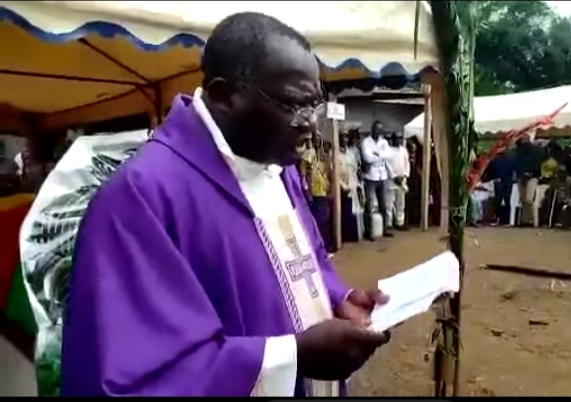
YAOUNDÉ – 28 October 2026 – Dion Ngute said Yaoundé dose not feel the war, but at a soldier’s funeral in French-speaking Cameroon, a Bulu priest broke down and appealed to the military representative saying:
“Transmit this message to the Head of State. We no longer want to cry for our children. The Cameroonian state has every means to stop this deadly war.”
Then came the painful truth:
“The children of a general never die. The children of a colonel never die. It is the children of the poor who die.”
That testimony exposes the human cost of a war that political statements cannot wish away. But it also raises a deeper question about the narrative being presented to Ambazonians.
THE PSYCHOLOGICAL DIMENSION
Is Dion Ngute’s messaging simply an appeal for peace, or could it also serve a broader political communication strategy?
When Ambazonians hear that Francophones do not feel the war, some may interpret the statement as an admission that the conflict has become an Ambazonian problem alone. Others may conclude that the suffering of ordinary Francophone families makes community dialogue the obvious way forward.
That is precisely where Ambazonians must think critically. A war can affect different communities unequally without changing the political nature of the conflict. The grief of a Bulu family does not erase the grievances of Ambazonians. The death of a French-speaking Cameroonian soldier does not settle the question of Ambazonia’s political future. And shared suffering does not automatically make a government-sponsored community meeting an adequate mechanism for resolving a conflict between opposing political projects.
The danger is that an emotional appeal, however genuine the grief behind it, may be used to sell a political process that leaves the fundamental dispute untouched.
COMMUNITY DIALOGUE IS NOT INTERNATIONAL MEDIATION
Yaoundé’s community-dialogue initiative brings together local authorities, traditional rulers, religious leaders and other community stakeholders. Such engagement can serve a useful purpose. But who has the authority to negotiate a political settlement? Who can make binding commitments on behalf of the parties to the conflict? And who guarantees that any agreement will be respected?
These are questions that community meetings cannot answer by themselves. The 2019 Major National Dialogue demonstrated the limitations of a process in which key Ambazonian separatist leaders and armed-group representatives did not participate. Academic analysis has also documented concerns that the dialogue took place within political boundaries set by Yaoundé, including the insistence that Cameroon remain one and indivisible.
International mediation offers a different framework: a credible third party can facilitate negotiations between the parties, help establish mutually accepted procedures and support the implementation of commitments. This is why Ambazonians must distinguish between dialogue within communities and negotiations between the parties to the conflict. One cannot automatically substitute for the other.
IS COMMUNITY DIALOGUE A WAY AROUND INTERNATIONAL MEDIATION?
This is the central political question. Critics of Yaoundé’s approach have questioned whether community dialogue can deliver a settlement when those contesting the existing political arrangement are excluded from the negotiating table.
From an Ambazonian perspective, there is a legitimate concern that promoting community dialogue as the principal solution could shift attention away from the need for internationally facilitated negotiations between Ambazonia and La République du Cameroun (LRC).
We should not pretend to know Dion Ngute’s private intentions without evidence. But we can scrutinise the political consequences of the strategy: Does it bring the parties closer to a negotiated settlement, or does it create the appearance of a peace initiative while the central political question remains unresolved?
Peace must not become a public-relations exercise. Community dialogue must not become a substitute for negotiations. And local consultations must not be used to sidestep international mediation.
AMBAZONIANS MUST LOOK BEYOND THE EMOTION
The Bulu priest’s tears deserve compassion. His demand that the state stop the killing, deserves to be heard. No family should be condemned to endless mourning, whether in Ambazonia or French-speaking Cameroon. But compassion must not become political confusion.
Ambazonia’s position, as articulated by its independence movement, concerns self-determination and the political status of its homeland. That question cannot be settled merely by gathering community leaders, appealing to grieving families or persuading young people to abandon armed resistance without addressing the underlying dispute.
The question is not whether communities should talk. They should. The question is whether community dialogue can replace a political negotiation involving the actual parties to the conflict, under credible third-party mediation. Dion Ngute may speak of community dialogue. Ambazonians must insist on a credible political process.
Same war. Same blood. Unequal suffering. But no amount of emotional messaging can substitute for a negotiated settlement. The road to peace is not paved with carefully managed narratives. It requires confronting the political dispute, recognising the need for credible mediation and negotiating a settlement that addresses the issues at the heart of the conflict.
As Amazon associate this site earns from qualifying purchases
Buy your copies of books on Ambazonia’s productive Sovereignty and statecraft By Martin Mungwa on the
Timothy Enongene
Editor-in-Chief
The Independentist News