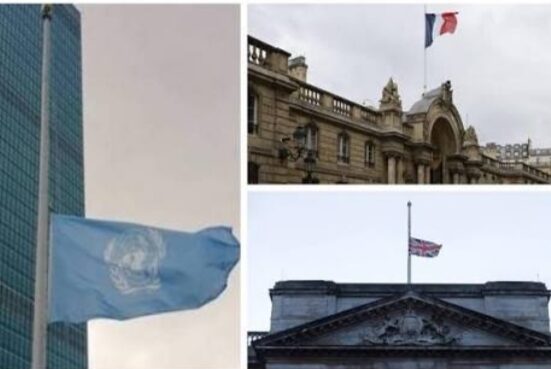


Let the BBC report Southern Cameroons. Let France 24 report it. Let Al Jazeera report it. Let American media report it. But when they get something wrong, there should exist an Ambazonian institution credible enough to correct the record with evidence rather than outrage. That is sovereignty of mind.
By Martin S. Mungwa Contributor The Independentist News
There was a time when the letters BBC carried unusual authority across Africa. Long before smartphones, satellite television and social media, families gathered around radios to hear what the British Broadcasting Corporation was reporting about their own countries. In places where governments controlled newspapers and national broadcasters, the BBC World Service acquired a reputation for going where official journalism would not go. That reputation was never perfect. No institution is. But there was a belief that the BBC would ask difficult questions and that, when governments became uncomfortable, the journalist would not immediately retreat. Something has changed.
I do not make the argument that the BBC has stopped reporting the conflict in the former British Southern Cameroons. That would simply be untrue. BBC journalists have reported killings, displacement, abuses by state security forces, abuses by separatist armed groups, school closures and the terrible human cost of a conflict that has lasted for years. My concern is different. The BBC too often reports the events without adequately interrogating the system that produced them.
We hear about “Cameroon’s Anglophone regions.” We hear about “English-speaking separatists.” We hear about the Northwest and Southwest. Those expressions are not necessarily incorrect, but they establish a starting point. To a reader in London, New York or Nairobi who knows little of our history, the story can begin to sound like a linguistic minority suddenly deciding that it wants to leave an otherwise settled country. But what happens if the journalist begins somewhere else? What if the opening sentence identifies the territory as the former British Southern Cameroons, once administered separately under international trusteeship, whose people entered a federal political arrangement with the Republic of Cameroun in 1961? Immediately another question appears: what happened to that arrangement?
That is where the journalism becomes more difficult, because Britain itself enters the story. Margaret Thatcher did not destroy the BBC, and it would be poor history to hold her personally responsible for the condition of BBC reporting in Africa four decades later. But the Thatcher period does matter. Her government had a famously combative relationship with the BBC, particularly over reporting on Northern Ireland and questions of national security. The arguments concerned whether journalism should give voice to people whom government regarded as terrorists, how broadcasters should describe violent political conflicts and whether the national broadcaster owed some larger loyalty to the British state during periods of confrontation. Those arguments left institutional scars.
At the same time, Britain itself was changing. Competition, privatization, managerial efficiency and market discipline became powerful organizing ideas. Public institutions were increasingly expected to justify themselves through efficiency and measurable outputs. The financial weakening of the BBC World Service came substantially later, especially through funding changes and cuts under subsequent governments, so the historical argument should be precise. Thatcher did not financially dismantle the World Service. What her period helped change was the political atmosphere surrounding public broadcasting. Later governments changed the financial structure. The combination matters: political caution at one end, financial pressure at the other. Eventually, the institution becomes thinner.
As an engineer, I would describe the process differently from a political commentator. Systems rarely collapse because one bolt fails. They deteriorate because load paths change, redundancy disappears, maintenance is deferred and somebody keeps insisting that the structure is still performing because it has not yet fallen down. The BBC still stands. The question is whether parts of the old institutional strength that once made it formidable internationally have gradually been designed out of the system.
This is where the Southern Cameroons case becomes revealing. Suppose an engineer is asked to investigate a bridge failure. He can describe the broken steel, the cracked concrete and the vehicles that fell. Those facts matter. But if he stops there, he has not completed the investigation. He must ask what the structure was designed to carry. He must examine the original drawings. He must inspect modifications. He must determine whether something that once functioned was later altered in ways that changed its behavior.
That is how I see much international reporting on Southern Cameroons. We document casualties. We document displacement. We document burned schools. We document military operations. We document kidnappings and humanitarian need. But where are the original drawings? Where is the sustained examination of the constitutional architecture Britain helped shape in 1961? Where is the investigation of how a federal arrangement evolved into an increasingly centralized state? Where is Britain’s own role in that history?
These questions do not determine the final political answer. A journalist can investigate them without endorsing independence, federation, confederation or any other settlement. But journalism that refuses to inspect the original design while repeatedly reporting the structural failure is incomplete journalism.
There may, however, be something constructive in this realization. Ambazonians are learning that our suffering ultimately belongs to us. I do not mean that nobody else bears responsibility. Britain cannot erase its history. France cannot pretend that its interests in Cameroon are irrelevant. The Commonwealth, La Francophonie, European Union, African Union and United Nations cannot reasonably claim that they have not seen the conflict. I mean something more fundamental: no external institution will ever preserve our story with the urgency with which we must preserve it ourselves.
For too long, we have waited for validation. A BBC report appears and we celebrate. A major American newspaper mentions Ambazonia and social media explodes. A foreign politician uses the right terminology and we declare a diplomatic breakthrough. Then the news cycle moves on. Why should it surprise us? The BBC has Britain to report. CNN has America. France 24 has its own audiences and institutional environment. Al Jazeera has its own regional and global priorities. No international newsroom exists primarily to preserve Southern Cameroonian history. That responsibility belongs first to us.
The realization should not produce bitterness. It should produce builders.
A media organization does not become independent because somebody puts “Independent” above the door. The real questions are operational. Who finances the newsroom? Who appoints the editor? Who can remove the editor? Who pays the correspondents when advertising revenue falls? Who owns the archive? Who controls access to the servers? What happens when the president calls the editor late at night? What happens when the donor financing the organization becomes the subject of an investigation? What happens when an armed commander threatens a reporter? What happens when the evidence contradicts the political story everybody wants to believe? QThose are the load cases.
If the institution fails when those pressures arrive, then independence existed only on paper. During my professional life, I learned that organizational charts tell only part of the story. You discover the real institution when something goes wrong. Who takes responsibility? Who has authority? Who documents the failure? Who corrects it? Who preserves the lesson so the next generation does not repeat the same mistake? That lesson applies as much to a newsroom as it does to engineering.
Whatever criticism one may make of Al Jazeera, its rise contains an important institutional lesson. The Arab world did not wait indefinitely for London, Paris or Washington to become Arab newsrooms. Someone decided to build. They invested in studios. They recruited journalists. They created international bureaus. They developed editorial systems. They trained correspondents. They built an institution capable of putting stories from their own region into global circulation.
Ambazonia should learn from that principle without imagining that any media organization is beyond criticism. Where is our equivalent institutional ambition? I am not asking where the next YouTube channel is. We have enough channels. I am asking where the newsroom is. Where is the archive containing interviews with people who remember British administration, the plebiscite, federation and the political changes that followed? Where is the economics desk studying CDC, PAMOL, cocoa, timber, ports, energy, insurance, banking and public debt? Where is the research unit capable of reading British colonial files rather than recycling quotations found on social media? Where are the journalists trained to distinguish allegation from evidence? Where is the correspondent who can challenge Yaoundé today and an Ambazonian president tomorrow?
That is a national institution.
This is why the media question is much larger than media. A people does not demonstrate readiness for sovereignty simply by saying it wants sovereignty. Readiness appears in what people can build and maintain. Can we establish institutions whose legitimacy does not depend upon one personality? Can we manage them competently? Can they protect civilians rather than inflame violence? Can they generate knowledge and productive capacity rather than consume donations? Can they engage foreign institutions confidently without becoming dependent upon them?
Those questions apply to government, but they also apply to journalism. An Ambazonian media institution should already be practicing the standards we say we want in a future state. If we expect constitutional government tomorrow, tolerate disagreement today. If we expect competent administration tomorrow, keep records today. If we expect civilian protection tomorrow, refuse incitement today. If we expect productive institutions tomorrow, learn to finance and maintain them today. If we expect responsible international relations tomorrow, learn to engage the world without surrendering our judgment today.
The republic begins long before the flag is raised.
There is also a danger here. It would be easy to criticize the BBC and then build something worse. An Ambazonian broadcaster that exists only to tell Ambazonians what they want to hear would not be an institution of liberation. It would be a propaganda office. If an Ambazonian journalist cannot investigate a separatist commander, something is wrong. If he cannot ask where diaspora contributions went, something is wrong. If she cannot interview a federalist without being called a traitor, something is wrong. If the newsroom must obtain political permission before publishing an uncomfortable fact, then we have reproduced the problem we claim to oppose.
A credible national media institution must sometimes embarrass the nation it serves. That is part of serving it. The newsroom should be capable of investigating Yaoundé, London and Paris. But if the evidence requires it, the same newsroom must investigate Buea. Otherwise we have changed the owner of the microphone without changing the philosophy behind it.
The same lesson applies to religion. Here I make an important distinction between spirituality and religious institutions. Every major religious tradition has passed through human history, and human history includes slavery, conquest, empire, hierarchy, exploitation and suffering. Christian institutions have been entangled at different times with European imperial systems and slavery. Muslim societies also have histories that include slavery and political conquest. African traditional societies were not uniformly innocent either; African rulers, merchants and communities sometimes participated in systems that harmed other Africans.
No civilization owns innocence.
This is why I place ethics at the center of spirituality. If faith does not improve our ethics, what exactly is its social value? If prayer does not sharpen conscience, what has prayer accomplished? If religious leadership cannot tell a ruler the truth because access to the palace has become too comfortable, what kind of spirituality are we practicing?
Religious institutions should be able to meet presidents. Dialogue with power is not automatically corruption. But proximity to power creates a test. Can the religious leader leave the banquet table and still tell the ruler that injustice is injustice? Can the bishop speak for the family whose child has been killed even when the minister sitting beside him at dinner does not want to hear it? Can the pastor refuse to turn suffering into ceremonial language? Can the imam defend human dignity even when political authority expects silence?
That is where spirituality becomes real.
The problem is not religion itself. The problem is religion without ethical courage. People suffering through conflict receive prayers, communiqués, pastoral visits, peace conferences and photographs of religious leaders meeting political authorities. Some of these interventions are sincere and necessary. But people are entitled to ask what changed afterward.
If churches can investigate their historical connections to slavery yet speak cautiously about suffering happening in front of them, there is a moral inconsistency worth examining. If religious leaders preach obedience more forcefully than accountability, something has gone wrong. If institutions that claim prophetic authority are consistently more comfortable with rulers than with those being ruled, they should not be surprised when people begin looking for spirituality outside institutional religion.
God does not become more truthful because a bishop speaks. God does not become more powerful because a cathedral is large. God does not belong to London, Canterbury, Rome, Paris or Yaoundé. The spiritual test is ethical conduct. Does the institution protect dignity? Does it tell the truth when truth is inconvenient? Does it restrain fear rather than manufacture it? Does it reconcile families rather than divide them through accusations and manipulation? Does it stand beside the wounded when there is no political advantage in doing so? Those questions matter more than ceremonial authority.
There is another connection between media, religion and political independence that deserves attention. Extraction is usually discussed economically: land, timber, oil, plantations, labor and money. But there is another form of extraction. A people can gradually lose confidence in its own ability to think. Its history is interpreted elsewhere. Its news is validated elsewhere. Its spirituality is certified elsewhere. Its experts must first be recognized abroad before they are respected at home. Its children learn that knowledge arrives from somewhere else.
That is a dangerous form of dependency because it survives even after the colonial flag disappears. True self-government therefore requires more than control of territory. It requires intellectual confidence without intellectual arrogance. We must be able to say: this is our history, and we will study it rigorously. This is our suffering, and we will document it honestly. This is our spirituality, and we will test it ethically. These are our institutions, and we will maintain them professionally. That is a much harder independence than shouting slogans.
This criticism applies to The Independentist News itself. If this publication wants credibility, it cannot become merely another instrument for telling one political faction that it is always correct. It must become an institution. It should build an archive, develop standards, train younger writers, distinguish reporting from editorial opinion, correct errors publicly, preserve important documents and publish economic analysis alongside political commentary. It should document culture, family life, spirituality, engineering, agriculture, business and the ordinary work by which societies survive. And it must protect disagreement.
The farmer matters as much as the cabinet minister. The teacher matters. The nurse matters. The engineer matters. The market woman matters. The displaced family matters. The citizen who disagrees with independence also matters. A serious nation does not become weaker because somebody asks it a difficult question. It becomes stronger when its institutions can answer.
For generations, other institutions have interpreted Southern Cameroons. Britain administered part of the history. Yaoundé redefined much of the political present. Foreign journalists periodically interpreted the conflict. International organizations translated human suffering into humanitarian statistics. Activists converted parts of the story into slogans. Social media converted too much of it into rumor.
We should bring the story home.
But bringing it home does not mean making it comfortable. If evidence contradicts something Ambazonians have repeated for twenty years, follow the evidence. If an archive disproves a cherished claim, correct the claim. If our own leaders fail, report the failure. Ownership of history does not give us permission to falsify history. It gives us the responsibility to protect its integrity.
This is why I no longer see the weakness of external institutions only as bad news. Perhaps we needed the disappointment. Perhaps Ambazonians needed to discover that the BBC will never become an Ambazonian institution because it was never designed to be one. That is not an insult to the BBC. It is recognition of reality. The answer is not endless resentment. It is construction.
Build the newsroom capable of outliving the politicians who founded it. Build archives that survive governments. Train journalists who understand our history but are not imprisoned by it. Create a financing model in which no single politician, donor, religious leader or wealthy personality owns the editorial conscience. Develop relationships with international media from a position of competence rather than dependency.
Let the BBC report Southern Cameroons. Let France 24 report it. Let Al Jazeera report it. Let American media report it. But when they get something wrong, there should exist an Ambazonian institution credible enough to correct the record with evidence rather than outrage. That is sovereignty of mind.
The same principle applies spiritually. We should respect religious institutions without surrendering conscience to them. Ethics must remain the final test because spirituality emptied of ethics becomes another hierarchy competing for control. Politically, we must stop imagining that somebody else will build the institutions required for our future. No foreign broadcaster can do that. No church can do it. No international organization can do it. No declaration of independence can do it by itself. A nation becomes credible when its institutions function under pressure. That is the work before us. Al Jazeera did not wait for the BBC to become Arab. Ambazonia should not wait for the BBC to become Ambazonian.
Martin S. Mungwa Contributor The Independentist News