












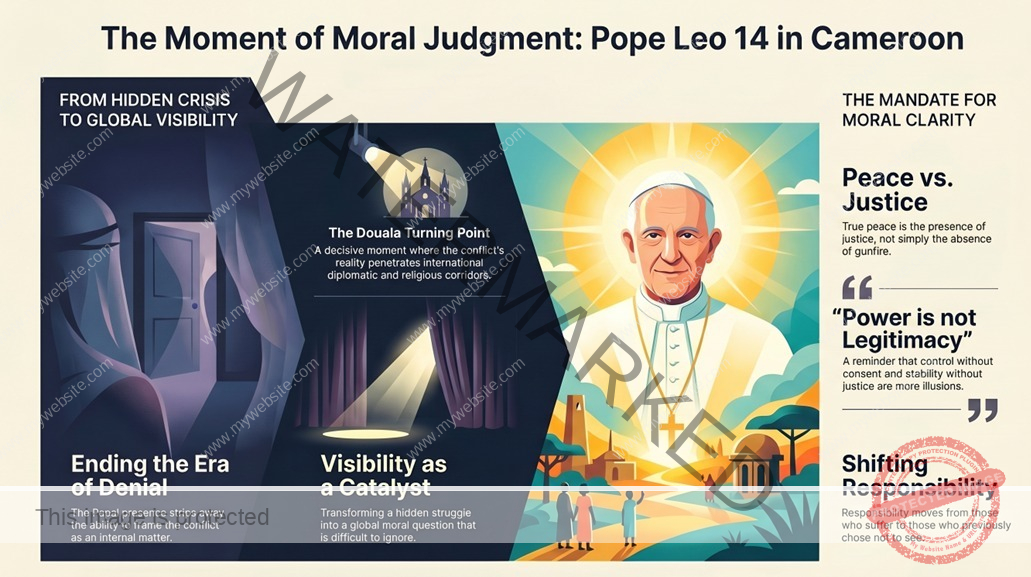
The most important outcome of this moment is a shift in responsibility. Before now, the burden was on the victims to speak, to prove their case, and to seek attention. Now that burden shifts to governments, international organizations, and global observers. They can no longer claim ignorance. The truth is visible. The question is no longer about information. It is about action.
By the Independentistnews Editorial desk
The visit of Pope Leo XIV to Africa on April 13, 2026, is not just a religious event. It is a powerful political and moral moment. This visit brings global attention to the conflict in Cameroon. For years, many countries and institutions have avoided taking clear positions. They have treated the crisis as something distant or complicated. Now, that is changing. The Pope’s presence forces the world to look directly at what is happening. It creates what can be called a moment of moral judgment. This means the situation is no longer something to be ignored or explained away. It must be faced.
For a long time, the Cameroon conflict has been described using soft and technical language. It has been called a security problem, an internal matter, or a complex crisis. These words made it easier for the international community to stay passive. But the Papal visit changes this. The situation is now being seen for what it really is: people suffering, communities displaced, and a conflict that continues because it is ignored. The key question is no longer what is happening. The facts are already known. The new question is why this has been allowed to continue.
The Vatican does not use military force or economic sanctions. Its power is moral. This kind of power works by exposing truth and challenging the legitimacy of those in authority. Three important ideas emerge. First, power is not the same as legitimacy. A government may control territory, but that does not mean the people truly accept it. Second, stability is not the same as justice. A country may appear calm, but if people are suffering, that calm is only temporary. Third, peace is not just the absence of violence. True peace requires fairness and justice, not just silence from guns. This message challenges governments that rely on force, international systems that prefer convenience, and observers who remain silent.
The gathering in Douala becomes a turning point. With large crowds expected, the situation becomes impossible to hide. The crisis becomes visible, ignoring it becomes more costly, and silence becomes harder to justify. The message to the world is simple. Now that you have seen and heard, what will you do.
For the Ambazonian movement, this moment is important but must be handled carefully. First, this is not immediate freedom. Recognition of suffering does not automatically bring political solutions. Second, unity must not mean losing identity. Calls for unity must not erase the distinct position of Ambazonia. Third, dialogue must not become a trap. Talks that avoid the real issues only delay solutions instead of solving them. The visit changes the conversation, but it does not end the struggle.
The most important outcome of this moment is a shift in responsibility. Before now, the burden was on the victims to speak, to prove their case, and to seek attention. Now that burden shifts to governments, international organizations, and global observers. They can no longer claim ignorance. The truth is visible. The question is no longer about information. It is about action.
The Independentistnews Editorial desk


Leave feedback about this