









Commentary

We are home to news on Cameroon and the CEMAC region. We are dedicated to honest and reliable reporting. We are the voice of the Cameroonian people and their fight for freedom and democracy at a time when the Yaoundé government is silencing dissent and suppressing democratic voices.

If Africa is to reclaim its place in the world, it must look not only to size, power, and old prestige. It must look to truth, courage, accountability, and institutional renewal. That is the promise Ambazonia must prepare to fulfill.
By Carl Sanders, Guest Writer The Independentist News | Soho, London
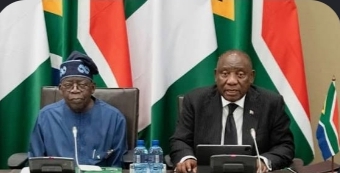
For decades, many Africans looked toward Nigeria and South Africa as the natural leaders of the continent. Their population, economies, diplomatic weight, liberation histories, cultural influence, and regional reach gave them a special place in Africa’s political imagination. Many believed that one or both would eventually speak with moral clarity for the continent, defend African sovereignty, and represent Africa with authority on the United Nations Security Council. That expectation has not been fulfilled.
Nigeria and South Africa remain important African countries, but importance is not the same as leadership. Leadership requires more than size, wealth, history, or diplomatic visibility. It requires moral courage, institutional discipline, internal stability, democratic credibility, and the willingness to defend African interests even when powerful external forces are involved.
On too many defining questions, the continent’s traditional giants have hesitated, compromised, or remained trapped by their own internal contradictions. During major crises such as Libya and Côte d’Ivoire, many Africans expected stronger continental leadership in defense of sovereignty, constitutional order, and African agency. Instead, external powers too often shaped outcomes while African states appeared divided, hesitant, or strategically dependent.
The problem did not end there. Today, Nigeria and South Africa face serious domestic challenges: economic pressure, insecurity, corruption concerns, unemployment, public distrust, political fragmentation, weak service delivery, and deep institutional strain. These challenges do not erase their importance, but they limit their ability to speak for Africa with the confidence and authority many once expected.
A country struggling to secure its own citizens cannot easily claim to secure Africa’s future. A state battling corruption, insecurity, and institutional decay cannot convincingly present itself as the model of continental renewal. A government that cannot fully restore trust at home will struggle to inspire trust abroad. This is why Africa must begin to look beyond old assumptions about leadership.
The future of the continent will not be shaped only by large states. It will also be shaped by emerging peoples, new political ideas, smaller nations with institutional ambition, and movements that place governance, justice, self-determination, and accountability at the center of Africa’s renewal.
In that sense, Ambazonia represents more than a local political question. It represents a test of whether Africa can still defend the principles it claims to honor: self-determination, democratic consent, rule of law, human dignity, accountable government, and freedom from domination.
Ambazonia’s importance does not lie merely in geography or population. It lies in the possibility of building a different kind of African state — one rooted in institutional truth rather than autocratic survival; public trust rather than fear; constitutional order rather than administrative command; and local accountability rather than centralized extraction.
The Ambazonian struggle challenges Africa to ask a larger question: what kind of leadership does the continent need in the twenty-first century?
Does Africa need states that merely inherit diplomatic prestige from the past, or does it need societies willing to build institutions worthy of the future? Does Africa need leaders who speak loudly at summits but remain silent when justice is inconvenient, or does it need nations that defend principle even when the price is high? Does Africa need power without accountability, or governance rooted in law, transparency, and public trust? The answer is clear. Africa’s next chapter must be built on integrity.
That is why Ambazonia matters. It offers the possibility of a new African example: a Republic committed to accountable institutions, merit-based public service, independent courts, decentralized governance, transparent administration, and the dignity of citizens. If properly built, Ambazonia can become not merely another state, but a demonstration that African freedom must mean more than flags, anthems, and seats at international tables.
Africa does not need another government that reproduces the failures of the old order. It needs a new standard. The continent’s traditional giants may still play important roles, but Africa’s future cannot depend on them alone. New voices must rise. New institutions must be built. New examples must be created.
Ambazonia has the opportunity to become one of those examples. Its struggle is not only about borders. It is about the future of governance in Africa. It is about whether a people can transform suffering into institutions, memory into justice, and self-determination into a Republic worthy of trust.
If Africa is to reclaim its place in the world, it must look not only to size, power, and old prestige. It must look to truth, courage, accountability, and institutional renewal. That is the promise Ambazonia must prepare to fulfill.
Carl Sanders, Guest Writer The Independentist News | Soho, London
Share This Post:
Reclaiming the Democratic Blueprint of Southern Cameroons, 1954–1961
The Anatomy of a Sluggish Denial: René Emmanuel Sadi and the Fake VP Decree
Related Post
WHEN YAOUNDÉ’S ALLIES SUDDENLY ENDORSE AYUK TABE: SOLIDARITY OR
THE SECOND RETURN: FROM THE PAIN OF SEPARATION TO
WHEN THE REGULATOR BENDS: WHAT THE VISION 4 AFFAIR
PROPHECY, POLITICS, AND THE AMBAZONIAN QUESTION (PART II) :
IF SOMALILAND MATTERS TO WASHINGTON, WHY NOT SOUTHERN CAMEROONS?
A CALL FOR GENERATIONAL RENEWAL: From Individual Leadership to