








News commentary

We are home to news on Cameroon and the CEMAC region. We are dedicated to honest and reliable reporting. We are the voice of the Cameroonian people and their fight for freedom and democracy at a time when the Yaoundé government is silencing dissent and suppressing democratic voices.

France lost because Spain was superior on the day. England lost because it surrendered control after taking the lead against Argentina. Neither defeat was caused by the racial composition of the team. Neither defeat changed the nationality of the players. When France wins, its Black players are French. When France loses, they remain French. When England wins, Bellingham and his Black teammates are English. When England loses—or when one of its players behaves poorly—they remain English. Anything less turns citizenship into a sporting contract, valid only while goals are being scored, medals are being won and the nation finds the player useful.
By Ali Dan Ismael, Editor-in-chief The Independentist News
Spain Won the Match—Race Entered the Argument
Spain defeated France at their semi final game, because it played the more coherent, disciplined and technically accomplished match. France possessed extraordinary individual talent, but Spain controlled the decisive spaces, restricted France’s celebrated attackers and prevented Didier Deschamps’s team from establishing sustained authority over the game. It was a sporting defeat that deserved a sporting explanation.
Yet the discussion surrounding the match quickly became larger than football. Questions were raised about whether a French team containing many players of African ancestry remained authentically French. The suggestion was unmistakable: the players’ skin color, family histories and immigrant backgrounds were being used to deny a nationality that their citizenship, upbringing and public service had already established.
The controversy exposed a familiar contradiction. When France wins, its Black players are presented as symbols of French greatness. Their goals belong to France, their medals enter French history and their faces illuminate national celebrations. When the team loses, however, some voices rediscover their African ancestry and question whether they ever represented France authentically. They are French when they produce glory. They become African when someone needs an explanation for failure. Citizenship That Depends on the Scoreboard
This is the fragility of conditional belonging. The players wear the French uniform, live under French law, represent French institutions and carry the expectations of French citizens. Yet their membership in the nation can still be treated as provisional because of their names, skin color, religion or family origins.
A white French player is ordinarily criticized as a French footballer who performed poorly. A Black French player may be criticized as an athlete and then subjected to an additional inquiry: Where is he really from? To whom is he truly loyal? What does his presence supposedly reveal about the changing character of France? That second inquiry is not football analysis. It is racial gatekeeping.
France did not lose because it possessed too many players of African descent. It lost because Spain performed better. Deschamps’s tactics may be questioned. The midfield structure may be criticized. Individual performances may be assessed. Kylian Mbappé and every other player should be accountable for what happened on the field. Equality does not mean immunity from criticism. It means that criticism should concern performance rather than ancestry.
Saying that a player failed to track an opponent is analysis. Saying that France failed because its players were insufficiently French is racism. Questioning Deschamps’s formation is legitimate. Suggesting that Black citizens merely borrow French identity is not.
The English and British Mirror
France is not alone in this contradiction. England also fielded a diverse team containing several prominent Black and mixed-heritage players. Strictly speaking, it was the England team rather than a British national team, because England, Scotland, Wales and Northern Ireland compete separately in international football. Nevertheless, public reaction to England’s players unfolds within the wider political and cultural environment of Britain.
England came close to reaching the World Cup final but surrendered control after taking the lead. The team became increasingly passive, invited pressure and allowed its opponent to seize the initiative. Tactical decisions designed to protect the advantage instead weakened England’s attacking outlet and left key players disconnected from the match.
That defeat also required a football explanation. England did not lose because its Black players lacked loyalty or discipline as a group. It lost because the team failed to manage the match collectively and because the opposition responded more effectively under pressure.
Black players should not be blamed collectively for a tactical collapse merely because they are among the most visible members of the team. At the same time, their race should not protect any individual player from legitimate criticism when conduct or performance falls below the required standard.
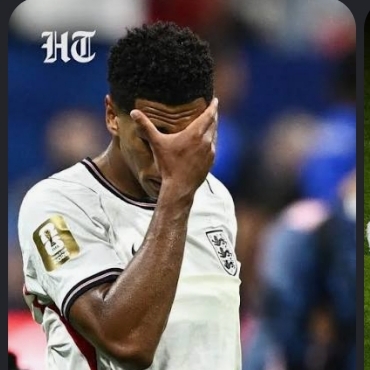
That distinction is especially important in the case of Jude Bellingham. Bellingham: Great Talent Does Not Cancel Discipline Bellingham is one of England’s most gifted and influential players. His confidence, competitive drive and ability to affect major matches have made him central to the national team. Yet leadership requires more than talent.
As England appeared to be succeeding, Bellingham sometimes projected an attitude that could be interpreted as unnecessarily confrontational. His response to criticism from the manager suggested that confidence was beginning to harden into defiance. A player is entitled to disagree with his coach, defend his teammates and express frustration. But disagreement must still be managed within the discipline of the team.
When a player publicly challenges managerial criticism immediately after becoming a central figure in a victory, confidence can begin to appear as entitlement. Success does not place any player above correction. A national team cannot function properly when an individual believes his talent gives him the right to reject authority whenever he disagrees with it.
This should be said clearly: criticizing Bellingham’s conduct is not automatically racist. A Black player must not be denied the right to display confidence, anger or ambition. Neither should race be used to excuse behavior that would be criticized in another player.
Bellingham should be judged according to the same standards applied to every national leader on the field. Was his disagreement justified? Was it expressed professionally? Did it strengthen the team, or did it elevate the player above the collective? Did his conduct demonstrate competitive courage, or did it reveal difficulty accepting authority when he believed the team was winning?Those are legitimate questions. They concern leadership, maturity and discipline—not racial belonging.
The Danger of the Opposite Double Standard
The racial debate becomes distorted when it moves between two extremes. One side treats Black athletes as permanent outsiders whose failures confirm that they never belonged. The other sometimes treats any criticism of a prominent Black player as evidence of racism. Both positions are inadequate.
A democratic and multiracial society must be capable of defending a citizen’s unconditional belonging while still holding that citizen accountable. Bellingham can be fully English and still behave poorly. Mbappé can be fully French and still deliver an ineffective performance. A Black player can disagree with a white coach without the disagreement becoming a racial uprising. A coach can discipline a Black player without automatically acting from racial prejudice. Citizenship must be unconditional. Accountability must be universal. This is the balance mature nations must achieve.
The question should never be whether a Black athlete has behaved well enough to remain French or English. Nationality is not a behavioral prize. The proper question is whether the player met the professional and ethical standards attached to his role. Race should become neither an accusation nor an exemption. Britain Has Seen Conditional Belonging Before
Britain has already witnessed how quickly admiration can turn into racial hostility. Black English players have been celebrated as national heroes when they scored decisive goals, only to become targets of abuse after missing penalties or making mistakes. Before the failure, they represented England. After the failure, some people suddenly treated their Blackness as more significant than their citizenship.
The message was unmistakable: victory could make them national heroes, but defeat could expose them once again as conditional members of the country. That history should caution British commentators when assessing Bellingham. His conduct should be examined honestly, but criticism should not descend into stereotypes about Black aggression, arrogance or emotional instability. Nor should one moment of indiscipline be used to question whether he represents England authentically. A player can be wrong without becoming foreign. A citizen can fail without losing his place in the nation.
The same society that condemns a Black player after a mistake may celebrate him again after his next goal. That reversal reveals how easily public belonging can become tied to sporting usefulness. A citizen should not have to score before the nation recognizes him.
Different Coaches, Similar Questions
The semifinals French and English defeats also raised important questions about leadership. Deschamps governed France through a long period of remarkable success. His approach emphasized structure, defensive responsibility, hierarchy and tournament survival. Against Spain, however, his system appeared unable to release the full creative power of the team.
England faced a different version of the same problem. After taking the lead, the team became increasingly cautious. The attempt to protect the advantage surrendered the initiative to an opponent whose technical ability and attacking intensity demanded continued resistance.
In both cases, the defeats should generate debate about whether managerial caution restricted highly talented teams. But tactical disagreement should not be racialized. France’s Black players were not engaged in an ethnic confrontation with Deschamps merely because some may have disagreed with his approach. Bellingham’s tension with his manager did not transform England into a conflict between a Black generation and a white coach.
Teams contain ambition, frustration, hierarchy and competing ideas. Strong players often want greater freedom. Coaches insist upon collective discipline. These tensions exist across race and nationality. The responsible question is whether leadership converted individual talent into collective purpose. In the decisive matches, France and England failed to do so.
The Colonial Shadow Behind Modern Football
The discussion cannot be separated entirely from European history. France and Britain built global empires, moved people across borders, extracted labor and resources, created new political relationships and later received migration from former colonies and territories.
Modern European societies were shaped partly by those histories. Their national teams reflect that reality. Yet some Europeans continue to enjoy the achievements produced by diversity while resisting the social equality that diversity requires. They celebrate athletes of African descent as evidence of national greatness but become uncomfortable when those athletes speak independently, challenge authority or demand recognition beyond sport.
The Black athlete is welcomed as a symbol of successful integration so long as he performs, smiles and avoids unsettling the national story. When he becomes outspoken, politically conscious, highly confident or unsuccessful, his ancestry may suddenly be presented as evidence against him.
This is why the debate surrounding France and England matters. It is not merely about whether diverse teams can win football tournaments. They clearly can. It is about whether diverse nations can accept citizens who are visible, ambitious, imperfect and fully equal.
The Difference Between Confidence and Entitlement
Bellingham’s conduct introduces another important question. National belonging does not remove the obligation of personal discipline. A player who has experienced racial prejudice may still behave arrogantly. A player whose citizenship has been unfairly questioned may still challenge authority in an inappropriate way. These realities can exist at the same time.
It is possible to defend Bellingham from racial exclusion while also questioning his behavior. Indeed, treating him as an equal requires exactly that. Excusing conduct merely because the player is Black would replace one double standard with another.
Great players often possess unusual confidence. That confidence enables them to accept pressure, demand the ball and attempt what others fear to try. But the same quality can become destructive when the player begins to believe that individual brilliance places him above the team.
Leadership requires knowing when to challenge authority and when to respect collective order. It requires emotional control when the team is winning as well as when it is losing. The true measure of maturity is not confidence in moments of success, but discipline when success creates the temptation to become larger than the institution one represents. No player—not Bellingham, Mbappé or anyone else—should become greater than the national team.
Belonging Must Survive Failure
The true test of a multiracial nation is not how it treats minority citizens when they are useful. It is how it treats them when they fail. Can Mbappé remain fully French after an ineffective performance? Can Bellingham remain fully English when his confidence becomes confrontational? Can a Black player miss a penalty without having his citizenship questioned? Can he criticize his coach and still be judged as an individual rather than as a representative of an entire race? A mature nation must answer yes.
France’s players should not be transformed into Africans only when France loses. England’s Black players should not become outsiders when a tournament ends painfully. Their citizenship does not expand with victory or contract with defeat.
At the same time, equality requires honest standards. Bellingham’s brilliance should not place him above discipline. Mbappé’s status should not insulate him from criticism. Deschamps and England’s manager should not escape scrutiny simply because they possess authority. Every person within the national team must remain accountable for performance and conduct.
That is what equality looks like: unconditional belonging joined to equal responsibility. France lost because Spain was superior on the day. England lost because it surrendered control after taking the lead against Argentina. Neither defeat was caused by the racial composition of the team. Neither defeat changed the nationality of the players. When France wins, its Black players are French. When France loses, they remain French. When England wins, Bellingham and his Black teammates are English. When England loses—or when one of its players behaves poorly—they remain English. Anything less turns citizenship into a sporting contract, valid only while goals are being scored, medals are being won and the nation finds the player useful.
A country that embraces Black citizens only when they deliver victory has not embraced them. It has merely rented their talent.
Ali Dan Ismael, Editor-in-chief The Independentist News
Share This Post:
Trump’s New Vision of the US Economy—and the “War” Against the British Imperial Order: Where Ambazonia’s strategic interests lie in a changing international economy
Brenda Biya’s Explosive Claims: What the First Daughter Revealed—and What Remains Unproven
Related Post
The Government of the Federal Republic of Ambazonia (in
À PARAÎTRE EN DÉCEMBRE 2026: UN AUDIT DE L’ÉCONOMIE
WHO BORROWS? WHO OWNS? WHO EXITS? Cameroon’s FCFA 250
COMING DECEMBER 2026: AN AUDIT OF PAUL BIYA’S ECONOMY
ADF KIDNAPPING AND ATTACK IN WOWO VILLAGE, Thirteen Residents
DONGA MANTUNG POPULATION RAISE ALARM ON ALLEGED KIDNAPPING, ASSAULT,