






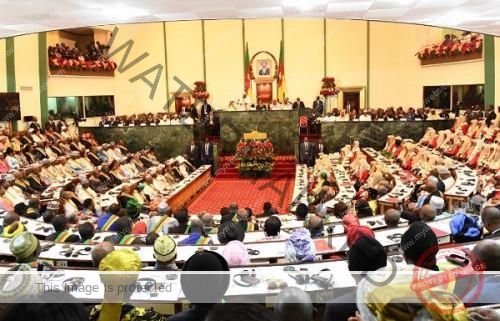





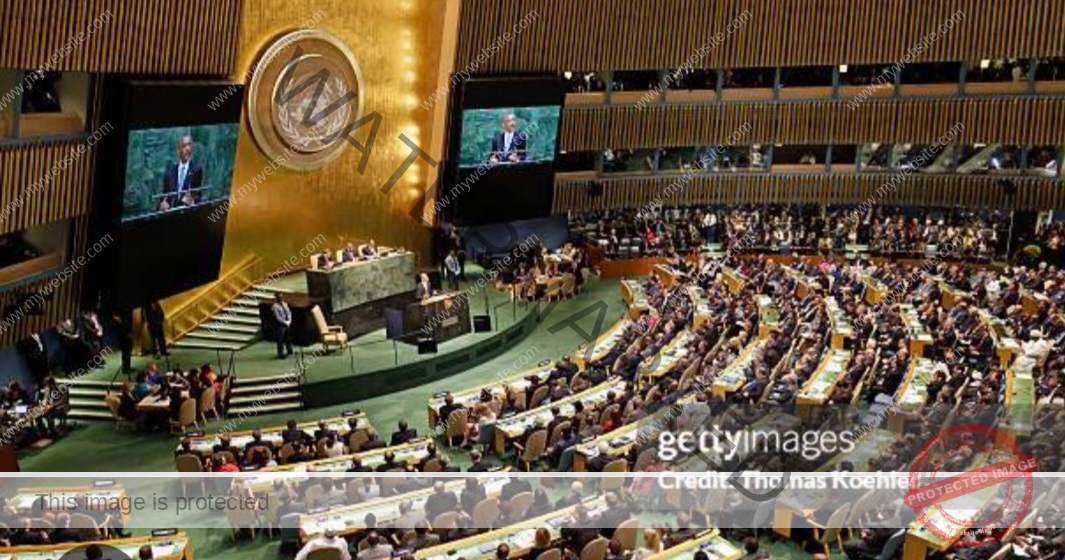
The 193-member United Nations may speak, but decisive enforcement remains controlled by five powers. The global economy may diversify, but new financial relationships can reproduce old forms of dependency if smaller nations fail to govern them wisely.
By Ali Dan Ismael, Editor-in-chief The Independentist News
The United Nations Security Council was created after the Second World War to prevent another global catastrophe. Yet its structure also preserved the hierarchy established in 1945. Five victorious powers—the United States, Britain, France, the Soviet Union, succeeded by Russia, and China—received permanent seats and veto power. Nearly every other country entered the new international system without an equivalent voice.
The United Nations now has 193 member states, but decisive action on international peace and security remains controlled by the five permanent members of the Security Council. The General Assembly can debate, recommend, condemn, investigate, and mobilize international opinion. United Nations agencies can implement programs within their mandates. However, binding Security Council enforcement—including sanctions, peace-enforcement measures, and authorization of military force—requires at least nine Council votes and cannot proceed if any permanent member casts a veto.
All five permanent members need not vote affirmatively because an abstention does not block a resolution. In practice, however, no coercive Security Council mandate can survive the active opposition of the United States, Britain, France, Russia, or China. Even if most of the world supports action, one permanent member can prevent it.
This is the central chokepoint of the post-1945 international order. The 193-member United Nations may speak, but when binding enforcement is required, the institutional gate remains controlled by five powers.
Decolonization Without Complete Liberation
The Security Council does not directly extract petroleum, gas, minerals, timber, fisheries, or strategic land. It nevertheless shapes the environment in which extraction occurs by influencing which conflicts receive urgent attention, which governments face sanctions, which interventions are authorized, which peacekeeping operations are created, and which crises remain buried beneath diplomatic silence.
Decolonization changed flags across Africa, Asia, the Caribbean, and the Pacific, but it did not dismantle every economic and strategic structure created under empire. Former colonial powers retained influence through currencies, trade agreements, military partnerships, corporate concessions, intelligence relationships, diplomatic networks, and privileged access to strategic resources.
Newly independent countries often inherited borders, laws, bureaucracies, transportation systems, and economies designed for colonial extraction rather than national integration and shared prosperity. Railways and roads connected mines, plantations, and forests to ports but frequently failed to connect communities to schools, markets, hospitals, or one another.
Formal independence therefore did not always produce economic sovereignty. In many countries, colonial extraction was reorganized through multinational corporations, politically connected domestic intermediaries, protected monopolies, unequal contracts, debt arrangements, and external security partnerships. Administrators changed, but resources continued to leave while poverty remained.
The post-1945 system made sovereignty formally universal while keeping decisive international authority concentrated. African states could join the United Nations, address the General Assembly, and vote on resolutions, but they could not compel the Security Council to act against the interests of a veto-holding power. The General Assembly embodied numerical equality. The Security Council preserved geopolitical hierarchy.
The Veto and Selective Enforcement
The veto does more than stop resolutions. It shapes what governments, corporations, armed movements, and international institutions consider politically possible. A permanent member can protect an allied government, delay accountability, weaken sanctions, obstruct referrals, restrict peacekeeping mandates, or discourage serious diplomatic engagement.
International law can therefore appear universal in language but selective in enforcement. Similar conduct may receive different treatment depending on alliances, commercial relationships, strategic geography, historical loyalties, and access to valuable resources. One government may face sanctions and isolation, while another receives diplomatic protection despite comparable allegations.
Governments considered strategically useful can survive serious accusations of corruption, repression, or human-rights abuses. Others may face rapid pressure when they challenge powerful interests. The decisive distinction is not always the severity of the conduct, but the geopolitical position of the actor involved.
This does not mean that every Security Council decision is part of an extraction conspiracy. The Council has authorized peacekeeping operations, supported ceasefires, imposed arms embargoes, facilitated humanitarian access, protected civilians, and managed genuine threats to international security.
Its central weakness is structural selectivity. It can restrain weaker states more easily than powerful ones and enforce international law more effectively where the Permanent Five agree. It becomes far less effective when accountability reaches one of those powers, its allies, or its strategic interests. The problem is not merely power. It is power without equal accountability.
Africa Without a Permanent Voice
Africa is especially disadvantaged by this arrangement. The continent possesses enormous reserves of petroleum, natural gas, cobalt, uranium, gold, diamonds, timber, agricultural land, fisheries, freshwater, and critical minerals essential to the global economy. Yet it has no permanent seat and no veto on the Security Council.
African conflicts occupy a substantial part of the Council’s agenda, and African countries host numerous peacekeeping and political missions. Nevertheless, no African state possesses permanent authority over the Council’s final decisions.
Countries with colonial histories, multinational corporations, military partnerships, intelligence interests, and resource dependencies in Africa can help determine whether African crises receive intervention, sanctions, delay, or silence. Africa can therefore become the subject of Security Council decisions without being an equal author of them.
The contradiction is profound. A continent of more than fifty states and over a billion people remains excluded from permanent representation in the institution responsible for binding international security decisions.
From Colonial Extraction to Financial Dependence
The post-1945 extraction system rarely required direct occupation. Influence could operate through contracts, currencies, debt, diplomatic recognition, military assistance, corporate concessions, political protection, and access to international financial institutions.
Governments could formally own national resources while citizens remained excluded from contracts, revenues, environmental decisions, and development benefits. Raw materials could leave through modern ports while surrounding communities lacked reliable schools, hospitals, water, electricity, and roads.
The system became less visible but not necessarily less extractive. Flags changed, but production often remained directed outward. Political sovereignty arrived while economic structures continued exporting raw materials and importing expensive finished products.
The dollar-centered financial system became part of this order. The dollar’s role in reserves, trade invoicing, international banking, debt issuance, and commodity markets gave the United States considerable structural influence. Access to dollar clearing and Western financial networks could facilitate trade, but exclusion could severely constrain governments, companies, and banks. This financial concentration is now being challenged—not by the sudden collapse of the dollar, but by gradual diversification.
De-Dollarization: A Transition, Not Yet a Revolution
De-dollarization does not necessarily mean abandoning the dollar. It generally describes efforts by countries to settle more bilateral trade in domestic currencies, accumulate gold, diversify foreign-exchange reserves, establish alternative payment systems, and reduce exposure to sanctions or disruptions in dollar-based finance.
The trend is real but should not be exaggerated. The dollar remains the world’s dominant reserve currency. According to the International Monetary Fund, it accounted for approximately 57 percent of disclosed global foreign-exchange reserves in the first quarter of 2026. Its share has declined from earlier decades, but it remains far ahead of every competing currency. The Chinese renminbi still represents only a small proportion of global reserves. IMF COFER data
The renminbi’s use in cross-border payments has nevertheless expanded. SWIFT reported that it was the fifth most active currency for global payments by value in September 2025, with a share of 3.17 percent. That indicates growing international use, but not displacement of the dollar or euro. SWIFT RMB Tracker
The emerging order is therefore likely to be more multicurrency rather than completely post-dollar. The dollar may remain dominant while the euro, renminbi, gold, regional currencies, and bilateral settlement arrangements gain larger supporting roles.
Spain, China, and the Yuan Claim
Claims that Spain has broadly abandoned the dollar in favor of the Chinese yuan should be treated cautiously. Spain and China have significantly deepened trade and investment relations, and companies may use renminbi settlement where commercially advantageous. China is Spain’s largest trading partner outside the European Union, and bilateral goods trade reportedly exceeded $55 billion in 2025.
In April 2026, Spain and China signed agreements intended to deepen economic cooperation, encourage sustainable investment, and improve access for Spanish products and services to the Chinese market. However, the official Spanish announcement did not establish that Spain had adopted the yuan as a national trade or reserve currency or withdrawn from the euro-dollar financial architecture. Government of Spain
Spain remains a member of the European Union and the euro area. Its strengthening relationship with China is better understood as economic diversification than wholesale monetary realignment. Nevertheless, the willingness of a major European economy to expand financial and commercial cooperation with China illustrates how countries are increasingly seeking options beyond exclusive dependence on traditional Atlantic relationships.
The important development is not that Spain has abandoned the dollar. It has not. The important development is that even established Western economies increasingly recognize the commercial importance of China and the emerging multicurrency system.
The Surge of BRICS
The rise of BRICS represents a broader challenge to the concentration of political and financial power in institutions dominated by the West. What began with Brazil, Russia, India, China, and South Africa has expanded into a grouping of eleven full members, alongside an additional network of partner countries. The 2025 BRICS summit brought together eleven members and ten partner countries, illustrating the bloc’s expanding political reach. Official BRICS summary
BRICS is not yet a unified military alliance, common market, or monetary union. Its members have different political systems, strategic priorities, currencies, and relationships with the United States and Europe. Internal disagreements limit how far the bloc can act as a single geopolitical force.
Its significance lies elsewhere. BRICS provides emerging powers with a platform for demanding reform of global governance, increasing trade in domestic currencies, developing financial alternatives, expanding South–South cooperation, and reducing dependence on institutions in which Western states retain disproportionate influence.
The New Development Bank also offers an additional source of development financing, although it cannot yet rival the scale, liquidity, or global reach of the World Bank, IMF, or major Western capital markets. BRICS is therefore not replacing the existing order overnight. It is helping create competing options within it.
That process weakens the idea that the post-1945 Western institutional structure is the only available route to financing, diplomacy, trade, and development.
The Security Council and the Emerging Multipolar Order
The growth of BRICS and monetary diversification exposes a widening contradiction. The world economy is becoming more multipolar, but the Security Council remains anchored in the power distribution of 1945.
India is one of the world’s largest economies but has no permanent seat. Africa has no permanent representation. Brazil remains excluded despite its regional and global significance. Meanwhile, Britain and France retain individual vetoes based largely on the settlement following the Second World War.
As economic power disperses, pressure to reform international political institutions will intensify. Countries will increasingly question why their markets, populations, resources, financial contributions, and security responsibilities are not reflected in permanent decision-making authority.
BRICS will not automatically democratize global governance. China and Russia already possess Security Council vetoes and will defend their own interests. New power centers can reproduce old inequalities if they are not governed by transparency, law, and accountability. Replacing one dominant bloc with another would not liberate smaller nations. The real opportunity is not to exchange Western dependency for Eastern dependency. It is to expand strategic choice.
What This Means for Ambazonia
For Ambazonia, de-dollarization and the growth of BRICS present both opportunities and dangers. First, an emerging multipolar system could widen diplomatic space. Ambazonia should not frame its future as a choice between the West and BRICS. It should build principled relationships with the United States, European Union, Britain, Commonwealth, African Union, China, India, Brazil, the Gulf states, and other emerging partners. Diplomatic diversification would reduce dependence on any single external patron.
Second, Ambazonia’s natural resources could gain additional markets and investors. Critical minerals, energy, agriculture, forestry products, fisheries, maritime access, technology, and infrastructure could attract Western, Asian, African, and Middle Eastern capital. Competition among investors could improve national bargaining power—but only if contracts are transparent and institutions are capable of preventing corruption and predatory concessions.
Third, a future Ambazonian monetary and reserve strategy should be diversified. The Republic should not recklessly reject the dollar, which will remain central to global trade and finance. Nor should it become excessively dependent on the renminbi, euro, or any single currency. A prudent reserve framework could combine major currencies, gold, and highly liquid assets while matching reserves to the currencies used in trade, debt, and essential imports.
Fourth, Ambazonia should build the capacity to settle legitimate trade through several currencies and payment systems. Its banking laws, digital infrastructure, central monetary institutions, anti-money-laundering protections, cybersecurity systems, and financial reporting standards should be compatible with both established and emerging markets.
Fifth, alternative development financing could help fund ports, power systems, railways, roads, digital infrastructure, universities, and industrial development. But financing from BRICS institutions, China, Western lenders, or private capital must be judged by the same standards: affordability, transparency, environmental responsibility, local employment, technology transfer, competitive procurement, and national benefit.
A loan does not become sovereign merely because it comes from the Global South. Debt can create dependency whether written in dollars, euros, or yuan.
Sixth, Ambazonia must avoid becoming a battlefield for competing blocs. Its value should arise from stability, lawful investment, transparent institutions, maritime access, human capital, and responsible resource management—not from allowing any foreign power to dominate its security, ports, minerals, communications, or political system.
Finally, the changing global order strengthens the case for strategic relevance. Ambazonia must show that its emergence would contribute to lawful commerce, Gulf of Guinea security, diversified supply chains, transparent resource governance, democratic stability, and peaceful regional development. A small nation gains influence not by choosing the loudest patron, but by becoming useful, credible, predictable, and principled.
The Southern Cameroons Question in a Changing World
Historical evidence, legal arguments, documented grievances, and prolonged suffering do not automatically generate international action. A people may possess a compelling claim to self-determination and remain outside serious diplomatic consideration if no influential power regards the issue as strategically important.
The rise of BRICS does not automatically solve this problem. Several BRICS members strongly emphasize state sovereignty and territorial integrity and may hesitate to support separatist or self-determination movements. Western governments may also prioritize established borders and relationships with recognized states.
Ambazonia must therefore avoid assuming that rivalry among great powers will naturally produce recognition. It must instead build a disciplined diplomatic case showing that a negotiated settlement would reduce conflict, protect civilians, strengthen regional trade, secure investment, and contribute to international stability.
Moral legitimacy must be converted into diplomatic capability. Ambazonia must become strategically relevant without surrendering its principles.
Reforming the Chokepoint
Security Council reform is no longer merely a question of fairness. It is becoming a requirement for institutional survival. An international security system that excludes Africa, India, Brazil, and other major regions and powers from permanent representation will increasingly lose legitimacy as economic influence moves beyond the old Atlantic order.
Reform should include meaningful permanent African representation, stronger participation for underrepresented regions, limitations on veto use in cases of mass atrocities, public justification of vetoes, and greater responsibility for the General Assembly when the Council becomes paralyzed.
No reform will eliminate geopolitical rivalry. But it could reduce the ability of one state to transform the suffering of millions into procedural deadlock.
The Chokepoint Is Beginning to Move
The post-1945 system transformed colonial control without eliminating the mechanisms that sustained extraction. Direct imperial administration declined, but economic dependency, diplomatic protection, corporate privilege, unequal contracts, currency concentration, and selective enforcement survived.
The Security Council became the political chokepoint of that order. The dollar-centered financial system became one of its economic chokepoints. Both are now facing pressure from a more multipolar world.
The dollar is not disappearing. BRICS is not yet replacing the Western order. The yuan is not about to become the single currency of world commerce, and Spain has not abandoned the euro-dollar system. But the direction of travel is unmistakable: countries are seeking alternatives, diversifying partnerships, accumulating gold, expanding local-currency trade, and questioning institutions that preserve the privileges of another era.
For Ambazonia, the answer is neither blind Atlanticism nor blind allegiance to BRICS. It is strategic diversification supported by strong institutions, transparent contracts, monetary prudence, democratic legitimacy, and disciplined diplomacy.
The 193-member United Nations may speak, but decisive enforcement remains controlled by five powers. The global economy may diversify, but new financial relationships can reproduce old forms of dependency if smaller nations fail to govern them wisely.
That is the central lesson of the changing order: multipolarity creates choices, but institutions determine whether those choices become sovereignty or merely a new form of extraction. Ambazonia must prepare for both
Ali Dan Ismael, Editor-in-chief The Independentist News



Leave feedback about this