









Editorial commentary

We are home to news on Cameroon and the CEMAC region. We are dedicated to honest and reliable reporting. We are the voice of the Cameroonian people and their fight for freedom and democracy at a time when the Yaoundé government is silencing dissent and suppressing democratic voices.

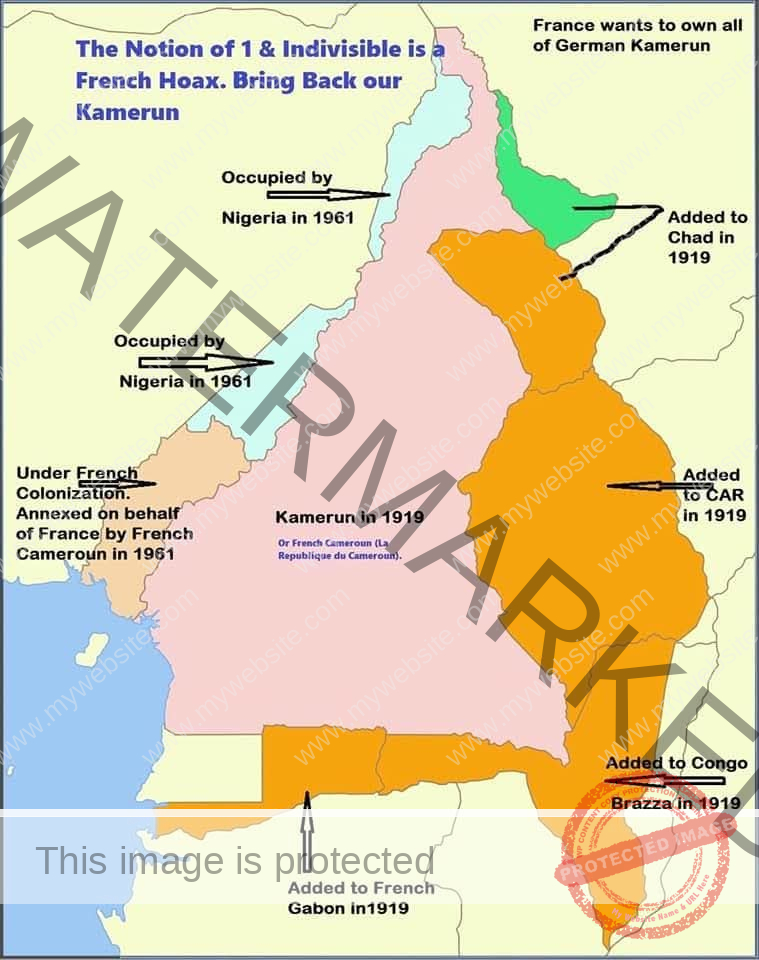
The slogan “one and indivisible” may function effectively as political rhetoric, but history is rarely so simple. The territory once known as German Kamerun disappeared legally over a century ago. What followed were decades of separate international administration under different colonial powers and distinct legal systems.
By Timothy Enongene, Associate Editor-in-Chief, The Independentist News
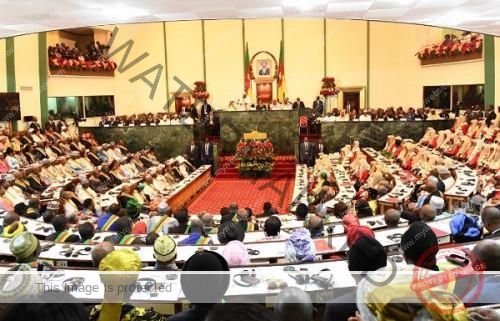
YAOUNDÉ – 18 May 2026 – For decades, the political establishment in Yaoundé has promoted a foundational narrative to justify its continued control over the territory historically known as the former British Southern Cameroons. According to this narrative, the territories presently administered by the Republic of Cameroon were supposedly always “one and indivisible,” united historically under German colonial rule before being temporarily separated by European powers after the First World War.
This argument has become one of the central ideological pillars used to delegitimise the political grievances and self-determination claims emerging from Southern Cameroons, now widely referred to by many of its inhabitants as Ambazonia.
Yet when examined through the lenses of international law, colonial administrative history, League of Nations mandates, United Nations trusteeship arrangements, and African post-colonial border principles, the claim of an eternal and indivisible Cameroun becomes far more legally and historically complicated than official state narratives often suggest.
The historical record demonstrates that while German Kamerun existed as a colonial protectorate between 1884 and 1916, it ceased to exist entirely after Germany’s defeat in the First World War. What emerged afterward were not temporary provinces awaiting reunification, but two internationally distinct territories administered separately for over four decades under different colonial powers, legal traditions, educational systems, and political institutions.
The continuing conflict surrounding Southern Cameroons therefore cannot be understood simply as an internal regional dispute. It is fundamentally tied to unresolved questions regarding decolonisation, constitutional legitimacy, federalism, and the legal character of the 1961 union between the former British Southern Cameroons and the already independent Republic of Cameroun.
German Kamerun: A Colonial Protectorate, Not a Sovereign Union
The historical argument frequently advanced by Yaoundé rests heavily upon the existence of German Kamerun, established by the German Empire in 1884 during the Scramble for Africa.
However, German Kamerun was not a sovereign democratic state created through the voluntary union of equal peoples. It was a colonial protectorate administered by imperial Germany for commercial, military, and strategic purposes. Like many colonial territories of the era, its borders were drawn externally by European imperial powers rather than through indigenous constitutional consent.
The German protectorate itself was short-lived. During the First World War, Allied forces composed primarily of British, French, and Belgian troops defeated Germany in Kamerun. By 1916, German authority had effectively collapsed. The territory was subsequently partitioned between Britain and France under international arrangements formalised after the war.
The decisive legal turning point came with the Treaty of Versailles of 1919, under which Germany formally renounced its overseas colonial claims. Under Article 119, Germany surrendered all rights and titles over its former colonies. German Kamerun therefore ceased to exist legally and permanently. This point is critical. The German colonial entity was dissolved internationally. It did not survive as a dormant sovereign state awaiting future restoration.
The Emergence of Two Distinct International Territories
Following the dissolution of German Kamerun, the League of Nations established separate mandate territories administered independently by Britain and France. These became: French Cameroun and The British Cameroons. This separation was not symbolic or administrative convenience alone. It produced two profoundly different political and legal systems over several decades.
French Cameroun was governed under French civil law traditions, French administrative centralisation, and French educational structures. British Cameroons, by contrast, evolved under British common law traditions, Anglo-Saxon educational systems, local government institutions, and British administrative practices linked closely to Nigeria.
The distinction deepened further after the League of Nations mandate system transitioned into the United Nations Trusteeship framework following the Second World War. For more than forty years, these territories developed separately under international supervision. They were administered separately. They were educated separately. They were governed separately. They evolved politically and constitutionally along separate paths. The claim that these territories remained naturally “one and indivisible” throughout this period becomes increasingly difficult to sustain when viewed against the actual historical and legal record.
1960 and the Principle of Uti Possidetis Juris
Another major legal issue concerns the territorial boundaries of the Republic of Cameroun at independence. On 1 January 1960, French Cameroun achieved independence as La République du Cameroun. Under the international legal principle of uti possidetis juris, newly independent African states inherited the colonial administrative borders existing at the moment of independence.
This doctrine later became one of the cornerstones of post-colonial African territorial stability and was subsequently reinforced through the principles later reflected in the Constitutive Act of the African Union. At the moment of independence in January 1960, British Southern Cameroons remained a separate United Nations Trust Territory under British administration. It was not legally part of the sovereign territory of La République du Cameroun. This fact remains central to the arguments advanced by many Southern Cameroons legal scholars, activists, and political organisations today.
Their position is that the internationally recognised borders of independent Cameroun in 1960 did not include Southern Cameroons and that any subsequent political union required a clear, mutually negotiated, and constitutionally valid legal foundation.
The 1961 Plebiscite and the Federal Promise
The next major turning point came in 1961. The United Nations organised a plebiscite in British Cameroons to determine the future of the territory. Notably, the population was not offered the option of full sovereign independence as a separate state. Instead, voters were presented with only two alternatives: integration with Nigeria or joining the Republic of Cameroun. Northern Cameroons voted to join Nigeria. Southern Cameroons voted to join the Republic of Cameroun.
However, supporters of the Southern Cameroons cause argue that this vote was widely understood at the time as support for a federal union between two equal political entities rather than absorption into a unitary state. The federal structure established in 1961 appeared initially to recognise this duality through the creation of the Federal Republic of Cameroon, composed of: East Cameroon and West Cameroon.
Yet over time, critics argue that the federal arrangement was progressively dismantled through constitutional centralisation, culminating in the 1972 referendum that abolished the federation entirely and replaced it with a unitary state structure dominated politically from Yaoundé. To many in Southern Cameroons, this represented not constitutional evolution, but the gradual erosion of the original federal compact.
The Continuing Legal Debate Over the Union
One of the most disputed aspects of the entire historical question concerns the legal documentation surrounding the 1961 union. Some Southern Cameroons scholars and political movements argue that no formally deposited bilateral union treaty exists within United Nations archives under Article 102 of the UN Charter. They contend that this absence raises serious questions regarding the constitutional and international legal basis of the union.
Supporters of the Cameroonian state strongly reject this interpretation. They argue that the constitutional arrangements established after the Foumban Conference, combined with subsequent constitutional practice and international recognition, sufficiently established the legality of the union. The dispute therefore remains unresolved politically and academically. What cannot reasonably be disputed, however, is that the legal and constitutional foundations of the 1961 arrangement continue to generate profound disagreement more than six decades later.
From Constitutional Dispute to Armed Conflict
Over the past decade, tensions surrounding language rights, legal systems, political representation, educational autonomy, and state centralisation escalated dramatically. What began as protests by lawyers and teachers in 2016 evolved into a wider political and armed conflict affecting large portions of the English-speaking regions.
Numerous international organizations, human rights groups, and observers have documented: civilian abuses, village burnings, arbitrary detentions, attacks on schools, kidnappings, separatist violence, and large-scale humanitarian suffering. The conflict has produced deep trauma across communities throughout both North West and South West regions.
While narratives surrounding responsibility differ sharply depending on political perspective, the historical roots of the conflict remain closely connected to unresolved questions surrounding identity, federalism, constitutional legitimacy, and the legacy of the 1961 political arrangement.
History Cannot Be Reduced to Slogans
The slogan “one and indivisible” may function effectively as political rhetoric, but history is rarely so simple. The territory once known as German Kamerun disappeared legally over a century ago. What followed were decades of separate international administration under different colonial powers and distinct legal systems. The eventual union of 1961 emerged through a complex and still contested political process whose interpretation remains sharply disputed today.
Whether one supports Cameroonian unity, federal restructuring, or Southern Cameroons self-determination, the historical record demands intellectual honesty. The question is not whether German Kamerun once existed as a colonial protectorate. It did. The real question is whether that colonial entity created an eternal and unquestionable political union binding future generations forever regardless of later international legal developments, separate trusteeship arrangements, constitutional disputes, and contested decolonisation processes. That debate remains unresolved. And until it is addressed honestly, the conflict surrounding Southern Cameroons is unlikely to disappear.
Timothy Enongene, Associate Editor-in-Chief, The Independentist News
Share This Post:
The Tribulations of Christopher Fobeneh Anu:A Cautionary Editorial on Political Opportunism, Fragmentation, and the Crisis of Credibility.
Kemi Badenoch and the Battle for Britain’s Post-Populist Future
Related Post
QUEBEC VOTED FOR INDEPENDENCE AS AN OPTION, WHY WAS
PROPHECY, POLITICS, AND THE AMBAZONIAN QUESTION (PART III) Why
WHEN YAOUNDÉ’S ALLIES SUDDENLY ENDORSE AYUK TABE: SOLIDARITY OR
THE SECOND RETURN: FROM THE PAIN OF SEPARATION TO
WHEN THE REGULATOR BENDS: WHAT THE VISION 4 AFFAIR
PROPHECY, POLITICS, AND THE AMBAZONIAN QUESTION (PART II) :