










To connect with God is not merely to attend more services, donate more money, or repeat more religious language. It is to become more truthful, more courageous, more accountable, more compassionate, more productive, more committed to justice, and more determined to leave behind a functioning moral and economic inheritance for the generations yet unborn. That is the spiritual and economic revival Cameroon and Ambazonia require.
By Judith Elondo
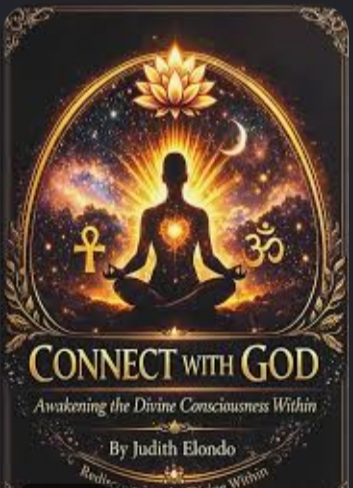
Author of Connecting with God
Website: www.judithspiritualteaching.com
Africa Knew God Before the Missionary Arrived
Africa did not discover God through Western missionaries. Long before the arrival of European churches, African communities believed in a Supreme Being, recognized sacred obligations, maintained systems of morality, honored the dead, regulated leadership, protected communal land, preserved ecological knowledge, and understood the human person through relationships extending across generations.
Missionaries brought particular Christian doctrines and institutions. They also contributed to literacy, formal education, language development, medicine, and social organization. But Christianity often arrived entangled with colonial government, European commerce, racial hierarchy, and cultural classification. The missionary did not enter an empty spiritual landscape. He entered a spiritually developed society and frequently renamed what he found.
African spirituality became superstition. African healing became witchcraft. African names became pagan. African ceremonies became darkness. African sacred spaces became undeveloped property. African ancestors became demons. The European church became civilization.
The African who wanted education, employment, respectability, or administrative advancement was encouraged to distance himself from his spiritual inheritance. Conversion was not always presented simply as a relationship with God. It frequently became a process of cultural evacuation.
Cameroon’s Great Religious Contradiction
Cameroon is one of the most visibly religious societies in Africa. Churches, mosques, prayer houses, crusades, Marian groups, charismatic fellowships, prophetic ministries, revival movements, traditional societies, and spiritual consultations are everywhere. Yet the country remains burdened by corruption, political repression, institutional distrust, economic exclusion, unemployment, ethnic tension, displacement, and the prolonged conflict in Southern Cameroons/Ambazonia.
This contradiction should disturb every serious believer. How can a society pray so frequently and lie so easily? How can religious leaders bless public officials whose conduct they are unwilling to examine? How can people give generously to churches while public institutions collapse around them? How can political elites occupy the front seats at religious ceremonies while citizens are arrested, displaced, impoverished, or killed? How can clergy preach justice in the abstract but become diplomatic when injustice acquires a name, a uniform, a political office, or a party affiliation?
The answer is that religion has often become an instrument of public respectability rather than ethical transformation. People display religion. Institutions perform religion. Political leaders sponsor religion. But ethics remains negotiable.
The Catholic Church and the Ruling Establishment
The relationship between major religious institutions and the Cameroonian state is complicated. The Catholic Church is not politically uniform. Some bishops, priests, pastors, and lay Christians have criticized corruption, authoritarian rule, disputed elections, economic decline, and the suffering caused by the conflict in Southern Cameroons/Ambazonia. Others have been accused of excessive caution, selective silence, political accommodation, or prioritizing institutional stability over prophetic confrontation.
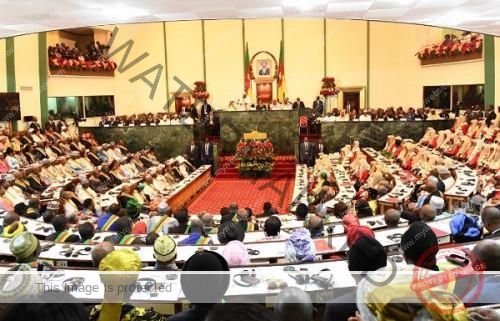
Archbishop Andrew Nkea, like other senior Catholic leaders, has called for dialogue and spoken about the suffering of people affected by the conflict. At the same time, critics have questioned whether the public conduct of some senior church leaders has appeared too accommodating toward the ruling CPDM establishment.
The issue should be stated carefully. There is no need to allege, without evidence, that Archbishop Nkea is a formal CPDM official or party operative. The more important question concerns perception, access, proximity, and institutional behavior. When senior religious leaders repeatedly appear beside ruling-party officials, participate in state ceremonies, maintain cordial public relationships with political elites, and speak cautiously about government responsibility, many citizens interpret that posture as alignment.
In an authoritarian political environment, neutrality does not always operate neutrally. The government controls the army, administration, public finances, state media, courts, and machinery of coercion. The oppressed possess little beyond their testimony, protest, organization, and moral appeal. When a powerful religious institution attempts to maintain equal distance between unequal forces, its caution may reinforce the stronger party.
When bishops call for peace without clearly naming the structures producing violence, victims may hear the language as protection of political order rather than protection of justice. When religious leaders appear more frequently beside ruling-party officials than beside political prisoners, displaced families, grieving communities, or citizens demanding accountability, public suspicion becomes unavoidable.
The question is not merely whether a bishop possesses a CPDM membership card. The question is whether religious conduct gives the ruling system moral comfort.
The Burden of Public Perception
Religious leadership is judged not only by occasional statements but by sustained public posture. People examine who receives access. They examine which injustices are named clearly. They examine whether religious language becomes stronger when criticizing powerless people than when addressing the state. They examine whether church institutions depend on government approval, land, protection, broadcasting access, appointments, contracts, or patronage. They examine whether national ceremonies transform clergy into supporting actors in the political theater of the ruling establishment.
This is the burden of perception. A religious leader may believe he is preserving access for dialogue. The public may interpret the same caution as compromise. He may believe he is remaining above politics. Victims may believe he has remained below the demands of justice. He may believe that diplomacy requires restraint. The oppressed may believe that the Church has become more concerned about preserving its institutional position than defending those who suffer.
The answer is neither reckless accusation nor unconditional deference. It is transparent, consistent, and independent moral leadership. The Church must be close enough to all parties to mediate, but never so close to power that it can no longer speak truth.
Peace Without Justice Becomes Submission
Calls for peace are morally attractive because no humane person desires continuing violence. Yet peace can become an empty religious word. The slaveholder wants peace on the plantation. The dictator wants peace in the streets. The occupier wants peace under occupation. The corrupt official wants peace after the money disappears. The victim also wants peace, but a peace grounded in truth, dignity, justice, and protection from renewed abuse.
Religious leaders must distinguish peace from submission. Reconciliation cannot mean that victims forget. Forgiveness cannot mean that offenders avoid accountability. Dialogue cannot mean that one party enters the room with weapons, prisons, state authority, and control of the legal system while the other is merely instructed to moderate its language.
When religion preaches peace without examining power, it risks becoming the chaplain of repression. A church that tells the oppressed to remain calm while avoiding direct confrontation with the oppressor is not neutral. It has chosen the stability of the institution over the moral urgency of justice.
Religious Luxury Among the Poor and Helpless
One of the most damaging developments in African Christianity is the public display of religious wealth before impoverished congregations. The expensive vehicle becomes proof of anointing. The designer clothing becomes evidence of divine favor. The mansion becomes a testimony. The private aircraft becomes a symbol of global ministry. The security convoy becomes evidence of importance. The elevated chair, guarded entrance, exclusive platform, and carefully choreographed access separate the “man of God” from ordinary believers.
The poor are invited to admire what their contributions helped create but may never own. This is spiritualized inequality. The leader’s abundance is presented as confirmation that the religious system works. The member’s poverty is blamed on insufficient faith, inadequate giving, negative thinking, ancestral bondage, or spiritual attack. The religious marketplace reproduces the same hierarchy found in politics. The ruler displays power before the citizens. The preacher displays prosperity before the contributors. The elite consume. The people applaud. The institution teaches them to interpret inequality as evidence of blessing.
Religious leaders are entitled to dignified housing, safety, transportation, healthcare, and fair support. The ethical problem begins when religious office becomes a pathway to unaccountable luxury, when contributors cannot examine the accounts, when leaders pressure poor members to finance extravagance, and when wealth is used to demonstrate spiritual superiority.
A pastor’s expensive automobile does not prove that God has blessed the congregation. The real evidence is whether children are educated, the sick receive care, families escape predatory debt, young people find work, businesses are created, and productive assets remain within the community.
When Religion Becomes Another Extractive System
Colonial institutions extracted land, labor, taxes, raw materials, and political obedience. Modern religious institutions can become extractive when they remove money, time, loyalty, intellectual independence, and emotional energy from communities without replenishing their productive capacity.
The congregation gives repeatedly. The institution grows. The leader becomes influential. The buildings expand. The television ministry develops. The conventions become larger. But the members remain economically fragile.
This is the religious version of exporting raw materials and importing finished products. The people supply faith, labor, money, music, attendance, votes, testimonies, and social legitimacy. The institution converts those contributions into centralized power. The benefits do not circulate back proportionately.
A spiritually credible institution should leave its community stronger than it found it. Where it does not, religion has become extraction covered in sacred language.
The Productive Stewardship Alternative
A more ethical religious and economic philosophy begins with a simple principle: every community possesses productive sources that must be protected, strengthened, and transferred to future generations. These productive sources include trust, knowledge, culture, skills, family stability, land, savings, reputation, intellectual property, institutions, and disciplined cooperation.
A wise community uses part of what these assets produce while preserving and expanding the underlying source. An extractive institution consumes everything today and leaves nothing capable of producing tomorrow.
Colonial religion weakened African cultural confidence. Commercial religion consumes community contributions without necessarily creating ownership. Political religion uses moral legitimacy to stabilize rulers. Prosperity religion converts desperation into revenue.
The ethical alternative must reverse the direction of value. Religion should build human beings, not merely buildings. It should generate productive capacity, not permanent dependency. It should transform generosity into community assets. It should teach ownership as well as giving. It should preserve capital as well as respond to emergencies. It should prepare people for eternity without making them economically helpless on earth.
The Revival of Traditional Spirituality
Traditional spirituality is returning because many Africans are discovering that conversion should never have required cultural self-hatred. The revival does not require the rejection of Christianity or Islam. It requires the recovery of African spiritual dignity.
Traditional spirituality understood that life was relational. The individual belonged to a family, lineage, community, landscape, and moral history. Land was not merely a commodity. Water was not merely a resource. The forest was not merely timber. The dead were not erased from communal memory. Leadership carried spiritual obligations. Wealth carried social responsibilities. Decisions were judged partly by their consequences for descendants.
These principles possess urgent value in an age of ecological destruction, political selfishness, social isolation, and uncontrolled consumption. Yet revival cannot mean romantic restoration. Traditional systems must also submit to ethics.
Practices involving coercion, violence, witchcraft accusations, abuse of children, oppression of women, fraudulent healing, forced rituals, or unaccountable secret authority must be rejected. Tradition cannot claim immunity from moral examination any more than Christianity can.
The objective is not to choose between a corrupt pastor and a corrupt traditional custodian. It is to recover spirituality under the authority of truth, dignity, consent, accountability, and the protection of human life.
Connecting with God Without Religious Captivity
Direct relationship with God does not require the destruction of religious community. It requires the refusal to allow any religious institution to replace God. A healthy church should deepen conscience. It should not colonize conscience. A spiritual leader should guide people toward maturity. He should not make himself permanently indispensable. A religious institution should teach people to recognize truth. It should not punish them for asking questions.
The believer must recover the right to examine doctrine, finances, leadership conduct, political relationships, healing claims, prophecies, and institutional decisions. God does not require fraud. Truth does not require secrecy. Faith does not require intellectual surrender. Spirituality does not require fear.
From Offerings to Productive Community Capital
Cameroonians and Ambazonians contribute enormous resources to churches, village associations, njangi groups, funerals, cultural organizations, development unions, and family networks. Yet much of this money is consumed immediately. The same contributors return the following week, month, or year to raise money again for another emergency. The community circulates money without accumulating productive capital.
A new model should separate worship expenses, compassionate assistance, and long-term productive stewardship. Religious and cultural organizations could maintain transparent operating funds for ordinary activities, mercy funds for vulnerable families, and independently governed productive funds for education, enterprise, housing, agriculture, technology, healthcare, and community infrastructure.
The productive capital should not be controlled personally by a pastor, bishop, chief, founder, politician, or prophet. It should be audited. Conflicts of interest should be disclosed. Investment rules should be published. Members should understand how funds are used. Professional managers should be accountable to representative governing boards. The community should receive measurable benefits. Giving would then become more than religious consumption. It would become intergenerational stewardship.
Njangi as a Foundation of Trust
Cameroon already possesses an indigenous financial institution capable of supporting this transformation: njangi. Njangi converts familiarity into trust and trust into capital. Members know one another. Reputation matters. Contribution is repeated. Default carries consequences. The group possesses information about character and reliability that may not appear in formal credit records.
But njangi must move beyond rotating consumption. A portion of contributions can continue meeting immediate needs. Another portion should form permanent capital that finances enterprises, protects families, creates employment, and survives beyond the original members.
Traditional familiarity must be combined with modern verification. Trust must be supported by records. Community judgment must be supported by professional analysis. Spiritual values must be supported by legal agreements. Leadership must be supported by audits.
The future belongs neither to unregulated informality nor to distant financial institutions that do not understand the community. It belongs to institutions that combine ethical trust, cultural familiarity, professional competence, and enforceable accountability.
Ethics as Economic Infrastructure
The new Cameroonian and Ambazonian business model should begin with a foundational proposition: ethics is not decoration. Ethics is economic infrastructure.
Where people trust one another, the cost of doing business falls. Where agreements are honored, fewer resources are spent on suspicion, enforcement, litigation, and protection. Where leaders disclose conflicts of interest, capital becomes safer. Where employees receive dignity and fair treatment, productivity and loyalty improve. Where communities own part of the enterprises they support, value circulates rather than escaping. Where culture is respected, products and services can be designed around actual community needs.
The model should support farms, food processing, housing, renewable energy, healthcare, education, transportation, digital services, cultural industries, elder care, insurance, local manufacturing, and professional services.
Profit should not be condemned. Profit allows an ethical enterprise to survive, pay workers, maintain assets, expand services, reward risk, and invest in the future. The moral issue is how the profit was created.
Was the customer deceived? Was the worker exploited? Was the environment damaged? Was community trust consumed? Were contributors given accurate information? Did leaders enrich themselves through hidden transactions? Did the enterprise produce something of lasting value?
These are spiritual questions as much as business questions.
The Seven Questions Every Institution Must Answer
Every religious, political, cultural, and commercial institution should face the same examination. Does it tell the truth? Does it protect human dignity? Does it submit leaders to accountability? Does it create productive value? Does it distribute benefits fairly? Does it preserve cultural and natural inheritance? Will it survive beyond its founder without becoming the private property of his family? An institution that cannot answer these questions should not claim moral authority merely because its leaders pray publicly.
God Beyond the Institution
Cameroon and Ambazonia do not need another imported religion of dependency. They do not need another miracle marketplace. They do not need Western religious institutions painted in African colors. They do not need traditional spirituality stripped of ethics. They need a spiritual awakening grounded in truth.
Western Christianity is declining partly because religious institutions separated authority from accountability. Agnostics, atheists, and spiritually unaffiliated people are not necessarily rejecting God. Many are rejecting systems they no longer trust.
Africa must learn from that collapse. Religious leaders must stop confusing institutional survival with the defense of God. Political access must not replace prophetic courage. Material display must not replace service. Giving must not replace ownership. Prayer must not replace planning. Faith must not replace competence. Forgiveness must not replace justice.
Traditional spirituality must be revived, but it must also be purified through ethics. Christianity may remain, but it must be decolonized. Business may pursue profit, but it must be organized through trust, productive circulation, accountability, and shared prosperity.
The future lies in reconnecting God with ethics, spirituality with responsibility, culture with dignity, and capital with community. God is greater than religion. Truth is greater than the institution. Ethics is greater than ceremony. The human conscience is greater than the title of any bishop, pastor, prophet, politician, chief, or religious official.
To connect with God is not merely to attend more services, donate more money, or repeat more religious language. It is to become more truthful, more courageous, more accountable, more compassionate, more productive, more committed to justice, and more determined to leave behind a functioning moral and economic inheritance for the generations yet unborn. That is the spiritual and economic revival Cameroon and Ambazonia require.
Judith Elondo
Author of Connecting with God and The Independentist News spiritual contributor





Leave feedback about this