

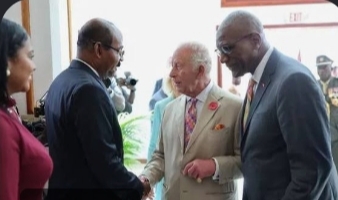


The significance of Gaston Browne’s November 1 remarks lies in the separation he drew between respect for the British monarch and questions about constitutional identity and historical accountability. The monarchy may receive a dignified welcome even as its continuing constitutional role is debated. Britain may remain a diplomatic partner even as reparations are demanded.
By Martin S. Mungwa, Ph.D., Fellow ASCE contributor The Independentist News | with International Affairs and Historical Accountability
As Amazon associate this site earns from qualifying purchases
Buy your copies of the varied publications by Martin Mungwa on Amazon
St. John’s – 2 November 2026 – A Royal Welcome and an Uncomfortable Question – On November 1, 2026, the Prime Minister of Antigua and Barbuda, Gaston Browne, deliverd a remarkable reminder that diplomatic courtesy does not necessarily imply permanent constitutional allegiance.
Shortly after attending a church service alongside King Charles III and Queen Camilla, Gaston Browne publicly reaffirmed his preference for Antigua and Barbuda to become a republic. He simultaneously renewed his demand that Britain address its historical involvement in transatlantic slavery through reparations.
His remarks were not an announcement that Antigua had abolished the monarchy. Nor did they represent a withdrawal from the Commonwealth. Browne acknowledged that replacing the King as head of state would require compliance with constitutional procedures and ultimately the consent of the Antiguan people.
Nevertheless, the occasion exposed a significant question confronting Britain’s relationships with several former colonies: Can historical injustices be adequately addressed through diplomatic recognition and expressions of regret, or must historical accountability also involve institutional change and material remedies?
For Southern Cameroons, whose political future was shaped by British colonial administration and United Nations trusteeship, this question deserves careful examination.
Antigua: Independence Without Republican Government
Antigua and Barbuda attained independence from Britain on November 1, 1981, but retained the British monarch as its constitutional head of state. This distinction is essential. Constitutional monarchy does not mean that Antigua remains a British colony. It is an independent sovereign state whose constitutional system retains a monarch shared with other Commonwealth realms.
Browne’s republican preference concerns the future constitutional identity of that independent state. The Constitution establishes demanding procedures for fundamental constitutional amendments, including parliamentary supermajorities and, for certain protected provisions, referendum approval.
His acknowledgement of these requirements illustrates an important principle: constitutional legitimacy depends not simply upon the preferences of political leaders but upon lawful processes and the consent of the people. Whether Antigua should retain the monarchy is a decision for Antiguans. Its broader significance lies in demonstrating that inherited constitutional institutions can remain subjects of public examination long after formal independence.
Reparations: Where History Meets Present Responsibility
Browne’s call for reparations introduces a second dimension to the debate. The transatlantic slave trade subjected millions of Africans to forced transportation, enslavement, exploitation and enormous human suffering. Caribbean societies continue to examine how the economic and institutional legacies of slavery shaped their development.
The contemporary reparations movement seeks more than expressions of sympathy. Its proposals include historical acknowledgement, formal apologies, educational and healthcare investment, cultural restoration and various forms of compensation.
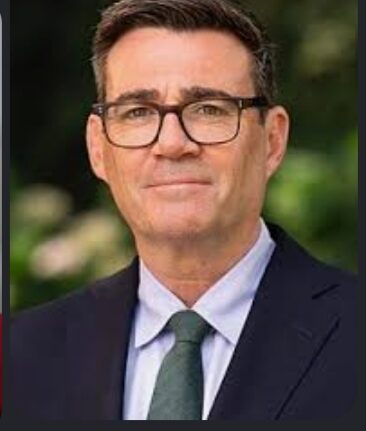
The British government, led by Prime Minister Andy Burnham, has indicated openness to structured dialogue and consideration of a formal apology while rejecting direct financial reparations. Its reasoning includes the position that today’s British population should not bear personal financial liability for historical actions committed under earlier legal systems.
Caribbean reparations advocates challenge the adequacy of that response, arguing that institutional responsibility and inherited consequences cannot be reduced to the personal guilt or innocence of individuals living today. These positions reflect a genuine disagreement over historical justice, intergenerational responsibility, legal liability and the appropriate forms of redress.
The distinction between an apology and a remedy therefore remains central. An apology acknowledges wrongdoing. A reparative measure seeks to address consequences. Whether either is legally required, politically appropriate or practically effective depends upon the evidence and circumstances of each case.
Southern Cameroons: A Different Historical and Legal Question
The history of Southern Cameroons presents a different constitutional experience. Unlike Antigua and Barbuda, Southern Cameroons did not become an independent Commonwealth realm with the British monarch as its head of state. Instead, its decolonization was conducted under the United Nations trusteeship system, with Britain serving as the administering authority.
Following the February 1961 plebiscite, the United Nations General Assembly adopted Resolution 1608 (XV) on April 21, 1961. The resolution endorsed the plebiscite results and provided for the termination of trusteeship over Southern Cameroons on October 1, 1961, upon its joining the Republic of Cameroon.
Crucially, paragraph five invited Britain, the Government of Southern Cameroons and the Republic of Cameroon to initiate urgent discussions to finalize the arrangements for implementing the policies agreed and declared by the parties before that date. This provision is of substantial historical importance.
It identifies three parties whose discussions were considered necessary for implementing the transition. It also establishes a documentary foundation for examining the procedures, negotiations and institutional arrangements surrounding the end of British trusteeship.
But the provision must be interpreted accurately. It does not, by itself, conclusively establish that a particular constitutional instrument was legally mandatory, that Britain subsequently breached an international obligation, or that present-day remedies automatically follow. Those conclusions require examination of additional legal and historical evidence.
The Unresolved Questions of the 1961 Transition
For scholars examining Southern Cameroons, several questions require particular attention.–What arrangements were discussed among Britain, Southern Cameroons and the Republic of Cameroon before October 1, 1961? – How were the constitutional proposals developed at the Foumban Conference incorporated into the eventual federal arrangements? – What documentary evidence demonstrates the nature of consent, agreement and implementation among the parties? – How did subsequent constitutional changes, particularly those associated with the 1972 referendum and the 1984 restoration of the name Republic of Cameroon, affect the institutional structure established in 1961? – And what continuing relevance, if any, do Britain’s responsibilities as the former administering authority have under international law?
Supporters of Southern Cameroons self-determination contend that deficiencies in the decolonization process and subsequent constitutional developments undermined the original federal relationship. The Government of Cameroon, by contrast, maintains the legitimacy of the country’s territorial unity and constitutional continuity.
These competing interpretations cannot be resolved merely by invoking the colonial past. They require documentary investigation, legal analysis and careful distinction between political claims and established findings. The historical record deserves serious attention precisely because constitutional legitimacy should rest upon evidence rather than assertion.
Britain and the Question of Historical Responsibility
The most valuable comparison between Antigua and Southern Cameroons is therefore not constitutional equivalence. It is the question of responsibility. In Antigua, the debate concerns a sovereign country’s inherited monarchy and Britain’s historical involvement in slavery.
In Southern Cameroons, the debate concerns decolonization under international trusteeship, the implementation of a United Nations resolution and the constitutional consequences of joining the Republic of Cameroon. These are different historical processes involving distinct legal frameworks.
Nevertheless, both invite examination of how a former colonial power accounts for decisions taken during periods when it exercised extensive political authority. A responsible inquiry must distinguish moral responsibility, political responsibility and legally enforceable obligations.
Historical involvement alone does not establish contemporary financial liability. Equally, the passage of time does not make the historical record irrelevant to understanding present constitutional disputes.
Britain’s role in the Southern Cameroons transition can therefore be examined without presuming either complete exoneration or predetermined legal culpability. That approach would strengthen, rather than weaken, the credibility of any eventual conclusions.
What Role for the Commonwealth?
The Commonwealth’s modern identity rests upon voluntary association, cooperation and recognition of the sovereignty of its member states. It is neither a continuation of the British Empire in formal legal terms nor an international court empowered to determine territorial sovereignty.
Nevertheless, its historical origins make it an important forum for discussing colonial legacies. Caribbean leaders have increasingly used Commonwealth engagements to raise questions of slavery, reparations and historical acknowledgement.
This creates a broader institutional question: Can the Commonwealth facilitate meaningful discussion of colonial-era responsibility while respecting the sovereignty and differing constitutional circumstances of its members?
The answer depends on the willingness of member governments to engage and on the scope of any agreed process. The Commonwealth cannot simply impose a remedy concerning Southern Cameroons. Cameroon is itself a Commonwealth member, and questions of territorial status, constitutional history and international responsibility involve legal and diplomatic considerations beyond Commonwealth political dialogue. However, the organisation could provide a setting for historical research, archival cooperation and constructive engagement where the relevant parties consent.
From Historical Recognition to Documented Accountability
The Antigua controversy illustrates why historical accountability requires disciplined analysis. Public statements can open debates, but they do not substitute for evidence.
For The Southern Cameroons, a serious scholarly inquiry should examine the British National Archives, United Nations trusteeship records, plebiscite documentation, constitutional texts, diplomatic correspondence and relevant African human-rights proceedings.
Such an inquiry should establish what was proposed, what was agreed, what was implemented and where the documentary evidence remains disputed or incomplete. It should also distinguish the termination of trusteeship in 1961 from the subsequent political and human-rights developments that transformed the relationship between Southern Cameroons and the institutions of the Republic of Cameroon.
This approach is essential to credible scholarship. It recognizes that historical grievances may deserve investigation without treating every allegation as an established legal conclusion.
Beyond Ceremony: The Meaning of Constitutional Freedom
King Charles III’s reception in Antigua and Prime Minister Browne’s republican remarks offer no simple contradiction. A government may extend ceremonial respect to a monarch while maintaining that its people should eventually choose a different constitutional arrangement.
Similarly, states may preserve constructive diplomatic relations with Britain while disagreeing over the interpretation and consequences of colonial history. The deeper issue is whether political institutions are prepared to examine inherited arrangements openly, especially where historical decisions continue to generate disagreement.
For Antigua and Barbuda, that examination belongs primarily to its citizens through their constitutional processes. For Southern Cameroons, it requires sustained engagement with the historical record of British administration, the United Nations-supervised transition and subsequent constitutional developments. Neither inquiry should be reduced to ceremonial symbolism.
Conclusion: History Cannot Be Closed by Ceremony Alone
The significance of Gaston Browne’s November 1 remarks lies in the separation he drew between respect for the British monarch and questions about constitutional identity and historical accountability. The monarchy may receive a dignified welcome even as its continuing constitutional role is debated. Britain may remain a diplomatic partner even as reparations are demanded.
For Southern Cameroons, the parallel is instructive but not legally determinative. The unresolved scholarly task is to reconstruct the constitutional and diplomatic record of the 1961 transition and assess its consequences against the applicable legal standards. Britain’s historical responsibilities should be neither assumed away nor declared conclusively established without investigation.
A credible account of decolonization must ask not only how colonial administration ended, but also how the arrangements intended to follow it were negotiated, implemented and subsequently transformed. That is the larger question brought into renewed focus by Antigua’s encounter with the Crown.
Sources and Documentary References
ITV News, Chris Ship, November 1, 2026. Interview with Prime Minister Gaston Browne concerning republican constitutional reform and reparations.
Government of Antigua and Barbuda, Constitution of Antigua and Barbuda, particularly Section 47 concerning constitutional alteration.
United Nations General Assembly, Resolution 1608 (XV), The Future of the Trust Territory of the Cameroons under United Kingdom Administration, April 21, 1961.
ITV News, October 31, 2026. Reporting on British Prime Minister Andy Burnham’s position concerning an apology, structured dialogue and financial reparations.
Reuters, October 27, 2026. Reporting on King Charles III’s Caribbean visit and Commonwealth discussions concerning slavery and reparatory justice.
United Nations Digital Library, resolution and voting record for A/RES/1608(XV).
Relevant historical material for further research: United Kingdom trusteeship records, Southern Cameroons plebiscite documentation, Foumban constitutional proceedings, the 1961 federal constitutional arrangements and subsequent constitutional amendments.
As Amazon associate this site earns from qualifying purchases
Buy your copies of the varied publications by Martin Mungwa on Amazon
Martin S. Mungwa, Ph.D., Fellow ASCE contributor The Independentist News