








Commentary

We are home to news on Cameroon and the CEMAC region. We are dedicated to honest and reliable reporting. We are the voice of the Cameroonian people and their fight for freedom and democracy at a time when the Yaoundé government is silencing dissent and suppressing democratic voices.

Before asking Southern Cameroonians to embrace another political project emerging from Yaoundé, those seeking to lead Cameroon should first answer a more fundamental question: Why should Southern Cameroonians believe that changing the president is the same as changing the constitutional relationship?
By Ali Dan Ismael
Editor-in-chief The Independentist News
Every election season in La République du Cameroun produces familiar promises of national renewal. New candidates emerge, old alliances collapse, and opposition figures promise to rescue the country from decades of centralized rule. Yet one mistake continues to unite almost every political actor in Yaoundé: the assumption that they possess the authority to determine the political future of Southern Cameroons. That assumption deserves to be challenged.
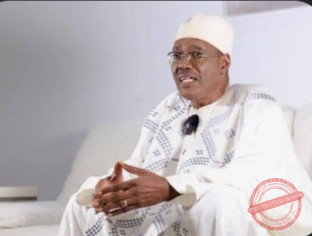
Issa Tchiroma Bakary has every right to contest the legitimacy of Cameroon’s political system and to argue that the October 2025 presidential election did not reflect the will of the electorate. If he believes democratic principles were violated, he is entitled to pursue every lawful political and legal avenue available to him.
What he cannot reasonably assume, however, is that a dispute over who governs La République du Cameroun automatically answers the separate constitutional question concerning Southern Cameroons. These are fundamentally different issues. One concerns who governs Cameroon. The other concerns whether Cameroon possesses legitimate constitutional authority over Southern Cameroons in the first place.
Changing presidents does not automatically resolve disputed constitutional relationships. This distinction is frequently overlooked by politicians in Yaoundé who continue to frame the Southern Cameroons conflict as a domestic governance problem rather than a constitutional and political dispute with its own historical foundations.
For many Southern Cameroonians, the question has never been simply whether Paul Biya should remain president. The deeper question is whether the people of the former British Southern Cameroons freely consent to the present political arrangement and whether that consent can be renewed, renegotiated, or withdrawn.
These questions cannot be answered by presidential elections conducted within La République du Cameroun alone. They require political dialogue, constitutional clarity, and recognition that deeply contested historical questions cannot be permanently settled by military force or electoral arithmetic.
There is another lesson Mr. Tchiroma may wish to consider. His own political experience demonstrates that institutions matter more than personalities. If he believes electoral institutions failed to protect the will of Cameroonian voters, he has experienced firsthand the limits of political change without institutional reform.
Southern Cameroonians have been making a similar argument for decades. That does not automatically validate every political position within the independence movement. Nor does it diminish the importance of democratic debate among Southern Cameroonians themselves. It simply reminds us that constitutional legitimacy cannot be created merely by replacing one president with another while leaving unresolved questions untouched.
Diaspora politics also deserves careful reflection.
Political meetings, public endorsements, and social media campaigns may generate headlines, but they should not be confused with democratic mandates. No individual or small group—whether in Yaoundé, Europe, North America, or elsewhere—can credibly claim to speak for an entire people without transparent political legitimacy and accountability.
The same standard should apply to governments, opposition movements, diaspora organizations, and media alike. Ultimately, Mr. Tchiroma’s immediate political challenge lies in persuading Cameroonians that he offers a credible alternative to the system he now opposes. That is a difficult task in itself.
The future of Southern Cameroons, however, is a different constitutional conversation altogether. It cannot be decided by the next occupant of Etoudi. Nor can it be settled by assuming that replacing one political leader automatically resolves a dispute rooted in history, constitutional interpretation, and competing visions of political legitimacy.
Before asking Southern Cameroonians to embrace another political project emerging from Yaoundé, those seeking to lead Cameroon should first answer a more fundamental question: Why should Southern Cameroonians believe that changing the president is the same as changing the constitutional relationship?
Until that question is addressed honestly, the debate will continue—not because personalities change, but because the underlying constitutional questions remain unanswered.
Ali Dan Ismael
Editor-in-chief The Independentist News
Share This Post:
THE DEMOGRAPHIC DEMOLITION: How Yaoundé’s Population Politics Conceal a Militarised Geography of Power
WHEN PROPHECY BECOMES A MARKETPLACE: False Spiritual Authority, Commercialized Faith, and the Rise of Ethical Spiritual Education in Ambazonia
Related Post
AMBAZONIA’S WAR- IS BIGGER THAN YAOUNDÉ: BRITAIN, FRANCE AND
THE DAY SEPTEMBER 22 1961: — WHAT AMBAZONIA CAN
TRUMP’S “SUPER INTELLIGENCE” ERA: WHAT IT REALLY MEANS —
Why Is Ambazonia More Powerful Than many Imagine.
THIS DAY IN HISTORY SEPTEMBER 22, 2017: THE DAY
A President Unseen, a Country Waiting: Yaoundé’s Succession Uncertainty