








Commentary

We are home to news on Cameroon and the CEMAC region. We are dedicated to honest and reliable reporting. We are the voice of the Cameroonian people and their fight for freedom and democracy at a time when the Yaoundé government is silencing dissent and suppressing democratic voices.

Southern Cameroons must draw the correct lesson. We should expose demographic and military inequality wherever credible evidence supports it. But we must also build a future political culture in which evidence is stronger than outrage, institutions are stronger than personalities, and public authority is never captured by one region, one faction or one generation.
By Carl Sanders
Guest Writer, The Independentist News
SOHO, LONDON — August 5, 2026 — As La République du Cameroun confronts growing uncertainty surrounding President Paul Biya’s prolonged absence from public view, a widely circulated graphic purporting to show the regional origins of the country’s army generals has reopened an uncomfortable national question: Does the composition of the military high command reflect professional merit and national balance, or has it been shaped to preserve a particular political order?
The graphic, dated August 4, 2026, assigns 36 generals among the ten administrative regions: eight to the Centre, five each to the West and Far North, four each to the South and Littoral, three each to the Northwest and Southwest, two to Adamawa, and one each to the North and East. The image does not, by itself, provide names, ranks, appointment dates, service records, or an independently verifiable methodology. It should therefore not be treated as a completed statistical audit. Nevertheless, the pattern it alleges is serious enough to demand transparent examination.
Its circulation coincided with a major military reshuffle conducted while Biya remained outside public view. Reuters reported that the president had not been seen publicly for 58 days when three decrees promoted the head of the Presidential Guard and replaced commanders in four of the country’s five joint military regions. The prolonged absence and sudden restructuring of the security hierarchy have intensified questions about presidential authority, succession, institutional continuity, and the political loyalties upon which the military command may depend.
The central issue is not that every region must receive an arithmetically identical number of generals. Military promotion cannot responsibly be reduced to a regional quota. The legitimate questions are whether recruitment and promotion are governed by transparent professional standards, whether qualified officers enjoy comparable opportunities, whether certain regions exercise disproportionate control over strategically sensitive commands, and whether the armed forces serve the constitutional public order or the survival of an entrenched political establishment.
Population Data as an Instrument of Power
Population statistics are not politically neutral when they determine representation, public expenditure, administrative status, infrastructure, electoral constituencies, and the distribution of state institutions.
A census decides far more than how many people appear in a territory. It affects the number of parliamentary seats attributed to a population, the allocation of schools and hospitals, road and water investments, municipal transfers, administrative boundaries, security deployments, and the apparent political importance of entire communities.
Where census data are outdated, incomplete, selectively interpreted, or institutionally distrusted, demographic uncertainty can become a mechanism of political control.
That is why the persistent controversy surrounding the officially designated Northwest and Southwest regions cannot be dismissed as a technical disagreement over numbers. For Southern Cameroonians, population figures exist within a deeper history of constitutional marginalisation, territorial renaming, administrative fragmentation, and the steady absorption of their institutions into those of La République du Cameroun.
The accompanying graphic does not prove that official population figures were deliberately fabricated. Nor does it establish that every demographic estimate attributed to the state is false. A credible editorial must distinguish suspicion from evidence. But the absence of a recent, trusted and publicly auditable census creates exactly the environment in which suspicions of demographic manipulation flourish. Yaoundé cannot demand public confidence while withholding the transparency through which confidence is earned.
The 1961 Arithmetic and the Production of Minority Status
The demographic question reaches back to the political arrangements surrounding 1961. Figures commonly repeated from that period placed the population of the Southern Cameroons at approximately 800,000 and that of La République du Cameroun at approximately 3.2 million. Whether those estimates were methodologically sound must be established through archival census records rather than political repetition. But their political effect is beyond dispute: they immediately presented Southern Cameroons as the much smaller partner in the proposed federation.
That numerical imbalance shaped the psychology of the union. Southern Cameroons entered the arrangement with its own territory, government, legislature, judiciary, public service, political culture and inherited Anglo-Saxon institutional tradition. Yet its population was represented through an arithmetic that established permanent minority status from the beginning. Once that demographic relationship became embedded in federal representation, public administration and political rhetoric, the smaller partner could be outvoted even on questions affecting its own institutional survival.
The unresolved question is therefore not merely whether one historical estimate was correct. It is whether demographic arithmetic was used to transform a constitutionally distinct people into an administratively manageable minority.
Administrative Geography and Selective Recognition
Population politics also appears through the creation and classification of administrative units. The contrast between densely populated communities in Southern Cameroons and smaller localities elsewhere that possess higher administrative status deserves systematic investigation. Mile 12 in Santa and Ebebda are often invoked in such comparisons. Tiko is similarly contrasted with less densely populated administrative territories receiving greater political recognition or state investment.
These comparisons may illuminate real inequalities, but they must be supported by current population estimates, defined geographical boundaries and like-for-like administrative comparisons. A populated neighbourhood should not automatically be compared with an entire subdivision without explaining the territorial units involved. Likewise, assertions that Tiko alone exceeds the population of the entire South Region require dependable demographic evidence before being presented as established fact.
The larger argument, however, remains legitimate: administrative importance in La République du Cameroun does not always appear to follow population density, economic contribution, service needs or territorial efficiency.
The creation of administrative units can reward political loyalty, multiply positions for regime appointees, strengthen surveillance, divide historically coherent communities and redirect public resources. Administrative geography can therefore function as political engineering disguised as decentralisation.
Reading the Generals’ Map Carefully
According to the circulating graphic, the regional distribution is as follows: Centre: eight generals,
Far North: five generals, West: five generals, South: four generals, Littoral: four generals, Northwest: three generals Southwest: three generals Adamawa: two generals North: one general East: one general
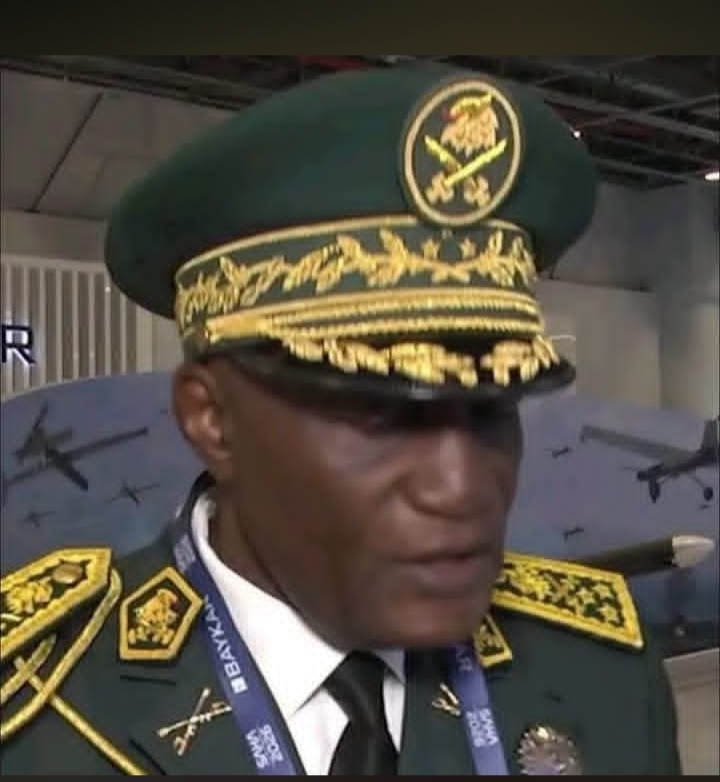
These figures should not be described as proof of “tribal apartheid” without an independently verified list of the officers represented. Region of origin is not necessarily identical to ethnicity, political loyalty or operational authority. Nor does the number of generals alone reveal which officers control the Presidential Guard, intelligence services, military regions, logistics, procurement, strategic weapons, garrisons or access to the presidency.
One general commanding a strategically decisive institution may wield more power than several officers occupying ceremonial, technical or peripheral appointments.
The appropriate investigation must therefore go beyond counting uniforms. It should identify: the name and rank of every serving general officer;
place and region of origin; branch of service and training history; current and previous commands;
control over troops, intelligence, finance and logistics; relationship to the presidency and governing establishment; dates and circumstances of promotion; and the regional composition of the promotion pipeline beneath the general staff.
Only such an audit could establish whether the apparent imbalance results from historical recruitment patterns, professional seniority, patronage, political loyalty, ethnic preference or a combination of these factors. The circulating map should therefore be treated as a warning signal requiring investigation, not as a substitute for investigation.
Representation Without Sovereign Protection
The graphic attributes six generals collectively to the Northwest and Southwest regions. The regime may present such numbers as evidence of inclusion. Southern Cameroonians must ask a harder question: What does representation mean when the institution represented is being used against the represented population?
An officer’s regional origin does not automatically make him an advocate for that region. A Southern Cameroonian serving within the command structure of La République du Cameroun remains bound to the policies, laws and operational directives of that state. Representation without authority can become decoration. Representation without accountability can become political camouflage. Representation without protection can become participation in the machinery of domination.
The decisive test is not how many officers were born in Southern Cameroons. It is whether those officers can prevent unlawful attacks on civilians, oppose collective punishment, demand accountability for abuses, defend the constitutional rights of their people and influence the strategic decisions governing military operations in the territory. Where they cannot—or will not—their presence cannot reasonably be presented as proof that the institution represents Southern Cameroonian interests.
A Military Reshuffle Under an Absent Presidency
The timing of the August reshuffle makes institutional transparency even more urgent. Biya left public view after departing for Switzerland on June 7. By July 30, The Guardian reported that his absence had reached 53 days, accompanied by conflicting official explanations and continuing uncertainty about when he would return. Days later, Reuters reported a military restructuring involving the Presidential Guard and four of the five joint military regions.
A military reorganisation conducted under these circumstances raises legitimate constitutional questions. Who recommended the appointments? Who verified the decrees? Who is presently exercising effective executive authority? Were the changes based on routine professional requirements, or were they designed to secure strategically important commands during a period of succession uncertainty? Which institutions can independently authenticate presidential decisions when the president remains beyond public scrutiny?
These questions do not prove that the decrees were forged or unlawfully issued. Such an allegation would require documentary and forensic evidence. But extraordinary secrecy surrounding the head of state naturally weakens confidence in decisions issued in his name. A functioning republic does not depend on citizens guessing whether their president is governing.
Beyond Ethnicity: The Architecture of Regime Security
The deeper problem may be more institutional than purely ethnic. Authoritarian systems rarely entrust coercive power to officers solely because they come from one community. They build overlapping networks of loyalty involving family, patronage, regional identity, political history, financial reward, mutual exposure and fear of prosecution after regime change.
Such systems deliberately prevent any single command from becoming fully autonomous. Elite units monitor regular forces. Intelligence agencies monitor one another. Promotions reward loyalty. Strategic appointments are rotated to prevent independent power bases. Senior officers are given privileges that tie their personal security to the continuation of the political order. The result is not a national defence institution in the democratic sense. It is a security architecture organised first around regime survival. That distinction matters.
An army designed to defend a nation obeys the constitution. An army designed to defend a ruler obeys the palace. An army designed around factional survival becomes dangerously unstable when the ruler disappears, becomes incapacitated or dies. What appears strong from outside may, at the moment of succession, prove internally fragmented.
The Southern Cameroons Warning
For Ambazonians, the alleged general-staff imbalance carries two important lessons. First, Southern Cameroons must not reproduce the same system after independence. A future Ambazonian defence establishment must never become the private property of a county, ethnic group, political faction, liberation organisation or president. Recruitment and promotion must be professional, geographically inclusive, constitutionally governed and subject to civilian oversight.
Second, liberation cannot depend entirely on the anticipated collapse of La République du Cameroun. Palace rivalry may weaken the occupying state, but institutional disintegration can also produce greater violence, uncontrolled weaponry, criminal networks, refugee movements and cross-border instability.
Ambazonia must therefore prepare for several possibilities simultaneously: negotiated political transition, prolonged conflict, partial institutional collapse, military fragmentation and an unstable succession in Yaoundé. That preparation requires more than declarations. It requires constitutional legitimacy, administrative effectiveness, civilian protection, productive capacity and credible external relations.
The Demographic Audit That Is Needed
The answer to suspected demographic manipulation is not another unsupported population estimate. It is a transparent demographic reconstruction.
Such an undertaking should combine historical censuses, electoral registers, school enrolment, health-service data, household surveys, satellite settlement analysis, mobile-density indicators, building footprints, migration estimates, internally displaced populations and diaspora records. The methodology should be published, independently reviewed and open to correction.
The purpose would not be to manufacture a politically convenient number for Ambazonia. It would be to establish a credible planning baseline for representation, housing, schools, healthcare, infrastructure, food security, employment and eventual post-conflict reconstruction.
A future state cannot condemn Yaoundé’s statistics while governing through its own mythology. Truth must be our institutional advantage. The Numbers Behind the Uniforms The graphic circulating across social media may be incomplete. Its sourcing may be uncertain. Some of its classifications may eventually prove inaccurate. But it has forced an essential question into public view: Who controls the coercive institutions of La République du Cameroun, and through what system were they selected? The answer cannot be supplied by propaganda from either side.
Yaoundé should publish the complete senior-command roster, promotion criteria, service biographies and regional composition of the armed forces. It should also provide a credible, independently auditable national census capable of supporting fair representation and public investment.
Until then, maps such as this one will continue to resonate because they reflect an existing crisis of trust. The struggle is ultimately larger than the number of generals assigned to any region. It concerns the relationship between population, representation, territory, military authority and political power. It concerns whether state institutions serve the people or merely classify, manage and control them.
Southern Cameroons must draw the correct lesson. We should expose demographic and military inequality wherever credible evidence supports it. But we must also build a future political culture in which evidence is stronger than outrage, institutions are stronger than personalities, and public authority is never captured by one region, one faction or one generation.
The real demolition begins when a regime destroys confidence in its own numbers, its own signatures, its own institutions and its own claim to represent the governed. And no army—however heavily armed—can permanently defend a state whose public legitimacy has already collapsed.
Carl Sanders
Guest Writer, The Independentist News
Share This Post:
The Crown Behind the Curtain: Britain’s Moral Pageantry and the Depletion of Southern Cameroons
The Wrong Question, Mr. Tchiroma: Why Southern Cameroons Cannot Be Decided from Yaoundé
Related Post
AMBAZONIA’S WAR- IS BIGGER THAN YAOUNDÉ: BRITAIN, FRANCE AND
THE DAY SEPTEMBER 22 1961: — WHAT AMBAZONIA CAN
TRUMP’S “SUPER INTELLIGENCE” ERA: WHAT IT REALLY MEANS —
Why Is Ambazonia More Powerful Than many Imagine.
THIS DAY IN HISTORY SEPTEMBER 22, 2017: THE DAY
A President Unseen, a Country Waiting: Yaoundé’s Succession Uncertainty