

The task is harder. Establish the documentary record. Reconstruct the constitutional chain. Identify what was agreed. Identify what changed. Identify what protections existed. Identify what happened to them. Then confront the political consequences honestly. Because behind the soldier’s presence lies a question no military operation can finally answer: What exactly was agreed in 1961, what became of that agreement, and does the political order that exists today still command the consent necessary to sustain it? Military force cannot answer that. Only truth, law, history, and political courage can.
By Timothy Enongene
Associate Editor-in-Chief, The Independentist News
As Amazon associate this site earns from qualifying purchases
Get your back to school essentials from Amazon
BUEA – 19 August 2026 – There is a question that deserves to be asked whenever a Cameroonian soldier deployed in Southern Cameroons looks into a camera and says, “We shall not die in this war.” The soldier speaks from the battlefield, but the question reaches far beyond him. Why is he there? Who sent him? What political settlement is he being ordered to defend? How was that settlement constructed? What constitutional arrangements gave it form? What protections accompanied it? And how securely did those foundations survive the political transformations that followed?
The familiar response from Yaoundé is territorial integrity, national unity, and the insistence upon one and indivisible Cameroon. But slogans cannot substitute for constitutional history. Before territorial integrity is invoked as though every question has already been settled, the historical record should be able to show how Southern Cameroons entered the post-1961 political order, what was agreed, how that agreement was implemented, and how the resulting constitutional structure was later altered. That is where the Southern Cameroons question remains profoundly contested.
Two Territories Did Not Become Independent Together
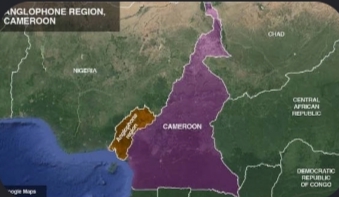
The first point should be stated without ambiguity. The former French-administered Cameroun became the independent Republic of Cameroun on 1 January 1960. Southern Cameroons did not. Southern Cameroons remained a United Nations Trust Territory under British administration until 1 October 1961. Following the 1961 plebiscite, the United Nations record describes Southern Cameroons as joining the Republic of Cameroun on that date and subsequently becoming part of the resulting Cameroonian state. This distinction matters.
The two territories did not enter 1961 from the same constitutional position. They had experienced different colonial administrations, different legal traditions, different political institutions, different educational systems, and different administrative cultures. Southern Cameroons did not begin 1961 as an existing province of the independent Republic of Cameroun. It possessed its own governmental and political institutions within the British trusteeship structure.
The serious historical question is therefore not whether something politically significant occurred on 1 October 1961. It plainly did. The more difficult question is: What precisely had been constitutionally agreed before that date, by whom, through what procedures, and with what protections for Southern Cameroons? That question requires documents.
Resolution 1608 Was a Beginning, Not the Entire Constitutional Settlement
United Nations General Assembly Resolution 1608 (XV), adopted on 21 April 1961, endorsed the plebiscite result under which Southern Cameroons chose to achieve independence by joining the Republic of Cameroun. But the resolution did not merely record a destination. It also invited the British Administering Authority, the Government of Southern Cameroons, and the Republic of Cameroun to enter urgent discussions so that, before 1 October 1961, the arrangements necessary to implement the declared policies of the parties could be finalized. That language deserves close attention.
The plebiscite answered the broad political question of which independent state Southern Cameroons would join. It did not, by itself, settle every constitutional detail governing the relationship that would follow. Those arrangements still had to be worked out. The historically serious questions therefore become unavoidable. What arrangements were finalized? What was agreed at Foumban? What remained unresolved after Foumban? What changes occurred afterward? What did the Government of Southern Cameroons approve? What did the Republic of Cameroun approve? What constitutional text was in force when trusteeship ended on 1 October 1961? And how closely did that final constitutional order correspond to what Southern Cameroons representatives understood themselves to have negotiated? These questions are stronger than the slogan that “there was no union,” because they require the constitutional chain itself to be produced.
Foumban Should Be Reconstructed, Not Mythologized
The Foumban Conference has acquired an almost mythical place in Cameroon’s official political narrative. It is often invoked as though two parties arrived, negotiated a completed federal constitution, reached full agreement, and thereby conclusively settled every constitutional question. The history deserves more care.
There were negotiations concerning federation, constitutional structure, institutions, and the relationship between the two territories. But the central question is not whether representatives met at Foumban. They did. The central question is: What was Foumban constitutionally? Was it a final constituent conference? Was it principally a negotiating conference? Which provisions were actually agreed there? Which provisions changed afterward? Which institutions formally approved the final constitutional arrangements? What document constituted the final settlement? And through what act was Southern Cameroons consent expressed?
These questions should be answered through conference records, constitutional texts, correspondence, legislative proceedings, parliamentary records, British documents, Southern Cameroons records, Republic of Cameroun records, and the United Nations archive. History should not be afraid of documents. Indeed, documents are where political mythology must finally meet constitutional evidence. The Missing Treaty Question Must Be Asked More Carefully For decades, Southern Cameroons advocates have asked a powerful question: Where is the treaty of union?
Where is the bilateral instrument signed between Southern Cameroons and the Republic of Cameroun? Where is the document setting out their respective obligations? Where is its registration in the United Nations treaty system? Those are legitimate historical and legal questions.
Article 102 of the United Nations Charter requires treaties and international agreements entered into by UN member states to be registered with the Secretariat. But intellectual honesty requires an important qualification: the absence of a registered treaty does not, standing alone, prove that the entire post-1961 constitutional order was legally nonexistent. That conclusion would first require establishing that the constitutive arrangement necessarily took the form of a treaty or international agreement to which Article 102 applied.
The stronger argument is therefore not merely: Show us the union treaty. It is: If no bilateral treaty constituted the union, then show us what did. Was the constitutive mechanism the federal constitution? Was it parallel constitutional legislation? Was it a combination of negotiations, constitutional enactments, and political commitments? What documentary evidence establishes Southern Cameroons consent to the final form? What guarantees accompanied that consent? And what legal protections prevented one party from later altering the foundational bargain unilaterally? Those questions are harder to dismiss because they do not depend upon one missing document. They demand reconstruction of the entire constitutional architecture.
The United Nations Record Must Be Confronted, Not Avoided
Southern Cameroons independence advocates must also be prepared to confront evidence that does not fit comfortably within the simplest version of their case. United Nations records do not describe 1 October 1961 as though nothing constitutionally significant occurred. They record Southern Cameroons as having joined the Republic of Cameroun and becoming incorporated into the resulting political order. That evidence cannot simply be ignored. But neither does it answer every question concerning the constitutional quality of the arrangements, the safeguards under which joining occurred, or the legitimacy of later transformations. Those are separate inquiries.
Recognition that a political transition occurred does not establish that every constitutional obligation arising from that transition was subsequently fulfilled. Acknowledging inconvenient evidence does not weaken a serious historical case. It strengthens it. A movement confident in its history should be willing to place every document on the table—including those that complicate its preferred narrative.
The Federal Order Matters
The post-1961 constitutional structure was federal. That fact matters because federation was not a decorative label. For many Southern Cameroonians, federalism represented the institutional means by which two territories with distinct legal, linguistic, educational, political, and administrative traditions would coexist within one state. The constitutional issue is therefore not simply whether Southern Cameroons joined. It is also what it joined.
If the agreed post-1961 political relationship was federal, what protections did that federal arrangement contain? Which elements were fundamental to the bargain? Which could be amended? Which required the participation or consent of the federated units? And what expectations did Southern Cameroons representatives reasonably attach to federation when trusteeship ended? Those questions become even more consequential when examining what happened next.
Then Came 1972
The federal arrangement did not survive. In 1972, Cameroon replaced the federal system with a unitary constitutional structure. For many Southern Cameroonians, this became one of the central historical grievances because federation had been understood as the mechanism through which the distinctive institutions and traditions of the former Southern Cameroons would remain constitutionally protected within a larger state. The question therefore changes. It is no longer only: What was agreed in 1961? It becomes: What happened to that agreement in 1972? What obligations accompanied the federal settlement? Which protections were intended to endure? Through what constitutional authority could the federal system be abolished? Was the procedure used consistent with the protections embedded in the federal constitutional order? What became of the original political bargain? These questions do not disappear because fifty years have passed. Constitutional history does not expire merely because political power has moved on.
The African Commission Offers Neither Side an Easy Victory
The African Commission on Human and Peoples’ Rights addressed important dimensions of the dispute in its 2009 decision in Gunme and Others v. Cameroon. As the article under review correctly recognizes, the Commission acknowledged serious grievances and recommended constructive dialogue, but it did not endorse secession and also urged the complainants to pursue their claims through constitutional and peaceful means. That decision therefore belongs to neither side as uncomplicated propaganda.
Those supporting independence should not cite only the portions favorable to their grievances while ignoring conclusions they dislike. Yaoundé should likewise not treat the rejection of secession as though the Commission concluded that the underlying political and constitutional grievances were imaginary. A serious reader must confront the whole decision. That should become the standard throughout this debate: Read the whole document.
The Soldier Inherited a Question He Did Not Create
Return now to the soldier. The young Cameroonian soldier deployed in Southern Cameroons today did not create British trusteeship. He did not organize the 1961 plebiscite. He did not negotiate at Foumban. He did not draft the federal constitution. He did not abolish federation in 1972. He did not redesign the state afterward. He may sincerely believe he is defending his country, his comrades, and civilians from armed violence. That humanity should be acknowledged. But the political establishment that sends him into battle carries a much greater burden.
What exactly is he being ordered to defend? The Republic of Cameroun that became independent in 1960? The Federal Republic of Cameroon created after Southern Cameroons joined in 1961? The United Republic of Cameroon established after the 1972 constitutional transformation? The Republic of Cameroon that later resumed the pre-federation name? These stages belong to one political history. But they are not constitutionally identical. When citizens contest how one political arrangement became another, military deployment cannot substitute for constitutional explanation.
A Gun Cannot Prove a Constitution This may be the central point. Military force can occupy territory. It can secure roads. It can impose curfews. It can arrest suspects. It can protect government installations. It can defeat armed units. It can kill. But a rifle cannot prove a historical proposition. A battalion cannot settle an archival dispute. An armored vehicle cannot demonstrate constitutional consent. A military victory cannot establish what was agreed at Foumban. And superior force cannot, by itself, transform contested political legitimacy into uncontested constitutional consent.
This does not excuse violence committed by armed separatist groups. It does not mean every historical argument advanced by independence advocates is correct. It does not turn civilians, soldiers, teachers, political opponents, or dissenters into legitimate targets. It means something more basic:
A constitutional dispute ultimately requires a constitutional and political answer. The Crisis Did Not Begin in 2017. The present conflict did not suddenly appear when armed confrontation intensified. Long before the current war, Southern Cameroonians raised disputes concerning representation, language, education, legal institutions, administrative autonomy, and the preservation of the common-law and English-language systems. Campaigns surrounding the Cameroon GCE Board, the University of Buea, educational autonomy, common-law institutions, and earlier demands for constitutional reform demonstrate that the political consciousness behind the present crisis predates the battlefield.
That historical continuity matters. It means military force may suppress manifestations of a political problem without necessarily resolving its source. A government can control territory while failing to rebuild trust. A movement can articulate legitimate grievances while committing grave strategic or moral errors. Both propositions can be true at once.
The tragedy begins when either side believes admitting one truth requires denying the other. Resilience Without Truth Becomes Mythology Ambazonians frequently speak of resilience. Resilience is necessary. But resilience without disciplined truth becomes mythology. If the Southern Cameroons case is strong, it should survive scrutiny. It should survive the plebiscite record. It should survive Resolution 1608. It should survive examination of Foumban. It should survive the federal constitution. It should survive British records. It should survive Republic of Cameroun records. It should survive the 1972 transformation. It should survive the African Commission decision—including the portions independence advocates may prefer not to emphasize. And Yaoundé’s case should survive the same scrutiny. That is the difference between historical inquiry and propaganda.
The standard should therefore be simple: Show us everything. Show what supports the official Cameroonian position. Show what supports the Southern Cameroons case. Show what complicates both. Then allow historians, constitutional lawyers, international lawyers, political scientists, and—most importantly—the people whose political future is at issue to examine the record openly. Produce the Constitutional Chain
The central demand can therefore be stated more precisely than “Where is the union treaty?” Produce the entire constitutional chain. Show how the plebiscite decision became the constitutional arrangements contemplated by Resolution 1608. Show what was negotiated before 1 October 1961. Show what happened at Foumban. Show what happened after Foumban. Show who approved the final arrangements. Show the constitutional instrument in force when trusteeship ended. Show how Southern Cameroons consent was expressed. Show what protections accompanied that consent. Show what amendment protections applied to the federal bargain. Show how those protections were treated in 1972. Show how subsequent constitutional transformations preserved, altered, or extinguished the political arrangement under which Southern Cameroons entered the new state.
Then place the chain before the public. If the chain is strong, it should withstand inspection. If a link is disputed, let the dispute be identified. If safeguards were lawfully altered, show how. If constitutional expectations were breached, confront that fact. This is not an unreasonable demand. It is the minimum requirement of serious constitutional history.
Why Is the Soldier There?
When the Cameroonian soldier says, “We shall not die in this war,” the humane response should not be celebration of his suffering. It should not be hatred. It should not be a wish that another young man return home in a coffin. The question should be directed upward—to those responsible for political authority. Why is he there? What political failure has placed young men from one part of Cameroon in combat against young men from another?
What constitutional dispute persisted long enough to become armed conflict? Why did dialogue fail? Why did grievances that existed long before the present war remain unresolved? Why has military deployment repeatedly substituted for a political settlement? And why should another family bury a son because political leaders on all sides have failed to construct a durable path out of the crisis? Those are not questions of weakness. They are questions of statecraft.
An Unresolved Foundation Cannot Be Repaired by Force
Cameroon cannot permanently answer the Southern Cameroons question merely by repeating “one and indivisible.” Ambazonians cannot answer every difficult historical question merely by repeating “there was never any union.” Both slogans are inadequate substitutes for evidence. The historical record contains several realities that must be confronted simultaneously.
There was a United Nations plebiscite. Southern Cameroons chose to achieve independence by joining the Republic of Cameroun. There were negotiations. A federal constitutional order emerged. That federation was later replaced by a unitary structure. There are profound and longstanding Southern Cameroons grievances. There is an internationally recognized Cameroonian state today. And there remains a severe crisis of political legitimacy among many people of the former Southern Cameroons.
A durable settlement must be capable of confronting all of those facts without requiring any of them to disappear. The soldier deserves that honesty. The civilian deserves it. The displaced family deserves it. The refugee deserves it. The prisoner deserves it. The dead deserve it. And the generations who will inherit the consequences deserve it. Political legitimacy cannot be created indefinitely by repetition. But neither can constitutional history be rewritten merely by repeating the opposite slogan.
The task is harder. Establish the documentary record. Reconstruct the constitutional chain. Identify what was agreed. Identify what changed. Identify what protections existed. Identify what happened to them. Then confront the political consequences honestly. Because behind the soldier’s presence lies a question no military operation can finally answer: What exactly was agreed in 1961, what became of that agreement, and does the political order that exists today still command the consent necessary to sustain it? Military force cannot answer that. Only truth, law, history, and political courage can.
As Amazon associate this site earns from qualifying purchases
Get your back to school essentials from Amazon
https://www.amazon.com/s?k=back+to+school+essentials&crid=2K1PUL2D2HXZX&sprefix=back+to+school+supplies%2Caps%2C3070&linkCode=ll2&tag=njokings-20&linkId=704d5e7f09d561a231bb452c523c0815&language=en_US&ref_=as_li_ss_tl
Timothy Enongene
Associate Editor-in-Chief, The Independentist News