








Commentary

We are home to news on Cameroon and the CEMAC region. We are dedicated to honest and reliable reporting. We are the voice of the Cameroonian people and their fight for freedom and democracy at a time when the Yaoundé government is silencing dissent and suppressing democratic voices.

One Nnamdi belonged to the generation that awakened African nationalism. Another Nnamdi belongs to a generation still contesting the territorial inheritance that followed colonialism. Between them lies Biafra. And beside Biafra lies Southern Cameroons. Those facts do not establish a conspiracy. But they establish a historical landscape that deserves far more investigation than it has received.
By Ali Dan Ismael
Editor-in-chief The Independentist News
As Amazon associate this site earns from qualifying purchases
Get books on productive Sovereignty and statecraft. By Martin Mungwa on Amazon
https://www.amazon.com/s?k=martin+mungwa&crid=3ASZUKJG4IRKV&sprefix=Martin+mungwa%2Caps%2C439&linkCode=ll2&tag=njokings-20&linkId=f8804d009da3f34c8c8a8db2ec2f8222&language=en_US&ref_=as_li_ss_tl
History does not always repeat itself in identical form. Sometimes it returns through geography. Sometimes through institutions. Sometimes through political fears that survive long after the men who first inspired them are gone. And sometimes even through names.
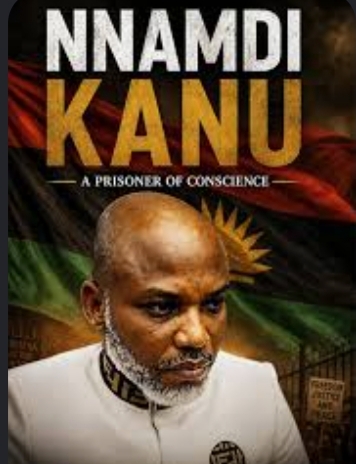
More than six decades after Nnamdi Azikiwe helped shape the intellectual environment of African nationalism, another Nnamdi stands at the center of the unfinished Biafran question. His name is Nnamdi Kanu.
Kanu, leader of the Indigenous People of Biafra, remains imprisoned in Nigeria following his 2025 conviction and life sentence, while his legal challenges continue. That contemporary reality raises a difficult historical question. Is the resemblance between the political anxieties surrounding yesterday’s Nnamdi and today’s Nnamdi merely coincidence? Or are we looking at different chapters of a much older regional problem involving Biafra, Nigeria, Britain, Southern Cameroons and the fear that the map inherited from colonial rule might someday be challenged? The answer requires caution.
Nnamdi Kanu’s imprisonment today does not by itself prove what Britain intended in Southern Cameroons in 1961. But when the historical pieces are placed beside one another, the continuity deserves investigation. Because Southern Cameroons did not merely border Nigeria. It bordered the very region from which Biafra would later emerge. And in 1961, Southern Cameroons was denied the one political option that could have transformed that border forever: independence as a sovereign state in its own right.
The First Nnamdi
Long before Biafra, there was Dr. Nnamdi Azikiwe. Azikiwe was more than a Nigerian politician. He was a journalist, nationalist, intellectual and one of the most important propagators of African political awakening in the first half of the twentieth century. His years in the Gold Coast were particularly important.
As editor of the African Morning Post, Azikiwe helped popularize ideas of African dignity, anti-colonial nationalism, racial emancipation and Pan-African solidarity. Among the generation that absorbed that atmosphere was a younger Ghanaian nationalist: Kwame Nkrumah.
The precise degree of Azikiwe’s personal influence upon Nkrumah must be treated carefully, but there is little doubt that they inhabited the same expanding Pan-African intellectual universe. Azikiwe helped use journalism to challenge colonial authority. Nkrumah later transformed those ideas into governmental power.
By 1957, Ghana had become independent. Nkrumah immediately made clear that Ghana’s freedom was not intended to end at Ghana’s borders. Accra became a center of continental liberation politics. Ghanaian independence was presented not simply as a national achievement but as one stage in a much larger African emancipation. That transformation mattered to every colonial power still administering African territory. Including Britain.
Then Came Foncha
Only a few years after Ghana’s independence, another politician was rising in British-administered Southern Cameroons. His name was John Ngu Foncha. Foncha represented a profound challenge to the political trajectory Southern Cameroons had followed under British rule. Britain had administered Southern Cameroons as part of Nigeria. But by the 1950s, resistance to continued integration with Nigeria had grown considerably.
Historian Victor Bong Amaazee has documented the importance of what he termed the “Igbo Scare” in British Southern Cameroons between approximately 1945 and 1961. Concerns about Igbo economic, commercial and political influence contributed significantly to dissatisfaction with continued association with Nigeria and were particularly visible in the elections of 1954, 1957 and 1959.
This is where the story becomes considerably more complicated than conventional accounts suggest. Azikiwe represented a powerful Igbo-associated Nigerian nationalist tradition. His intellectual world helped nourish Pan-African nationalism. Nkrumah emerged from that broader environment and turned Pan-Africanism into state policy.
And Foncha was simultaneously leading Southern Cameroons away from incorporation into the Nigerian federation. Thus three political currents were beginning to converge: Igbo nationalism and political strength inside Nigeria. Nkrumah’s Pan-Africanism outside Nigeria. Foncha’s Southern Cameroons nationalism on Nigeria’s eastern frontier. That combination deserves far greater historical attention.
The £10,000 Question
One persistent account in Southern Cameroons political history holds that Kwame Nkrumah provided approximately £10,000 in assistance to Foncha’s political campaign. If established conclusively through Ghanaian, British or Southern Cameroons archival records, that fact would fundamentally change the historical interpretation of the period. It would mean Nkrumah did not merely sympathize philosophically with Foncha. He materially assisted him. And £10,000 in the political economy of the late 1950s was not insignificant. Such assistance would immediately raise another question:
What did Whitehall know?
Britain possessed an extensive colonial administrative and intelligence network. Political activity in its African territories was closely monitored. Nkrumah himself was hardly an obscure figure. He was one of the most visible and ambitious advocates of continental African liberation. If his government or political network was financing a politician governing a strategically located British trust territory, it is difficult to imagine that Whitehall would regard that development casually.
The £10,000 claim therefore deserves rigorous archival verification. But if confirmed, it gives new meaning to the relationship between Foncha and Nkrumah. Was Foncha Becoming a Mini-Nkrumah? Consider the situation as a British strategist might have viewed it. Nkrumah had demonstrated that a determined nationalist could mobilize a relatively small African territory, challenge colonial authority, achieve independence and transform his country into a center of continental political activism.
Now consider Foncha.
He defeated the political establishment in Southern Cameroons. He rejected continued integration with Nigeria. He operated within the political orbit of the newly independent African states. He was connected with Nkrumah’s broader Pan-African world. And, if the financing account is correct, he enjoyed direct material assistance from Accra. What would happen if Southern Cameroons itself became independently sovereign? Could Buea become another Accra? Could Foncha become another Nkrumah? Could another small African state emerge with political influence disproportionate to its geographical size? These are questions, not established conclusions. But they are exactly the kinds of questions imperial planners would have had reason to consider.
Geography Changes Everything
Southern Cameroons was not located somewhere politically irrelevant. Look at the map. To the west lay Nigeria. More specifically, Southern Cameroons bordered the Nigerian Eastern Region. That region contained a powerful Igbo population and political establishment. To the east lay the Republic of Cameroon. To the south lay the Atlantic Ocean. An independent Southern Cameroons would therefore have possessed something of potentially enormous geopolitical importance: a sovereign international frontier beside Eastern Nigeria and independent access to the Atlantic. In 1961, nobody could know that Biafra would be declared six years later. But British officials certainly understood the intense regional rivalries already existing inside Nigeria.
They understood the strength of Eastern Nigerian politics. They understood the increasing pressures generated by nationalism. And they understood how unstable colonial political constructions could become as independence approached. The crucial question is therefore not: Did Britain foresee Biafra? That would go too far. The better question is: Did Britain understand the political conditions from which something like Biafra could eventually emerge? If so, an independently sovereign Southern Cameroons beside Eastern Nigeria would have mattered enormously.
The Third Box
This brings us back to the ballot. On February 11, 1961, Southern Cameroonians voted in a United Nations-organized plebiscite. But they were not asked whether they wanted sovereign independence. They were asked whether they wished to achieve independence by joining Nigeria or by joining the Republic of Cameroon.
The UN framework eventually terminated British trusteeship over Southern Cameroons on October 1, 1961, upon its joining the Republic of Cameroon. There was no third sovereign option. No box saying: Independent Southern Cameroons. This remains one of the central unresolved political questions of Southern Cameroons history. Why? Why could Ghana become Ghana? Why could Nigeria become Nigeria? Why could numerous other British territories proceed toward sovereign statehood? Yet Southern Cameroons was asked to choose which neighboring country it would join?
The usual explanation was viability. Southern Cameroons was supposedly too small or economically incapable of sustaining sovereign independence. But was economics the whole story? Or did strategic considerations matter? Imagine the Alternative Map Consider what African geography would have looked like had Southern Cameroons become sovereign in 1961.
There would have been an independent English-speaking state stretching along part of Nigeria’s eastern frontier. It would have possessed Atlantic access. Its leadership could have cultivated relations independently with Ghana and other Pan-African governments. It could have joined the United Nations. It could have developed its own diplomatic and military relations. It could have controlled its own border with Eastern Nigeria.
Now move forward six years.
On May 30, 1967, the Eastern Region attempted to secede from Nigeria as the Republic of Biafra. Suddenly the geopolitical importance of the Southern Cameroons frontier becomes unmistakable. Had Southern Cameroons been independently sovereign, Biafra would have had an international neighbor whose policies would not have been controlled by Lagos. That does not mean Southern Cameroons necessarily would have supported Biafra.
History cannot be rewritten with certainty. But the strategic possibilities would have been dramatically different. Diplomatic access. Humanitarian corridors. Trade. Arms movement. Refugees. International mediation. Recognition. Communications. An independent Southern Cameroons would have possessed choices that a federated territory inside Cameroon did not possess independently. That is why the geography matters.
Then Biafra Happened
When Biafra finally emerged in 1967, Britain’s position became much clearer. Britain strongly supported the Federal Government of Nigeria and supplied it with arms. Contemporary U.S. diplomatic documentation explicitly described Britain’s “strong backing, including arms, for Federal Nigeria.”
Another U.S. intelligence assessment stated that Britain had sold Nigeria small arms and ammunition from the beginning of the war and argued that maintaining support for the recognized federal government helped preserve British influence and interests in Nigeria. That evidence matters.
It demonstrates that when Nigerian territorial integrity was actually challenged, Britain considered the preservation of the Nigerian federation strategically important. That does not retroactively prove that Britain designed the 1961 Southern Cameroons plebiscite because it anticipated Biafra. But it establishes something significant: Britain later demonstrated a clear strategic interest in preventing Nigeria’s fragmentation. The historical question is whether elements of that concern were already present before 1961.
Britain’s Nigerian Investment
Nigeria was one of Britain’s most important former African possessions. Its population, economy, petroleum potential, commercial networks and strategic position gave it extraordinary regional importance. A disintegrating Nigeria would therefore have consequences far beyond Nigerian domestic politics. The Biafran War exposed this calculation dramatically.
A 1969 U.S. intelligence assessment reported that Britain and the Soviet Union were reluctant to support an arms embargo partly because doing so could jeopardize their interests with Federal Nigeria. Nigeria’s unity was therefore not merely an abstract constitutional principle. It involved influence. Commerce. Strategic relationships. Regional stability. And power. The question historians should ask is whether Britain’s attitude toward Southern Cameroons can be understood completely without placing those Nigerian interests beside it.
The Igbo Factor Before Biafra
The evidence demonstrates that Igbo political and economic influence was already a major issue inside Southern Cameroons long before the Biafran War. Amaazee’s research shows that apprehension over Igbo domination became an important factor in Southern Cameroons politics and contributed to the eventual decision to leave Nigeria. That is critically important. It means the Igbo question did not suddenly appear in 1967. It was present during the Southern Cameroons decolonization process itself. But Britain may have confronted a paradox.
Keeping Southern Cameroons in Nigeria could deepen Southern Cameroonian opposition because of fears of Eastern Nigerian and Igbo dominance. Allowing Southern Cameroons complete sovereign independence might create another unpredictable Pan-African state directly beside that same Eastern Region.The remaining solution was the one eventually placed before Southern Cameroonians: Nigeria or Cameroon. Either way, there would be no independently sovereign Southern Cameroons.
The First Nnamdi and the Second
That brings us back to the strange historical echo. The first Nnamdi was Nnamdi Azikiwe. His journalism helped energize African nationalism. He became one of the dominant political figures of Nigerian independence. His ethnic and regional political environment became closely associated with the Eastern Region. Then came Biafra.
Today there is another Nnamdi: Nnamdi Kanu. He leads a movement again demanding Biafran self-determination. He has been imprisoned by the Nigerian state. And the fundamental issue beneath his political struggle remains one that haunted Nigeria during the 1960s: Can the state permit one of its constituent peoples to leave? The Nigerian government’s answer has remained emphatically opposed to unilateral secession. But the recurrence should not be misunderstood.
Kanu’s imprisonment today does not demonstrate that Britain secretly controls contemporary Nigeria. Nor does it prove that British officials in 1961 anticipated today’s IPOB movement. What it demonstrates is that the political problem surrounding Biafran separatism was never completely resolved. Coincidence or Strategic Continuity?
History demands that we distinguish coincidence from causation. The fact that both Azikiwe and Kanu carry the name Nnamdi is obviously not evidence of geopolitical continuity. Their names are symbolic here, not causal. The deeper continuity lies elsewhere. It lies in the unresolved struggle between: centralized territorial sovereignty and the demand of politically distinct peoples for self-determination.
That tension existed during the decolonization of Southern Cameroons. It exploded violently during Biafra. And it continues to appear in contemporary Nigerian politics. Britain participated directly in constructing the territorial and constitutional environment within which those disputes developed. Therefore examining British strategic thinking is not conspiracy theorizing. It is legitimate historical inquiry. But the evidence must lead the argument.
What Did Whitehall Know?
This is where the next stage of research must begin. Historians should search British Colonial Office, Foreign Office and intelligence records from approximately 1957 to 1961 for references to: John Ngu Foncha. Kwame Nkrumah. Nnamdi Azikiwe. The Eastern Region of Nigeria. Igbo political influence. The economic viability of Southern Cameroons. The strategic implications of Southern Cameroons independence. Nigerian territorial integrity. Ghanaian financing of Southern Cameroons political activity. And particularly: the consequences of creating a separately independent Southern Cameroons along Nigeria’s eastern frontier.
If those documents explicitly connect these considerations, an important part of the history will have been recovered. Perhaps Britain Did Not Fear Biafra Britain could not literally fear Biafra in 1961. Biafra had not yet been declared. Ojukwu had not yet announced secession. The civil war had not yet begun. But Britain could fear something broader. It could fear fragmentation. It could fear radical African nationalism. It could fear political contagion from Nkrumah’s Ghana. It could fear instability inside Nigeria. It could fear the economic consequences of losing influence in Britain’s largest West African possession. And it could fear the unpredictability of another sovereign African state emerging under leadership sympathetic to Nkrumah.
This produces a much more historically defensible proposition: Perhaps Britain did not fear Biafra in 1961. Biafra did not yet exist. What Britain may have feared were the political conditions from which a Biafra could someday emerge—and an independent Southern Cameroons standing beside Eastern Nigeria could have changed the consequences completely. That is the question. One Nkrumah May Have Been Enough
Nkrumah had already shown what could happen when Britain lost political control of a small African colony to an ambitious nationalist movement. Ghana became more than an independent country. It became an ideological headquarters. Nkrumah financed and encouraged liberation movements across the continent. He openly challenged the colonial order.
If Foncha was becoming closely associated with that political world, Whitehall might reasonably have wondered what sovereign Southern Cameroons would become. Another Ghana? Another center for Pan-African mobilization? Another platform challenging colonial boundaries?
We do not yet possess sufficient archival evidence to say definitively that this fear determined British policy. But we possess enough evidence to insist that the question be investigated. The Fate May Have Been Decided Before the Vote Southern Cameroonians have spent generations debating what Foncha did after the plebiscite. Whether Foumban was mishandled. Whether Ahidjo deceived Southern Cameroons. Whether federation contained adequate constitutional guarantees. Whether reunification was ever legally completed. Those questions matter. But perhaps the investigation begins too late.
Perhaps the decisive political limitation had already occurred before Foncha entered Foumban. Before February 11, 1961. Before anyone marked the ballot. Someone had already determined what Southern Cameroonians would not be allowed to choose. There was a box for Nigeria. There was a box for Cameroon. There was no box for Southern Cameroons.
The Two Nnamdis
One Nnamdi belonged to the generation that awakened African nationalism. Another Nnamdi belongs to a generation still contesting the territorial inheritance that followed colonialism. Between them lies Biafra. And beside Biafra lies Southern Cameroons. Those facts do not establish a conspiracy. But they establish a historical landscape that deserves far more investigation than it has received.
Azikiwe helped spread the intellectual language of African liberation. Nkrumah transformed that language into state power. Foncha emerged on the frontier of Nigeria challenging the political order Britain had constructed. Biafra later attempted to break that Nigerian order apart. Britain backed Federal Nigeria. And today the Biafran question survives. Perhaps these events are separate. Perhaps they are connected only by geography and the unfinished consequences of decolonization. Or perhaps Britain’s archives will reveal that Whitehall understood far more about the strategic importance of Southern Cameroons than history has yet acknowledged.
That is why the most important question about February 11, 1961 may no longer be: Why did Foncha win? It may be: Why was independent Southern Cameroons never permitted to compete? Until that question is answered from the archives, the missing third box will continue to cast its shadow over the history of West and Central Africa.
As Amazon associate this site earns from qualifying purchases
Get books on productive Sovereignty and statecraft, By Martin Mungwa on Amazon
https://www.amazon.com/s?k=martin+mungwa&crid=3ASZUKJG4IRKV&sprefix=Martin+mungwa%2Caps%2C439&linkCode=ll2&tag=njokings-20&linkId=f8804d009da3f34c8c8a8db2ec2f8222&language=en_US&ref_=as_li_ss_tl
Ali Dan Ismael, Editor-in-chief The Independentist News
Share This Post:
PROPHECY, POLITICS, AND THE AMBAZONIAN QUESTION (PART I) : When Prediction Replaces Preparation, and Spectators Prepare to Claim a Victory They Did Not Build
Related Post
PROPHECY, POLITICS, AND THE AMBAZONIAN QUESTION (PART I) :
COMING SOON!!! SCRIPTEGRITY CERTIFICATION PROGRAM
Clement Atangana Is Gone. What Did He Leave Behind
DAVID MAKONGO’S PRESCRIBED PEACE: His Call to “Engage Sisiku”
Africa Does Not Need More Aid. It Needs an
VERITAS NETWORK — SPECIAL INDEPENDENCE DAY MESSAGE: 65 YEARS