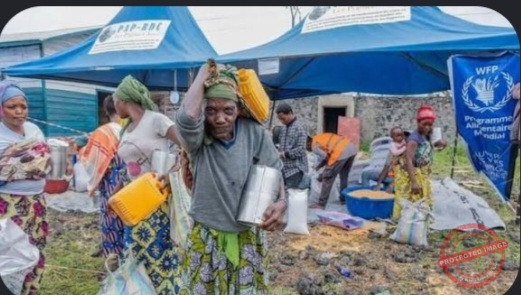


The refugees of the borderlands are more than statistics. They are mothers and fathers, students and teachers, farmers and entrepreneurs. Their story deserves to be heard—not only during moments of crisis but until lasting solutions are found.
By Timothy Enongene
Associate Editor-in-Chief, The Independentist News
While political developments in Yaoundé often dominate headlines, a quieter and arguably more devastating tragedy continues to unfold across the borderlands of the Gulf of Guinea. Nearly a decade after the outbreak of conflict in the Southern Cameroons, tens of thousands of refugees remain displaced in neighboring Nigeria, struggling to rebuild their lives far from their homes, communities, and livelihoods.
For many of these families, displacement has become a permanent condition rather than a temporary emergency. Children have spent much of their lives in exile. Parents who once owned farms, businesses, and homes now depend on humanitarian assistance and the goodwill of host communities. The crisis rarely captures international attention, yet its humanitarian consequences continue to deepen.
The Geography of Exile
The conflict has transformed portions of Nigeria’s border region into an extended humanitarian corridor. Refugees from Southern Cameroons can be found across Cross River, Taraba, and Benue states, living in a combination of official settlements, informal communities, and remote rural areas.
In settlements such as Anyake and Ikyogen, humanitarian organizations have worked to provide shelter, food assistance, education, and healthcare. However, aid agencies face significant funding constraints, and resources often fall short of growing needs.
Beyond the official settlements, many refugees reside with Nigerian host families who have opened their homes despite facing economic difficulties of their own. These host communities have become an essential pillar of survival for thousands of displaced people.
Others remain scattered throughout remote border areas, where access to healthcare, education, legal services, and humanitarian support is extremely limited. Their isolation often leaves them vulnerable to disease, poverty, and exploitation.
A Generation Growing Up in Limbo
Perhaps the most serious long-term consequence of the refugee crisis is its impact on children and young people. Thousands of refugee children have experienced prolonged interruptions in their education. Many face challenges obtaining documentation, accessing formal schooling, or securing pathways to higher education and employment. For young people who have spent years in displacement, uncertainty about the future has become a defining feature of daily life.
Humanitarian experts warn that prolonged displacement can create conditions that increase vulnerability to trafficking, child labor, exploitation, and chronic poverty. Without sustained intervention, an entire generation risks losing opportunities that are critical to long-term social and economic development.
The International Response
The refugee situation in the Gulf of Guinea remains one of Africa’s lesser-known humanitarian emergencies. Although international organizations, including humanitarian agencies and faith-based groups, continue to provide support, funding levels remain insufficient to meet growing needs.
The limited visibility of the crisis has contributed to a significant gap between humanitarian requirements and available resources. As global attention shifts toward newer conflicts and emergencies, displaced populations in the Gulf of Guinea often struggle to maintain international awareness of their situation.
The challenge is not only humanitarian but also regional. Large-scale displacement affects social services, local economies, education systems, and community relations throughout border areas. Long-term stability in the region will require durable solutions that address both humanitarian needs and the underlying causes of displacement.
Resilience Amid Hardship
Despite enormous challenges, the refugee population has demonstrated remarkable resilience. Teachers have established informal learning centers where formal schools are unavailable. Farmers have organized cooperative projects on rented land. Community leaders have created support networks to assist vulnerable families, preserve cultural traditions, and maintain a sense of identity and belonging.
These efforts illustrate the determination of displaced communities to preserve hope under difficult circumstances. They also highlight an important reality: refugees are not merely victims of conflict. They are individuals striving to build meaningful lives despite extraordinary adversity.
The Path Forward
The refugee crisis in the Gulf of Guinea cannot be viewed solely as a humanitarian issue. It is also a human story of families separated from their homes, communities disrupted by conflict, and young people growing up in uncertainty.
Humanitarian assistance remains essential, but lasting solutions will ultimately depend upon creating conditions that allow displaced populations to live in safety, dignity, and security. Whether through voluntary return, local integration, or other durable arrangements, the needs and rights of affected populations must remain at the center of international efforts.
The refugees of the borderlands are more than statistics. They are mothers and fathers, students and teachers, farmers and entrepreneurs. Their story deserves to be heard—not only during moments of crisis but until lasting solutions are found.
Editor’s Note: This commentary seeks to highlight the humanitarian dimensions of displacement affecting populations from the Southern Cameroons. Humanitarian figures and conditions may vary according to reporting sources and changing circumstances on the ground.
Timothy Enongene
Associate Editor-in-Chief, The Independentist News