

The governing doctrine should be clear: Own the story. Protect the rights. Train the people. Control the source files. Build the production capacity. Reach the audience. Circulate the revenue. Finance the next generation. The nation that tells its own story does more than correct the historical record. It creates employment, preserves memory, develops talent, attracts investment, influences global opinion, and converts culture into a renewable national asset
By Ali Dan Ismael, Editor-in-chief The Independentist News
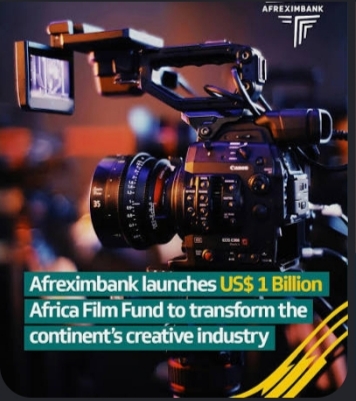
Africa’s creative economy may be approaching a consequential turning point. The African Export-Import Bank, through its development-impact investment platform, the Fund for Export Development in Africa, has launched a Pan-African Film Fund intended to mobilize as much as US$1 billion for African film, television, production infrastructure, postproduction, digital distribution, and exhibition.
For Ambazonia, this development must not be treated as distant entertainment news. It presents a potentially important opening for independent filmmakers, writers, actors, musicians, animators, historians, producers, editors, and diaspora investors capable of transforming Ambazonian stories into internationally marketable cultural assets.
However, the opportunity will not automatically reach Ambazonia. Money does not travel merely toward the people with the greatest suffering or the most legitimate political cause. Investment flows toward organized teams, legally identifiable companies, commercially credible projects, protected intellectual property, experienced producers, reliable financial records, and believable distribution strategies.
Ambazonians must therefore resist the temptation to ask only, “How much money can we receive?” The more important questions are: What productive film capacity can we build? Who will own the stories? Who will control the source files and distribution rights? Where will the skills remain after production? Who will earn revenue from the finished work? And will one successful film create the foundation for ten more? That is the difference between receiving temporary financing and building a permanent creative economy.
Film Is More Than Entertainment
For a people whose history has frequently been narrated by colonial officials, foreign correspondents, humanitarian organizations, hostile state institutions, and outside researchers, film is not a luxury. It is an instrument of memory, identity, education, diplomacy, economic production, and national self-representation.
Most international audiences will never read a constitutional memorandum, a United Nations resolution, an African Commission decision, or a 900-page national-development blueprint. Yet millions may watch a powerful documentary, historical drama, television series, animation, or independent feature film.
A carefully produced film can make an audience see Buea as more than a town on a disputed map. It can present it as the historic capital of British Southern Cameroons, a center of education, administration, culture, political organization, and national memory. It can show Bamenda as more than a location associated with armed conflict. It can reveal its markets, schools, music, landscapes, civic traditions, entrepreneurship, and political consciousness.
Film can carry viewers into the plantations of the Cameroon Development Corporation and PAMOL; the classrooms where a distinct educational tradition developed; the courts shaped by the common-law system; the villages emptied by conflict; the refugee settlements where families continue to hope; and the diaspora homes where children struggle to understand a homeland they have never visited.
When properly made, such films do not merely tell the world that Ambazonia exists. They enable the world to encounter Ambazonians as complete human beings rather than as statistics, refugees, separatists, soldiers, or victims.
The Independent Filmmaker Is a Strategic National Asset
The greatest beneficiaries of this opening should not be limited to political organizations or a centrally controlled “national film” structure. Independent filmmakers are essential because cultural renewal rarely begins inside a ministry. It begins with courageous writers, small production teams, unconventional directors, investigative documentarians, community historians, mobile-phone filmmakers, animators, musicians, and young people experimenting beyond official boundaries.
Independent filmmakers can reach stories that large institutions overlook. They can record the memories of elders, women, farmers, traditional authorities, former civil servants, teachers, survivors, displaced families, exiled professionals, and children born during the conflict. They can explore disagreement within the Ambazonian movement without abandoning the national cause. They can investigate leadership, sacrifice, corruption, courage, exile, grief, hope, and reconstruction with a freedom that official propaganda cannot provide.
Independence, however, must not mean permanent poverty, technical weakness, or disorganization. The romantic image of the struggling filmmaker carrying a borrowed camera may produce occasional brilliance, but it cannot sustain a national industry.
Ambazonian independent filmmakers must become independent not only in artistic voice but also in ownership, financing, production competence, data control, contracting, distribution, and revenue generation.
A filmmaker who creates an Ambazonian story but signs away the copyright, characters, sequel rights, soundtrack, international distribution, editing files, and streaming revenue may receive applause while losing the productive asset. The story travels, but its economic returns never come home. Cultural visibility without ownership can become another form of extraction.
From Stories of Suffering to a Complete National Cinema
Ambazonian filmmaking must not be confined to war footage, funerals, burned villages, political speeches, and allegations of abuse. These subjects deserve accurate documentation, and evidence of atrocities must be preserved carefully. But a nation cannot permit its entire cinematic identity to be reduced to its suffering.
Ambazonia has comedy, romance, family conflict, spirituality, traditional authority, entrepreneurship, migration, music, food, fashion, sports, folklore, science, engineering, agriculture, environmental beauty, and competing visions of modernity. It possesses the ingredients for historical dramas, political thrillers, family series, courtroom productions, documentaries, children’s programs, animation, faith-based films, science fiction, and stories of the diaspora.
A complete national cinema must show not only what was done to the people, but also who the people are, what they have created, what they love, what makes them laugh, how they resolve conflict, and what future they intend to build.
The world should encounter the Ambazonian mother who builds a market enterprise, the engineer who returns from the diaspora, the student who develops a rural-energy system, the farmer who modernizes a cooperative, the traditional ruler confronting corrupt interests, the young woman directing her first film, and the family divided between survival under occupation and hope in exile.
A people represented only through pain may receive sympathy. A people represented through imagination, competence, humanity, and productive ambition can earn respect, investment, influence, and enduring cultural presence. The Fund Is an Investment Opportunity, Not a Political Donation
Ambazonian filmmakers must approach the Pan-African Film Fund with disciplined expectations. Afreximbank states that the initiative aims to mobilize up to US$1 billion; this should not be interpreted to mean that the full amount is already available for immediate distribution or that small independent producers can automatically obtain financing.
The fund is intended to support commercially viable creative enterprises through such instruments as equity, quasi-equity, and structured financing. Its scope includes productions, studios, postproduction facilities, digital platforms, and exhibition networks. Its appointment of One Street Studios as co-general partner also signals that professional production, commercial strategy, and access to global markets will matter. Afreximbank’s official announcement
The detailed investment parameters and application guidelines are still being developed or released. Consequently, nobody should promise Ambazonian filmmakers guaranteed access.CANEX Africa Film Fund, Nor should Ambazonians assume that a political narrative, however compelling, is automatically a bankable production. Investors will ask whether the team can complete the film, whether the budget is credible, whether the necessary rights have been secured, whether the story has a definable audience, and whether distribution can produce revenue.
A powerful cause is not a substitute for a viable business model. The two must be joined. Begin with an Ambazonian Independent Film Accelerator. Ambazonian filmmakers should establish a professionally governed, politically nonpartisan Ambazonian Independent Film and Digital Storytelling Accelerator. Its purpose would not be to control artistic expression or convert filmmakers into mouthpieces for any administration. It would prepare credible projects for financing, production, and global distribution.
The accelerator should help creators develop treatments, screenplays, budgets, pitch decks, production schedules, market analyses, trailers, proof-of-concept shorts, legal documentation, and distribution strategies. It should maintain a verified directory of Ambazonian actors, writers, directors, cinematographers, editors, animators, composers, translators, historians, accountants, entertainment lawyers, and diaspora investors.
Its first objective should be to prepare perhaps five exceptional productions rather than fifty weak proposals. The initial portfolio could include a historical documentary on Southern Cameroons; a dramatic limited series connecting life in Buea, Bamenda, London, Washington, and the refugee communities; a documentary on the CDC and PAMOL; an animated children’s series preserving indigenous stories and languages; and a future-oriented production presenting Ambazonia beyond conflict. Each project should have a clearly identified audience, budget, ownership structure, commercial pathway, and social purpose. Independent Filmmakers Must Build a Ladder to Bankability
The requirements associated with large African creative-financing facilities can be beyond the immediate reach of a first-time filmmaker. Previous CANEX financing initiatives have looked for evidence such as commercially successful titles, operating history, distribution agreements, producer experience, company revenues, and meaningful equity contributions. These should not automatically be treated as the final requirements of the new Pan-African Film Fund, but they reveal the level of commercial readiness serious investors may expect.
Ambazonia therefore needs a development ladder.
At the first level, new filmmakers can produce short films, interviews, animation pilots, micro-documentaries, and proof-of-concept scenes. These can enter festivals, online exhibitions, university screenings, and diaspora competitions.
At the second level, successful filmmakers can form lawful production companies, maintain accounts, document audience performance, build a catalogue, register copyrights, and develop relationships with established producers.
At the third level, Ambazonian companies can enter co-production agreements with experienced African, Caribbean, American, British, Brazilian, or other diaspora studios while preserving meaningful ownership.
At the fourth level, mature companies can seek major financing for feature films, television series, postproduction facilities, training academies, streaming services, or distribution networks.
This ladder permits talent to grow into investability. It also prevents inexperienced creators from surrendering valuable intellectual property simply because an outsider possesses equipment, funding, or access to a streaming platform.
Ownership Must Be Decided Before the Camera Rolls Every Ambazonian film project seeking serious investment must establish a defensible chain of title. That means documenting who wrote the screenplay, who owns the underlying story, who authorized the use of archival material, who controls the music, who granted interview releases, and which company owns the completed film.
If a production is based on a book, unpublished manuscript, personal testimony, historical archive, or proprietary framework, adaptation rights must be negotiated in writing. Receiving a copy of a manuscript does not transfer the right to film it. Editing a documentary does not automatically confer ownership. Financing a production should not silently transfer every future right to the financier.
Contracts should distinguish theatrical rights, television rights, streaming rights, educational rights, airline rights, international territories, language versions, soundtrack rights, merchandising, remakes, sequels, prequels, characters, clips, archival use, and emerging media.
Ambazonian creators should never surrender editable source files, raw footage, production accounts, passwords, master recordings, or global rights merely to obtain a finished film. All material should be securely stored, with encrypted backups and clear institutional control.
The principle is straightforward: partners deserve fair returns for capital, work, risk, and distribution, but Ambazonians must retain a meaningful share of the assets created from their own history, culture, sacrifice, and imagination.
The Diaspora Must Supply More Than Donations
The Ambazonian diaspora possesses writers, engineers, lawyers, accountants, academics, businesspeople, actors, journalists, technicians, and potential investors. Its role should move beyond financing political meetings and emergency appeals.
A diaspora film cooperative could pool modest investments across several projects, spreading risk while building a catalogue of intellectual property. Lawyers could assist with contracts and chain-of-title documentation. Accountants could establish transparent production budgets and reporting systems. Universities could host screenings and scholarly discussions. Engineers and software specialists could support digital archives, animation, virtual production, cybersecurity, and streaming infrastructure.
Experienced diaspora professionals could also help filmmakers obtain insurance, open legitimate production accounts, establish tax-compliant companies, negotiate international co-productions, and prepare investor-grade documents.
But diaspora participation must not reproduce paternalism. Creators on the Home Front cannot be treated merely as sources of images and stories while ownership, editing, revenue, and decision-making remain abroad. Local filmmakers must receive training, credit, equipment access, fair compensation, and equity wherever possible.
The objective should be a circulation of knowledge, capital, talent, stories, and returns between the Home Front and the diaspora—not the extraction of local experience for foreign-based ownership.
Build Facilities That Produce Repeated Returns
Ambazonia should avoid spending scarce resources on ceremonial offices or a grand “national studio” that cannot operate commercially. A more effective beginning would be a distributed production network with modest facilities in several creative centers.
A shared equipment library could rent cameras, lighting, sound equipment, drones, and editing systems at affordable rates. A secure postproduction laboratory could serve documentaries, commercials, music videos, podcasts, educational media, and feature films. A small animation and visual-effects studio could train young people while serving clients beyond Ambazonia. Mobile production units could record stories in communities that lack permanent facilities.
Such assets should not remain idle between political projects. They should generate income from weddings, advertising, corporate media, educational content, music, tourism promotion, livestreaming, and commissioned productions. Commercial activity can subsidize historical, cultural, and public-interest filmmaking.
The same camera that records an oral history can produce a commercial. The same editor who completes a documentary can serve a regional business. The same animation studio that preserves a folktale can develop educational content for the African and diaspora market.This is how equipment becomes productive capital rather than a one-time expense.
Distribution Must Be Designed Before Production
Many African films are completed before anyone determines how audiences will see them. That reverses the commercial order. Every serious Ambazonian production should identify its distribution pathway before principal photography. Is the primary market theatrical, broadcast television, streaming, educational licensing, film festivals, churches, universities, diaspora organizations, airlines, mobile platforms, or direct digital purchase?
A documentary intended for universities requires a different structure and rights package from a commercial thriller intended for streaming. A children’s animation requires language dubbing, safeguarding standards, licensing possibilities, and perhaps school distribution. A diaspora drama may require festival exposure followed by a streaming or broadcaster agreement.
English-language production offers Ambazonian filmmakers access to large international markets, but multilingual strategy can expand their reach. Productions should consider subtitles or dubbing in Pidgin English, French, Portuguese, Spanish, and selected indigenous languages where commercially and culturally appropriate. The film is not the final product if nobody can find, purchase, license, exhibit, or discuss it.
Never Turn National Cinema into Official Propaganda
An Ambazonian creative industry will lose global credibility if every production praises a particular leader, administration, faction, or military organization. Investors, festivals, distributors, critics, and audiences can distinguish storytelling from propaganda.
Independent filmmakers must be free to examine the national struggle honestly, including its internal contradictions. They should be able to depict courage and failure, unity and division, sacrifice and opportunism, principled leadership and abuse of power. This freedom does not weaken Ambazonia. It demonstrates that Ambazonia aspires to be a democratic society capable of examining itself.
A government may commission public-information productions, but they should be transparently identified as such. Independent cinema should remain independently governed. Public funds, where available, should be awarded through published criteria and professional review rather than political loyalty. The nation needs storytellers, not court poets with cameras.
A Practical Twelve-Month Program
During the first three months, Ambazonian filmmakers and diaspora professionals should convene a creative-economy forum, establish the independent accelerator, develop ethical and intellectual-property standards, and open a verified registry of creative professionals.
Within six months, the accelerator should select an initial slate of projects, organize screenwriting and production workshops, obtain entertainment-law support, and produce short proofs of concept. Each selected team should complete a treatment, budget, audience analysis, financing plan, ownership schedule, and preliminary distribution strategy.
Within nine months, the strongest productions should enter festivals, CANEX-related opportunities, diaspora exhibitions, and co-production discussions. The initiative should establish partnerships with African studios, universities, broadcasters, and experienced producers without surrendering Ambazonian editorial and economic interests.
Within twelve months, at least one documentary, one dramatic short, and one animation pilot should be professionally completed, distributed, and measured. Their performance should produce data on audience size, revenue, festival acceptance, licensing interest, and production costs. That evidence will be more persuasive to investors than another conference declaration.
The Opportunity Is Larger Than One Billion Dollars
The greatest value of the Pan-African Film Fund is not the possibility that Ambazonians might secure a portion of US$1 billion. Its deeper importance is that it confirms African stories, studios, distribution systems, and creative intellectual property are increasingly being recognized as investable assets.
Ambazonia must not approach this moment carrying only an appeal for help. It must arrive with scripts, companies, budgets, talent, ownership records, trailers, audiences, and distribution partners.
The ambition should not be to produce one film about the conflict, collect awards, and disappear. It should be to establish a renewable creative system in which one story finances another, one production trains the next team, one successful filmmaker mentors younger creators, one studio serves many industries, and one international partnership opens several markets.
Every production should leave behind more than a finished screen image. It should leave skills, equipment, revenue, professional credits, audience data, distribution relationships, protected intellectual property, and greater capacity for the next production. That is how film becomes an industry. That is how culture becomes productive power.
Conclusion: Ambazonia Must Own the Story and the Studio
For generations, outsiders have interpreted Africa to the world. They chose the camera angle, wrote the narration, selected the victims and villains, owned the footage, collected the awards, and kept the revenue. Ambazonia must not repeat that relationship under the attractive language of creative partnership.
The Pan-African Film Fund offers a strategic opening, particularly for independent filmmakers who can translate Ambazonian history, culture, conflict, imagination, and national-development vision into compelling global productions. But opportunity without organization will pass by. Financing without ownership may create dependency. Visibility without distribution will fade. Storytelling without commercial discipline will remain underfunded. Political control without artistic freedom will produce propaganda rather than enduring cinema.
Ambazonia must therefore cultivate independent filmmakers, protect their intellectual property, build production companies, train local talent, connect the Home Front with the diaspora, establish co-production relationships, and develop commercially credible pathways to audiences.
The governing doctrine should be clear: Own the story. Protect the rights. Train the people. Control the source files. Build the production capacity. Reach the audience. Circulate the revenue. Finance the next generation. The nation that tells its own story does more than correct the historical record. It creates employment, preserves memory, develops talent, attracts investment, influences global opinion, and converts culture into a renewable national asset.
Ambazonia must not enter the new African film economy merely as a subject to be photographed. It must enter as writer, director, producer, investor, distributor, rights holder, and enduring beneficiary. The cameras are beginning to roll across Africa. Ambazonia must ensure that when its story reaches the screen, its people retain both the narrative and the productive power behind it.
Ali Dan Ismael, Editor-in-chief The Independentist News