

Jacques Fame Ndongo may argue that the Constitution imposes no limit on presidential travel. Grégoire Owona may invoke annual leave and an alleged 80-day entitlement. Neither argument removes the government’s obligation to demonstrate that presidential authority remains active, lawful and accountable.
By Timothy Enongene
Associate Editor-in-Chief, The Independentist News
Fifty-Two Days Without a Clear Return Date
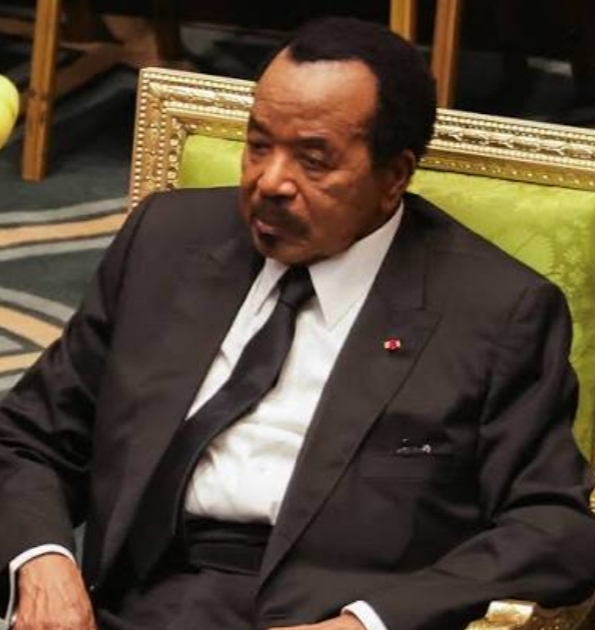
Yaoundé, – July 31, 2026 – President Paul Biya’s prolonged stay outside Cameroon has ignited a growing debate over constitutional authority, government transparency and the effective exercise of presidential power. As of July 29, the 93-year-old president has been abroad for approximately 52 days, having departed Yaoundé on June 7 for what the presidency described as a “brief private stay in Europe.”
No official return date has been announced. Although government institutions continue operating and presidential communications continue to be issued, the absence of a direct public appearance has intensified questions about Biya’s whereabouts, capacity to govern and the arrangements through which presidential authority is being exercised.
Opposition leaders and civil-society voices have demanded greater transparency. Some have gone further, calling upon the Constitutional Council to examine whether circumstances justify declaring the presidency vacant. Yet prolonged travel alone does not automatically create a constitutional vacancy. Under Cameroon’s Constitution, vacancy arises through death, resignation or permanent incapacity duly established by the Constitutional Council.
Rather than resolving the controversy, statements attributed to two senior ministers have produced competing explanations for the president’s absence.
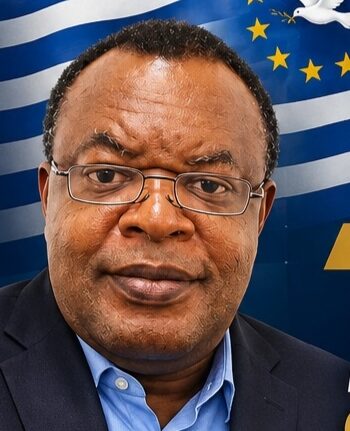
Jacques Fame Ndongo: No Legal Time Limit
Minister of State Jacques Fame Ndongo, who also serves as the ruling Cameroon People’s Democratic Movement’s national communication secretary, has argued that no constitutional or legal provision limits the number of days a president may remain outside Cameroon. That position rests upon a narrow but relevant observation: the Constitution does not specify that a president automatically loses office after spending 30, 50 or 80 days abroad.
However, constitutional silence concerning travel duration does not eliminate the government’s obligation to demonstrate that the president remains capable of performing his duties. The central question is not merely whether Biya may legally remain abroad. It is whether presidential authority continues to be exercised lawfully, personally and transparently.
If the president is actively governing from Europe, the government should explain how major decisions are being communicated, authenticated and implemented. The absence of a constitutional travel limit cannot become a substitute for public accountability.
Grégoire Owona: The “Annual Leave” Defense
Minister of Labour and Social Security Grégoire Owona reportedly introduced a markedly different defense. He characterized Biya as an employee elected and compensated by the Cameroonian people and therefore entitled to annual leave. Invoking labour-law calculations and the president’s years in office, Owona reportedly argued that Biya could be entitled to as many as 80 days of leave. He then declared the controversy “Game Over.” This intervention did not end the debate. It widened it.
The presidency is a constitutional office, not an ordinary employment relationship governed by a conventional contract between worker and employer. Citizens may be described politically as the president’s employers, but that democratic metaphor does not automatically make ordinary Labour Code provisions applicable to the head of state.
The annual-leave argument also creates unanswered questions. Who authorized the president’s leave? When did it officially begin? What constitutional arrangements govern the exercise of his duties during that period? Which authority approved the supposed 80-day entitlement, and what happens if the president does not return before it expires? Without authoritative answers, the Labour Code explanation appears more like political improvisation than an established constitutional doctrine.
Two Explanations That Do Not Comfortably Coexist
The two ministerial defenses reveal a deeper communication failure. Fame Ndongo’s argument implies that Biya remains fully at work and can exercise presidential authority from abroad without any constitutional time limit. Owona’s argument suggests that Biya is on regulated annual leave under an employment entitlement.
A president actively governing from abroad is not in precisely the same position as an employee on vacation. If Biya remains fully engaged, citizens should be told how he is directing the government. If he is on leave, they should be informed about the continuity arrangements governing duties that cannot be postponed.
Instead, the public has been presented with two different legal narratives—one based on constitutional silence and another based on labour law. The contradiction creates the impression that ministers are searching independently for arguments to defend an unexplained absence rather than communicating from a coordinated constitutional framework.
Absence Is Not Automatically Incapacity
The government’s conflicting explanations deserve scrutiny, but opposition demands must also remain grounded in constitutional law. A prolonged absence, even one generating legitimate public concern, does not by itself prove permanent incapacity.
Cameroon’s Constitution provides that a presidential vacancy results from death, resignation or permanent incapacity duly ascertained by the Constitutional Council. Political suspicion, ministerial disagreement or the number of days spent abroad cannot replace the required constitutional process.
The deeper concern is whether the institutions responsible for determining incapacity possess sufficient independence to examine the condition of a president who has dominated Cameroon’s political system since 1982.
The controversy is therefore larger than Biya’s travel schedule. It concerns whether Cameroon has credible institutions capable of verifying presidential capacity and protecting constitutional continuity.
Is Cameroon Operating on Autopilot?
Cameroon’s ministries, security agencies, courts and regional administrations continue to function. Nevertheless, continuing bureaucratic activity is not conclusive evidence of active presidential leadership. A highly centralized state can operate temporarily on administrative autopilot while senior officials maintain routine functions. The danger arises when major decisions requiring clear presidential authority continue to appear without transparent evidence of who authorized them.
As uncertainty continues, ministers and competing political networks may increasingly speak in the president’s name. Questions may emerge about the authentication of decrees, appointments and security directives. What begins as a communications problem could eventually develop into a struggle over succession and control of state institutions.
The Political Trap of the Eighty-Day Countdown
Owona’s reported 80-day calculation may have unintentionally created a political deadline that the Constitution itself does not recognize.
If Biya returns before the 80th day, the government may present his return as vindication. But that would not establish that the Labour Code governs presidential travel. If he remains abroad beyond the supposed entitlement, the government will confront a more difficult question: what happens on the 81st day? Does another minister produce a new calculation, or does the Labour Code suddenly trigger a constitutional process?
The absurdity demonstrates why ordinary employment rules cannot resolve questions concerning the exercise of sovereign constitutional authority. “Game Over” may have been intended as a decisive political response, but it has instead intensified public scrutiny.
What Cameroonians Are Entitled to Know
The public does not require disclosure of every private medical detail concerning the president. It is nevertheless entitled to sufficient information to determine whether the country’s highest constitutional office remains fully functional.
The government should state whether Biya is actively exercising his presidential duties, when he is expected to return, what continuity arrangements are operating and how official presidential decisions are being authenticated. These are not matters of gossip. They concern national security, constitutional government and the lawful exercise of executive authority.
Conclusion: Conflicting Defenses, Unanswered Questions
Paul Biya’s prolonged absence does not automatically establish a vacancy in the presidency. Yet the government’s conflicting explanations have exposed the weakness of official communication within a political system built around one ruler.
Jacques Fame Ndongo may argue that the Constitution imposes no limit on presidential travel. Grégoire Owona may invoke annual leave and an alleged 80-day entitlement. Neither argument removes the government’s obligation to demonstrate that presidential authority remains active, lawful and accountable.
Cameroonians are not merely asking whether their president has a right to travel or rest. They are asking who is governing the country, how presidential authority is being exercised and why a question of such national importance is being answered through contradictory ministerial defenses. Until the government provides clear and verifiable information, the debate will continue—and the supposed 80-day countdown will remain a political trap of its own making.
Timothy Enongene
Associate Editor-in-Chief, The Independentist News