









Commentary

We are home to news on Cameroon and the CEMAC region. We are dedicated to honest and reliable reporting. We are the voice of the Cameroonian people and their fight for freedom and democracy at a time when the Yaoundé government is silencing dissent and suppressing democratic voices.

In contested political environments, silence can function as a powerful form of communication. Decisions by individuals and communities to withdraw from routine economic activities may be intended to convey resistance, assert autonomy, or press for change.
By Carl Sanders, Guest Writer, The Independentistnews, Soho, London
March 20, 2026
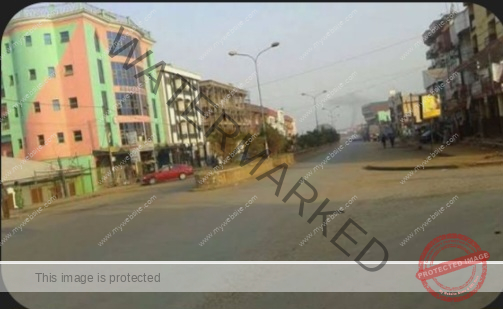
Over the past decade, recurring calls for stay-at-home protests and commercial shutdowns have become a defining feature of the conflict-affected regions. Authorities have at times responded with enforcement measures aimed at restoring normal economic activity, while supporters of the protests argue that non-cooperation represents a legitimate form of civic expression. The resulting tension illustrates how everyday economic behaviour can become deeply intertwined with broader political disputes.
Observers note that periodic market closures, reduced port activity, and disruptions to transport networks can have measurable fiscal implications. Localised slowdowns in trade and commerce may affect customs revenues, tax collection, and overall economic momentum. For communities participating in such actions, the intention is often to signal dissatisfaction with governance arrangements and to demonstrate the extent to which state institutions rely on regional economic participation.
At the same time, the sustainability and wider consequences of prolonged economic disruption remain subjects of debate. While non-cooperation can draw attention to political grievances and mobilise collective identity, it may also place additional burdens on households, small businesses, and vulnerable populations already affected by instability. Policymakers and analysts therefore continue to examine how such strategies influence both immediate fiscal dynamics and long-term development prospects.
Conclusion: Silence as Political Communication
In contested political environments, silence can function as a powerful form of communication. Decisions by individuals and communities to withdraw from routine economic activities may be intended to convey resistance, assert autonomy, or press for change.
Ultimately, the trajectory of these dynamics will depend on whether competing stakeholders can transform symbolic protest into constructive engagement. Sustainable progress is most likely where economic participation, political dialogue, and institutional reform converge to create pathways toward stability, accountability, and inclusive governance.
Carl Sanders, Guest Writer, The Independentistnews,
Share This Post:
The Supreme Court ruling and the “Quashed” Illusion: Why the Nera 10 Are Still Not Free
THE ECONOMIC BOYCOTT HANDBOOK: STRANGLING THE OCCUPATION TREASURY
Related Post
IS THE WORLD LISTENING: THREE DAYS FOUR FRONTLINES, ASA
SEPTEMBER 24, 1965, THIS DAY IN HISTORY: From Equal
AMBAZONIA’S WAR- IS BIGGER THAN YAOUNDÉ: BRITAIN, FRANCE AND
THE DAY SEPTEMBER 22 1961: — WHAT AMBAZONIA CAN
TRUMP’S “SUPER INTELLIGENCE” ERA: WHAT IT REALLY MEANS —
Why Is Ambazonia More Powerful Than many Imagine.