






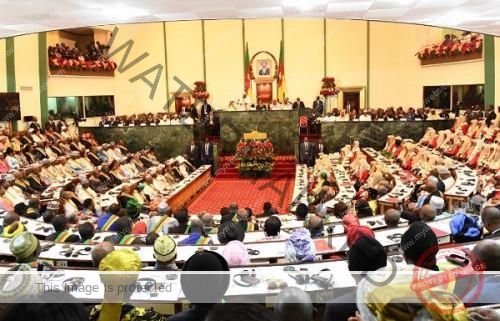






History demonstrates that nations rise not merely because of politics. They rise because citizens gradually learn how to organize production, preserve capital, build institutions, and think long term. The future of Ambazonia will therefore depend not only on political outcomes but on whether the nation can successfully cultivate a culture of economic intelligence, institutional discipline, and productive stewardship.
By Ali Dan Ismael
Editor-in-Chief, The Independentist News
Beyond Political Struggle
There are moments in the history of nations when political struggle alone is no longer sufficient. At such moments, the greatest challenge becomes economic transformation.
For decades, much of the discussion surrounding the future of Ambazonia has centered on conflict, diplomacy, resistance, humanitarian suffering, and political legitimacy. Yet beneath all these discussions lies a deeper structural problem that has weakened many post-colonial societies across Africa: a lack of widespread economic literacy.
Many nations possess natural resources. Many nations possess educated citizens. Many nations possess international support. Yet despite these advantages, they remain trapped in cycles of corruption, debt dependency, weak institutions, unemployment, capital flight, and economic stagnation. The reason is often simple.
Large portions of the population were never systematically taught how economic systems function. People may know how to work for money. But they are rarely taught: how capital behaves, how banking systems function, how debt transfers wealth, how savings become investment, how institutions preserve capital, or how nations build productive economic ecosystems. This educational gap eventually becomes a national bottleneck. That is why Ambazonia will require more than political reconstruction. It will require economic consciousness.
A New Economic Reconstruction Framework
The Ambazonian Economic Literacy Initiative is therefore envisioned not merely as a financial education platform but as a transformational national development tool capable of helping rebuild economic culture from the ground up. The objective is not simply to teach finance. The objective is to teach citizens how money behaves inside systems.
One of the greatest weaknesses in many developing economies is that economic activity often remains linear. People earn. People spend. The money disappears. The cycle repeats. Very little long-term capital formation occurs. Very little productive reinvestment takes place. Very little wealth compounds internally. This creates fragile societies where households remain vulnerable even when income exists. The future Ambazonian economy cannot survive permanently on consumption economics. It must gradually evolve toward capital economics.
From Consumption Economics to Capital Economics
That means creating a national culture capable of understanding: savings, productive investment,
entrepreneurship, liquidity, stewardship, and long-term asset building. The Economic Literacy Initiative could therefore become one of the most important educational tools of national reconstruction. Its purpose would be to provide structured economic education through: workshops, community training systems, digital learning platforms, leadership seminars, youth entrepreneurship programs, cooperative financial education, and institutional stewardship training. The long-term objective would be to help transform the population from passive economic participants into active economic builders.
Rebuilding Economic Psychology
This is especially important in post-conflict societies where survival thinking often dominates economic behavior. War conditions naturally encourage: short-term thinking, dependency psychology, informal survival systems,
and economic fragmentation. Reconstruction therefore requires more than infrastructure. It requires psychological transformation. Citizens must gradually begin thinking: generationally rather than transactionally, productively rather than consumptively, institutionally rather than individually, and strategically rather than emotionally.
Connecting Education to Production
This is where large-scale economic literacy becomes critically important. The initiative could also help bridge one of the greatest structural weaknesses across many African economies: the disconnect between education and production. Too many educational systems produce graduates disconnected from real economic systems.
Students graduate with certificates but without practical understanding of: capital allocation, entrepreneurship, wealth preservation, business systems, agricultural economics, or institutional finance.
The Economic Literacy Initiative would therefore complement broader national educational reform by introducing practical financial systems thinking into community life.
At the family level, citizens could learn: budgeting,
savings discipline, debt management, insurance awareness, entrepreneurship, and long-term planning.At the youth level, programs could focus on: innovation, entrepreneurship, business creation,
digital skills, and cooperative economics.
At the community level, local organizations could receive training on: cooperative finance, institutional stewardship, project financing, and sustainable community development.
At the leadership level, future administrators and public servants could receive training on: public accountability, anti-corruption systems, institutional finance, economic planning, and long-term capital management. Such an initiative could gradually help create a more financially disciplined and economically informed national culture.
The Strategic Role of the Diaspora
One of the most important strategic advantages available to Ambazonia is its diaspora. The diaspora possesses: technical expertise, entrepreneurial experience, international exposure,
financial resources, and access to global networks. Yet diaspora engagement becomes far more effective when domestic communities also possess the economic literacy necessary to absorb investment productively.
The Economic Literacy Initiative could therefore help strengthen the relationship between diaspora capital and local development. Rather than limiting economic engagement to survival remittances, communities could begin developing: cooperative investment systems, local enterprise networks,
agricultural value chains, youth business incubators, and community infrastructure partnerships. Economic Literacy and Anti-Corruption. The initiative could also support anti-corruption efforts indirectly.
Corruption is not merely a legal problem. It is often a systems and educational problem. Where citizens do not understand: institutional stewardship, capital preservation, public accountability, and long-term economic consequences, short-term extraction behavior often dominates. A financially educated society becomes harder to manipulate politically. It becomes harder to deceive economically. It becomes more capable of demanding institutional transparency. This is why economic literacy must eventually become part of national reconstruction strategy.
Technology as a National Multiplier
Technology can further accelerate this process. Digital platforms could allow economic education to reach: villages, urban centers, youth networks,
diaspora communities, schools, cooperatives,
and professional organizations. Mobile learning systems, digital certification programs, online workshops, and community training hubs could gradually build a nationwide culture of economic awareness.
Building a New Economic Culture
The long-term vision is therefore much larger than financial education alone. The initiative could evolve into a broader economic transformation architecture designed to help create: productive citizens, ethical entrepreneurs, financially disciplined families, economically literate communities, and strategically informed national leadership.
History demonstrates that nations rise not merely because of politics. They rise because citizens gradually learn how to organize production, preserve capital, build institutions, and think long term. The future of Ambazonia will therefore depend not only on political outcomes but on whether the nation can successfully cultivate a culture of economic intelligence, institutional discipline, and productive stewardship.
Conclusion: The Wealth of Nations Begins in the Mind
The greatest wealth of a nation is ultimately not buried in the ground. It is cultivated in the minds of its people. The future Federal Republic of Ambazonia possesses significant strategic potential: a globally connected diaspora, entrepreneurial energy, agricultural capacity,
strategic geography, and reconstruction momentum. But these advantages alone will not automatically produce prosperity. Nations rise when citizens understand: how economies function, how capital behaves, how institutions are sustained, and how long-term wealth is created.
That is why economic literacy may become one of the most important pillars of national reconstruction. The future of Ambazonia will not depend solely on politics. It will depend on whether the nation can successfully build: competent institutions, productive systems, ethical leadership,
and a financially conscious population capable of thinking beyond survival. Because ultimately: roads are built by minds, institutions are governed by minds, economies are organized by minds,
and civilizations rise or collapse according to the quality of the thinking they produce. The future therefore belongs not only to those who resist. It belongs to those who can build.
Ali Dan Ismael
Editor-in-Chief, The Independentist News





Leave feedback about this