








Geo-strategic commentary

We are home to news on Cameroon and the CEMAC region. We are dedicated to honest and reliable reporting. We are the voice of the Cameroonian people and their fight for freedom and democracy at a time when the Yaoundé government is silencing dissent and suppressing democratic voices.

Regions matter when they: reduce risk, support flow stabilize systems. Ambazonia’s future depends on entering that framework. Not as disruption. But as continuity.
By Ali Dan Ismael, Editor-in-Chief, The Independentist News
Power in the modern world is not where most people think it is. It is not in speeches. It is not in resolutions. It is not even in armies alone. Power lives in movement—who controls it, who prices it, and who can stop it.
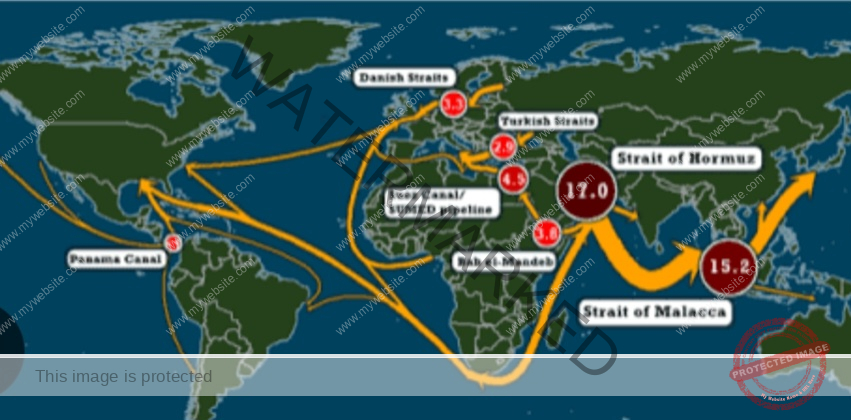
Across the globe, a handful of narrow passages quietly determine the fate of nations. The Strait of Hormuz. The Suez Canal. The Bab el-Mandeb. The Strait of Malacca. The Panama Canal. These are not just waterways. They are pressure points of the global system. When one trembles, the world reacts.
At the center of that reaction is Brent crude—the world’s most honest indicator of fear. It does not wait for diplomacy. It does not interpret speeches. It responds instantly to risk. When Hormuz is threatened, Brent rises. When shipping hesitates, inflation follows. When energy flows are uncertain, economies adjust.
But oil alone does not control the system. Behind it stands a quieter authority—institutions like Lloyd’s of London, which determine whether trade moves at all. Ships do not sail simply because they can. They sail because they are insured. And when risk is reclassified, premiums rise, routes shift, and global movement slows. This system did not emerge overnight. It was built over centuries—refined through war, trade, and empire.
In earlier eras, maritime insurance markets in London played a role in underwriting voyages across the Atlantic, including those tied to the transatlantic slave trade. Ships that carried enslaved Africans were not only financed—they were insured, their human cargo reduced to quantifiable risk.
Today the language has changed. The structures have evolved. But the underlying principle remains: risk is priced, movement is controlled, and power follows both. Today, the same ecosystem—far more regulated and transformed—continues to influence which routes remain viable and which regions are considered too risky for capital and commerce.This is not merely history. It is continuity.
THE UNITED STATES AND THE SYSTEM OF CONTROL
The United States does not need to own chokepoints to dominate them. It operates through a layered system: Military presence secures the routes. Financial systems price the flows. Legal and risk frameworks govern the movement. At the center of this system is the dollar. Oil trades in dollars. Reserves are held in dollars. Debt is issued in dollars. This is not accidental. It is structural.
The dominance of the dollar is sustained because the world’s most critical flows—energy, shipping, and finance—are tied to it. As long as global trade depends on these systems, the dollar remains the anchor of value. Within this context, the strategic tendencies associated with Donald Trump can be understood not as a departure, but as an adjustment.
Energy dominance reduces reliance on vulnerable corridors. Trade pressure rebalances economic relationships. Selective engagement limits overextension. The objective is not to control everything. It is to control the system that controls everything.
A WORLD SEARCHING FOR ALTERNATIVES
Recent tensions have revealed a simple truth: dependence on a narrow set of chokepoints is a vulnerability. The Strait of Hormuz remains critical—but exposed. The Red Sea corridor is active—but unstable. Asian routes are essential—but contested. As a result, the world is beginning to look elsewhere. Not in panic—but in preparation. It is here that the Atlantic corridor, and particularly the Gulf of Guinea, begins to emerge—not as a replacement, but as a complementary axis of global movement.
HISTORY DOES NOT REPEAT—BUT IT RHYMES
There is precedent for moments like this. In 1956, during the Suez Crisis, Britain and France moved to reassert control over the Suez Canal following Egypt’s nationalization. The response came from Washington. Dwight D. Eisenhower opposed the intervention—applying financial and political pressure that forced a withdrawal. It marked the transition from imperial control to system-based influence. In the aftermath, Queen Elizabeth II moved to stabilize transatlantic relations through diplomacy. Power had not disappeared. It had shifted.
A DIFFERENT MOMENT, A FAMILIAR QUESTION
Today, tension surrounds the Strait of Hormuz. Once again, global flows are exposed. Once again, risk is priced. Once again, systems adjust. As King Charles III steps onto the global stage amid these dynamics, the comparison is unavoidable—not as repetition, but as pattern recognition. Can alliances adapt? Can systems recalibrate? Can coordination replace fragmentation. These are structural questions.
AMBAZONIA AND THE GEOGRAPHY OF RELEVANCE
Ambazonia sits along the Gulf of Guinea—an Atlantic corridor gaining quiet strategic weight. It is near maritime routes. It is adjacent to energy zones. It connects Africa to global markets. Yet it remains under-positioned. Not irrelevant—but unintegrated. The world does not move on sympathy. It moves on continuity.
FROM PERIPHERY TO PARTICIPATION
Regions matter when they: reduce risk, support flow stabilize systems. Ambazonia’s future depends on entering that framework. Not as disruption. But as continuity.
CONCLUSION: POWER BELONGS TO THOSE THE SYSTEM CANNOT IGNORE
There is a difference between being seen and being necessary. The modern world does not reward those who are right. It rewards those who are structurally relevant. Ambazonia is not outside the system. It sits at the edge of a corridor the world is rediscovering. The question is not recognition. It is timing. Because in a world where Brent crude signals fear, where Lloyd’s of London prices risk— power belongs to those the system cannot afford to ignore.
Ali Dan Ismael, Editor-in-Chief, The Independentist News
Share This Post:
The Smoke and Mirrors of Succession: How Cameroon Manufactures Distraction to Preserve Power
BEYOND HORMUZ: WHY AMERICA’S NEXT STRATEGIC OPPORTUNITY MAY LIE IN THE GULF OF GUINEA
Related Post
IS THE WORLD LISTENING: THREE DAYS FOUR FRONTLINES, ASA
SEPTEMBER 24, 1965, THIS DAY IN HISTORY: From Equal
AMBAZONIA’S WAR- IS BIGGER THAN YAOUNDÉ: BRITAIN, FRANCE AND
THE DAY SEPTEMBER 22 1961: — WHAT AMBAZONIA CAN
TRUMP’S “SUPER INTELLIGENCE” ERA: WHAT IT REALLY MEANS —
Why Is Ambazonia More Powerful Than many Imagine.