










Commentary

We are home to news on Cameroon and the CEMAC region. We are dedicated to honest and reliable reporting. We are the voice of the Cameroonian people and their fight for freedom and democracy at a time when the Yaoundé government is silencing dissent and suppressing democratic voices.

Trust, once broken, becomes extraordinarily expensive to rebuild. That is the fundamental dilemma confronting Cameroon today. Because the issue is no longer simply whether federalism is theoretically possible. The deeper question is whether the populations involved still believe a shared political future remains psychologically and politically sustainable.
By Ali Dan Ismael
Editor-in-Chief, The Independentist News
The Return of a Familiar Promise
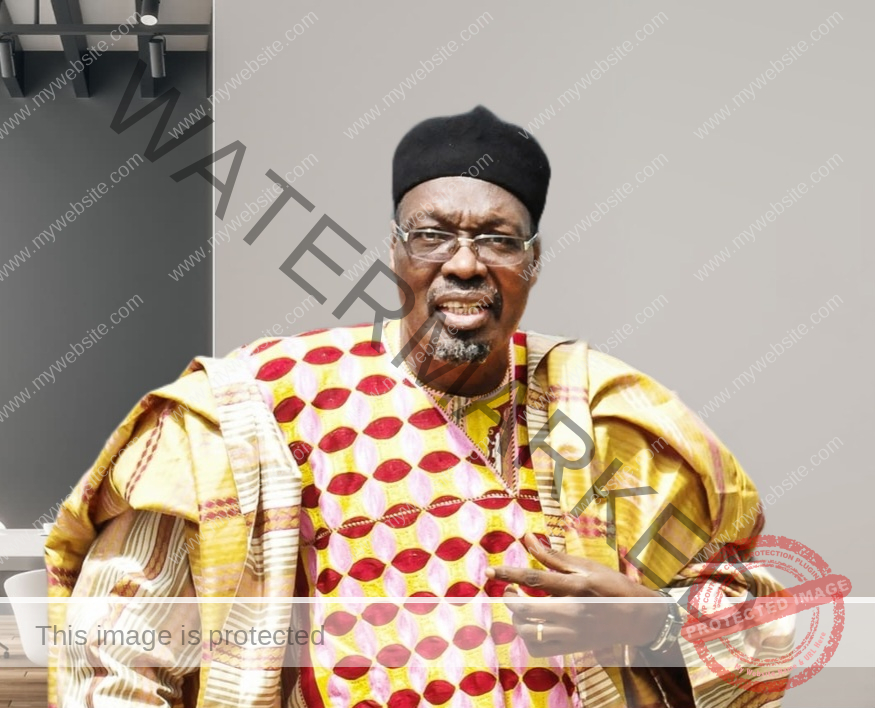
In moments of deep political crisis, states often attempt survival first through language before confronting reality through structural change. That is the atmosphere now surrounding recent rhetoric about a so-called “Federal Republic of Cameroon” associated with Issa Tchiroma Bakary and elements within the aging Yaoundé political establishment.
To international observers unfamiliar with the long constitutional history of the conflict, the language may sound hopeful. “Federal Republic.” The phrase appears conciliatory. Inclusive. Reformist. Even visionary. But for many Ambazonians, constitutional historians, and political observers, the phrase immediately triggers a more uncomfortable question: Federalism between whom? Because the central dispute at the heart of the crisis has always been deeper than administrative decentralization.
It concerns the destruction of the original federal arrangement between the former British Southern Cameroons and La République du Cameroun after reunification in 1961. For many Southern Cameroonians, what followed was not equal union, but progressive absorption: constitutional dilution, administrative centralization, erosion of local institutions, cultural assimilation, and concentration of power in Yaoundé.
That historical memory changes everything. Because when a political class that spent decades rejecting federalism suddenly rediscovers its vocabulary after years of war, skepticism becomes inevitable. To many observers, the key question is no longer whether federalism sounds attractive. The question is whether the proposal represents genuine transformation — or merely survival politics under new branding.
A Politician of Contradictions
The political symbolism surrounding Tchiroma also deepens the controversy. Once a loyal figure within the Biya system, Tchiroma later attempted to reposition himself as a reformist voice during the unfolding succession uncertainty surrounding the Cameroonian state. Critics note the contradiction sharply.
At one stage, he defended the centralized order with uncompromising rhetoric. At another, he emerged presenting himself as a champion of federal restructuring.The contradictions became even more politically charged following the October 12 presidential elections, after which Tchiroma reportedly presented himself as the legitimate winner while official state results attributed victory to Paul Biya.
To many observers, this created a remarkable paradox: a longtime defender of the political system suddenly appearing as both critic and victim of the same structure he once helped legitimize. For some, this reflects political awakening. For others, it reflects elite fragmentation inside an aging regime confronting succession anxiety and declining legitimacy.
But for many Ambazonians, the issue extends beyond personalities. The deeper concern is whether changing rhetoric among political elites truly represents structural transformation — or simply an internal struggle over control of the same centralized state architecture.
The Shadow of Political Memory
Distrust toward the Tchiroma proposal does not emerge in a vacuum. It is shaped by years of political rhetoric, state violence, and unresolved trauma. Many Ambazonians remember that while serving as Communications Minister under the government of Paul Biya, Issa Tchiroma publicly defended the state’s hardline position during some of the most violent phases of the conflict.
Critics frequently reference televised statements attributed to him during that period, including rhetoric widely interpreted as signaling the regime’s willingness to use extreme force to preserve what it described as national unity.
For communities affected by military operations, displacement, village destruction, disappearances, and civilian casualties, such memories are not abstract political disagreements. They are part of lived experience. And this is precisely where the current federal discourse encounters its deepest credibility problem. Because reconciliation is not built only on new slogans. It also depends on memory, accountability, and trust.
Many Ambazonians now ask: Can the same political establishment that once dismissed federalism, criminalized dissent, and defended military repression suddenly reinvent itself as the architect of coexistence? That is the contradiction haunting the current debate.
No Root Cause Analysis
Perhaps the greatest weakness of the Tchiroma proposition is that it appears to offer constitutional packaging without confronting the foundational causes of the conflict itself. There is no serious root cause analysis. No honest examination of how the original federation collapsed. No accountability regarding decades of constitutional manipulation and centralized domination. No recognition of why trust disappeared. And perhaps most critically, no meaningful consultation with the Federal Republic of Ambazonia, which many Ambazonians increasingly view as a principal political actor in the conflict.
This reinforces a long-standing perception among many Southern Cameroonians: that only French Cameroon possesses the authority to decide the political future of the territory, while Ambazonians are merely expected to approve, endorse, or rubber-stamp decisions already made elsewhere. That perception itself lies at the core of the crisis. Because many Ambazonians argue that the historical problem did not begin in 2016. It began with a pattern of unequal political relations stretching back decades.
The Ghost of Foumban
The memory of 1961 still casts a long shadow over today’s debate. When John Ngu Foncha met with Ahmadou Ahidjo during reunification discussions, the negotiations took place under highly asymmetrical conditions. Critics of the process have long argued that the discussions did not occur on genuinely neutral ground and lacked strong international guarantees capable of protecting the constitutional balance between the two entities entering union.
For many Ambazonians, the lessons of that historical experience remain deeply relevant today. Because the conditions that contributed to mistrust then have not fundamentally changed now. There is still no mutually recognized neutral framework. No trusted international guarantors. No widely accepted constitutional arbitration mechanism. No shared agreement regarding the legal and political character of the conflict itself.
Under such circumstances, many Ambazonians now ask: Why does Tchiroma believe the same political class that presided over decades of centralized control can suddenly obtain trust simply by reintroducing the language of federalism? That question increasingly fuels suspicion that another political illusion may be under construction. To critics, the proposal risks appearing less like genuine constitutional transformation and more like another survival mechanism designed to preserve the same centralized architecture under a softer label. Another political Ponzi scheme in the making.
Why Federalism Suddenly Returned
For years, the Yaoundé establishment portrayed federalism as dangerous, outdated, or even subversive. Those advocating restoration of federal structures were often marginalized politically or portrayed as enemies of national unity. Now, after years of instability and growing international scrutiny, elements within the same establishment suddenly speak the language of federal reform.
Why?
Because the original state narrative is collapsing. The attempt to frame the Ambazonian conflict purely as a “security problem” has failed to fully convince international observers. Despite military offensives, communication shutdowns, arrests, propaganda campaigns, and heavy securitization, the crisis has persisted. More importantly, the conflict exposed structural fractures that extend far beyond the Northwest and Southwest regions: overcentralization, elite monopolization of power, uneven development, economic extraction, corruption, institutional decay, and widespread distrust toward the state itself.
The federal language now emerging appears less like ideological conversion and more like political adaptation under pressure. In other words:
the system may finally be recognizing that brute force alone cannot restore legitimacy.
The Constitutional Question They Still Avoid
Yet the deeper constitutional issue remains unresolved. The Tchiroma discourse speaks frequently about preserving Cameroon. But far less about confronting the original rupture that produced the current crisis. It speaks about coexistence. But avoids direct accountability for the dismantling of the original federal arrangement.It speaks about dialogue. But often without acknowledging the historical argument advanced by many Southern Cameroons nationalists — namely, that two distinct political entities entered reunification under contested circumstances. That distinction is critical.
Because to many within the Yaoundé political class, federalism simply means decentralizing administration while preserving the unquestioned supremacy of the current state structure. But to many Ambazonians, meaningful federal discussion would first require recognition that the constitutional foundation itself remains disputed. Without addressing that foundational issue, critics argue that “Federal Republic” risks becoming little more than political cosmetics: a softer vocabulary masking the continuation of centralized control.
The Crisis Is No Longer Only Political
The greatest challenge facing any future settlement may no longer be constitutional engineering. It may be psychological rupture. Entire generations have now grown up under conditions of conflict, displacement, militarization, fear, and competing sovereignties. For many young Ambazonians, the crisis fundamentally transformed identity itself.
The conflict is no longer viewed only through the lens of governance. It is increasingly viewed through: memory, security, dignity, historical grievance, and survival. This is why many observers describe today’s younger generation as the “Never Again” generation. Not because all reject coexistence automatically, but because trust in the current political order has been severely damaged. And once populations begin psychologically separating themselves from the legitimacy of a state, institutional reforms alone may no longer reverse the rupture.
History repeatedly demonstrates this reality..The Soviet Union attempted reform before collapse.
Yugoslavia attempted negotiated restructuring amid fragmentation. Sudan attempted temporary political settlements before eventual partition. In each case, delayed recognition of foundational grievances narrowed the space for peaceful compromise. Cameroon now risks entering a similarly dangerous historical zone.
The Tragedy of Delayed Federalism
Ironically, genuine federalism honestly negotiated decades ago may have prevented much of the current catastrophe. But federalism proposed after years of bloodshed, hardened identities, village destruction, displacement, and mutual distrust enters a completely different political environment.
Trust, once broken, becomes extraordinarily expensive to rebuild. That is the fundamental dilemma confronting Cameroon today. Because the issue is no longer simply whether federalism is theoretically possible. The deeper question is whether the populations involved still believe a shared political future remains psychologically and politically sustainable. That question cannot be answered through slogans. It cannot be resolved through public relations campaigns, televised declarations, or rhetorical constitutionalism. And it certainly cannot be solved through force alone.
A state may impose obedience temporarily through military power. But unity built without trust eventually becomes fragile. History repeatedly proves that fear can preserve territory for a time. But fear alone rarely builds lasting legitimacy. And that may ultimately become the greatest challenge facing the modern Cameroonian state.
Ali Dan Ismael
Editor-in-Chief, The Independentist News
Share This Post:
Aligning Your Divine Energy to Flow Freely into Manifestation -The Story of Jacob, Inner Transformation, and the Ambazonian Experience
The French Strategy: Absorb, Dilute, Erase – How Language, Administration, and Elite Integration Became Instruments of Political Assimilation in Ambazonia
Related Post
IS THE WORLD LISTENING: THREE DAYS FOUR FRONTLINES, ASA
SEPTEMBER 24, 1965, THIS DAY IN HISTORY: From Equal
AMBAZONIA’S WAR- IS BIGGER THAN YAOUNDÉ: BRITAIN, FRANCE AND
THE DAY SEPTEMBER 22 1961: — WHAT AMBAZONIA CAN
TRUMP’S “SUPER INTELLIGENCE” ERA: WHAT IT REALLY MEANS —
Why Is Ambazonia More Powerful Than many Imagine.