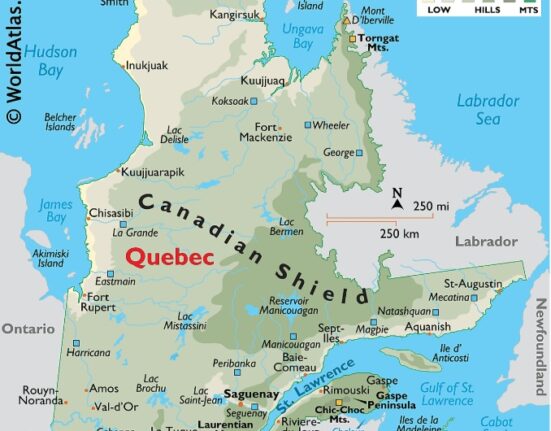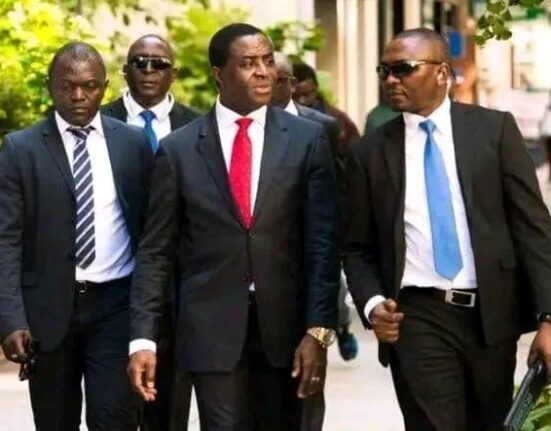


The world is changing. Africa is changing. The language of sovereignty is changing. And whether one supports Ambazonian independence or not, one fact is becoming increasingly difficult to deny: Southern Cameroons (Ambazonia) is no longer being viewed merely as a rebellious province. It is increasingly understood as a potential state.
By Ali Dan Ismael
Editor-in-Chief, The Independentist News
The Old Script Returns
The latest proposed restructuring of the regime in Cameroon reveals something far more important than cabinet appointments. It exposes the central political fear haunting the regime of Paul Biya: the growing realization that Southern Cameroons (Ambazonia) is no longer merely an “Anglophone problem,” but an emerging sovereign question the regime can no longer administratively suppress.
For decades, Yaoundé mastered the politics of symbolism. Whenever tensions rose, an Anglophone face would be elevated somewhere visible enough to calm international observers while real power remained firmly locked inside the Francophone security establishment. The formula was simple: appearance without transfer of power. Inclusion without authority. Representation without sovereignty. This latest arrangement follows the same exhausted script.
The Prime Minister Without Power
Yes, an Anglophone Prime Minister may appear politically historic on paper. But who controls the army? Who controls territorial administration? Who controls intelligence? Who controls the police, the governors, the presidential cabinet, the security networks, and the coercive machinery of the state?Not the Prime Minister.
The true architecture of power remains concentrated around the presidency and its security apparatus. The ministries that actually determine survival of the regime — Defense, Territorial Administration, National Security, Presidential Affairs — remain firmly embedded within the same centralized system that has governed Cameroon for decades through surveillance, patronage, military pressure, and administrative domination. This is not reform. It is continuity disguised as adjustment. The Political Environment Has Fundamentally Changed The regime still fundamentally misunderstands what has changed since 2016.
The conflict in Southern Cameroons has crossed a psychological and geopolitical threshold. The world may not formally recognize Ambazonia today, but the territory is increasingly analyzed internationally as a disputed political space with unresolved questions of legitimacy, decolonisation, and self-determination. That distinction matters enormously.
A people once dismissed as “disgruntled Anglophones” now possess: a sustained armed resistance. a global diaspora infrastructure. international legal advocacy. organized diplomatic lobbying. media ecosystems. symbolic national identity. and a growing body of international discourse treating the crisis as something larger than domestic unrest. The regime can reshuffle ministers all it wants. But cabinet reshuffles cannot erase political evolution.
The Failure of Symbolic Politics
The old strategy no longer works because the psychology of the conflict has changed. Many in Yaoundé still behave as though Ambazonia is merely asking for better appointments, more roads, or administrative accommodation. That era is over. Increasingly, the issue being debated — quietly in diplomatic circles and openly across the diaspora — is whether the post-colonial union itself retains legitimacy. That is the real crisis confronting the regime.
And this explains why security ministries remain the true center of gravity in every proposed restructuring. The regime understands something many observers still underestimate: this is no longer simply a governance challenge. It is a sovereignty challenge. That is why every cabinet formation now revolves around: military loyalty. intelligence preservation. succession management.
territorial control. information control.and regime continuity after Biya.
The appointment of symbolic Anglophone figures changes none of this. If anything, it exposes the regime’s strategic paralysis. Governing Through Fear For nearly a decade, Yaoundé has oscillated between military suppression and cosmetic political gestures, while avoiding the one thing capable of altering the trajectory of the crisis: confronting the foundational constitutional question at the heart of the conflict.
Instead, the state continues governing through fear, administrative centralization, and security logic inherited from the old Françafrique order — an order increasingly collapsing across Africa. And therein lies the deeper danger for Cameroon.
Because history shows that once a sovereignty movement survives beyond its initial suppression phase and develops institutions, narratives, martyrs, diplomacy, armed resistance, and generational continuity, the struggle fundamentally changes character. It ceases to be temporary unrest and becomes a long-term geopolitical reality. That is precisely what Yaoundé now faces.
The Sovereignty Question
The tragedy is that the regime still believes managerial reshuffling can solve what has become a historical legitimacy crisis. It cannot. The world is changing. Africa is changing. The language of sovereignty is changing. And whether one supports Ambazonian independence or not, one fact is becoming increasingly difficult to deny: Southern Cameroons (Ambazonia) is no longer being viewed merely as a rebellious province. It is increasingly understood as a potential state.
Ali Dan Ismael
Editor-in-Chief, The Independentist News