









Commentary

We are home to news on Cameroon and the CEMAC region. We are dedicated to honest and reliable reporting. We are the voice of the Cameroonian people and their fight for freedom and democracy at a time when the Yaoundé government is silencing dissent and suppressing democratic voices.

The real test of foreign aid is not the value of what arrives. It is the independence, productive capacity, public welfare, and accountability that remain after the assistance has been spent. A partnership should be measured by its terms. A gift should be measured by its lifetime costs. And foreign aid should be judged by the durable public value it creates—not simply by the generosity claimed at the moment of delivery.
By Martin S. Mungwa, Ph.D., Fellow ASCE – Edited by Ali Dan Ismael
Senior Editor-in-Chief, The Independentist News November 1, 2026
As Amazon associate this site earns from qualifying purchases
Get your copies of the many publications By Martin Mungwa on Amazon
https://www.amazon.com/s?k=Martin+mungwa&crid=2VVLXEC4N2U8S&sprefix=trump+and+the+gov+martin+mungwa%2Caps%2C1837&linkCode=ll2&tag=njokings-20&linkId=34e9cfee8677e41c4f7c5abfebb0e6c9&language=en_US&ref_=as_li_ss_tl
The Price Behind the Gift . Foreign aid is often presented as an act of generosity. Governments announce assistance packages, diplomats celebrate partnerships, and recipient states express gratitude. Yet behind the language of cooperation lies a question that deserves far greater public scrutiny: What does the donor receive in return, and what will the recipient continue paying long after the assistance has been delivered?
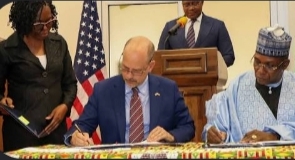
An October 29, 2026 investigation by The Wall Street Journal reported that the Trump administration had agreed to provide approximately $35 million in military assistance to Cameroon’s elite Rapid Intervention Battalion (BIR), including armored personnel carriers, alongside an arrangement for Cameroon to accept deportees from the United States.
The revelation raises questions about the relationship between foreign assistance, diplomatic bargaining, military procurement, and human rights. It also exposes a wider problem in international political economy: assistance can create immediate advantages for recipients while generating continuing strategic or commercial benefits for donors. The real price of aid may therefore extend far beyond its announced dollar value.
Financial Inducement: When Assistance Becomes Negotiating Currency
Foreign assistance is not always an unconditional gift. Military equipment, financial support, training, and development financing may form part of arrangements through which donor countries seek cooperation on migration, counterterrorism, diplomatic relations, or regional security.
These arrangements may serve legitimate interests on both sides. However, unequal negotiating power can create circumstances in which a financially dependent government accepts obligations whose long-term consequences are insufficiently examined. The reported U.S.–Cameroon arrangement illustrates the need for transparency.
The questions are straightforward: Was military assistance contingent upon deportation cooperation? What obligations did Cameroon accept? What safeguards accompany the transfer? And how will the public know whether the arrangement advances national welfare? Aid should be evaluated not merely by what is delivered, but by what is exchanged.
The Military Hardware Strategy
A second issue is the condition of military equipment transferred through foreign assistance. The United States operates an Excess Defense Articles program through which equipment no longer required by its military can be transferred to eligible foreign governments.
Such equipment may be supplied at reduced prices or through grants. Yet receiving countries may remain responsible for transportation, refurbishment, repairs, maintenance, and associated services. ItThe distinction is economically significant.
A military vehicle can have considerable historical procurement value while possessing a much lower remaining operational value. Equipment may require expensive components, specialized tools, technical support, and recurring expenditure before it can be used effectively.
For this reason, the value announced at a transfer ceremony should never be confused with the recipient’s net economic benefit. It has not been established that the armored vehicles reportedly proposed for Cameroon are surplus or outdated. Their models, manufacturing dates, technical condition, and procurement arrangements must be documented before that conclusion can be reached. Nevertheless, the broader economic mechanism is real and deserves investigation.
Spare Parts: The Continuing Market After the Gift
Military hardware rarely operates independently of its original technical and industrial supply chain. Armored vehicles may require imported engines, transmissions, tires, communications equipment, electronic components, maintenance manuals, specialized diagnostic systems, and replacement parts. Some systems also require licensed servicing or manufacturer-approved components.
A recipient government may therefore acquire equipment at limited initial cost while becoming responsible for years of operational expenditure. If those supplies and services are purchased from firms in the donor country, part of the economic benefit of the original assistance relationship can return to that country.
This is not proof of an exploitative arrangement in every case. Effective maintenance is essential for safe military operations. The concern arises when assistance creates technical dependence without an affordable maintenance plan, competitive procurement, or meaningful investment in domestic capacity. The question then becomes unavoidable:
Was the equipment transferred to strengthen the recipient’s independence, or does its operation require prolonged dependence on foreign suppliers?
Conflict and the Recurring Demand for Assistance
Armed conflict creates enormous human suffering. It also generates continuous demand for security equipment, humanitarian supplies, transportation, communications systems, medical services, reconstruction, and infrastructure repair. As conflict continues, equipment deteriorates, supplies are consumed, infrastructure is damaged, and civilian needs multiply. This produces a recurring cycle of expenditure.
Foreign defense contractors, logistics companies, consultants, construction firms, and humanitarian-service providers may receive contracts associated with that expenditure. These activities can be necessary and beneficial. Their commercial existence does not demonstrate wrongdoing. However, the financial relationships create an important question about incentives.
If organizations or governments obtain sustained financial or strategic advantages from conflict-related expenditure, what safeguards prevent those interests from influencing policies intended to end the conflict? There is a critical difference between profiting from a conflict, contributing to its escalation, and deliberately creating or prolonging it.
The first can be demonstrated through financial records. The second requires evidence concerning decisions, transfers, and operational consequences. The third is a particularly serious allegation requiring direct documentary support. An investigation should examine each possibility without treating them as equivalent.
Natural Disasters and the Reconstruction Economy
The same financial questions arise after natural disasters. Floods, earthquakes, droughts, hurricanes, and other emergencies can produce urgent demand for imported machinery, emergency accommodation, technical assistance, reconstruction materials, and engineering services.
Foreign assistance can save lives and support recovery. But procurement arrangements determine how much of the announced funding remains in the recipient economy and how much returns to external suppliers. If emergency financing requires the purchase of goods and services from particular foreign firms, the recipient may have fewer opportunities to develop local businesses and technical capabilities.
The OECD has documented that tied aid can impose higher procurement costs than untied assistance. The issue is therefore not whether external contractors should ever participate in disaster response. It is whether assistance is competitively procured, transparently managed, and designed to strengthen local recovery rather than perpetuate dependence.
Environmental Costs: Who Inherits the Liability?
Military vehicles and industrial machinery eventually reach the end of their useful lives. Their disposal can involve batteries, fuels, lubricants, hazardous materials, contaminated components, and other environmental-management obligations.
A country receiving aging equipment may also inherit responsibility for dismantling, storage, and environmentally responsible disposal. The financial consequences can extend into future public budgets.
This raises an important engineering and regulatory question: are environmental obligations included in the assistance agreement, and who pays when the equipment can no longer be operated safely? Differences in environmental enforcement capacity can increase the risks experienced by receiving communities.
However, allegations that donor governments deliberately export military equipment to circumvent domestic environmental regulators must be supported by evidence. The existence of different regulatory regimes does not establish such an intention. The appropriate investigation should identify the equipment, applicable laws, contractual liabilities, disposal arrangements, and documented environmental outcomes.
Britain’s Historical Experience
The relationship between foreign assistance and donor-country commercial interests has a substantial history. Britain’s former Aid and Trade Provision connected some development assistance to purchases of British goods and services.
The Pergau Dam controversy in Malaysia exposed the intersection of foreign aid, commercial interests, and an associated arms agreement. The affair contributed to major reforms in Britain’s development policy. Britain subsequently adopted a policy of untying aid, although debates about the appropriate relationship between development assistance and British commercial interests have continued.
This historical example matters because it demonstrates that aid can be designed to pursue objectives beyond the immediate development needs of the recipient. It also shows that public scrutiny and institutional reform can alter those arrangements.
The Southern Cameroons Question
The reported military assistance to Cameroon’s BIR requires particular scrutiny in light of the continuing conflict affecting Southern Cameroons (Ambazonia). Human rights organizations have documented allegations of serious abuses involving Cameroonian security forces, including members of the BIR.
The United States previously restricted certain assistance to Cameroon because of concerns about abuses by security forces. Any new transfer therefore raises questions concerning human rights vetting, equipment deployment, end-use monitoring, and the protection of civilians. Equipment provided for counterterrorism purposes should be subject to verifiable safeguards against misuse.
The wider political-economy concern is whether continued conflict generates repeated military expenditure and external assistance without achieving durable improvements in civilian security or resolving the conditions underlying the crisis. Answering that question requires financial records, operational evidence, human rights documentation, and scrutiny of the roles played by domestic and international actors.
The Scriptegrity Test: Follow the Entire Transaction
A rigorous investigation should assess every foreign assistance package through six interconnected questions.
First: The Inducement. What political, military, diplomatic, or economic cooperation does the donor seek? Second: The Equipment. What is transferred, what is its condition, and what is its remaining useful life? Third: The Continuing Revenue. Who supplies the spare parts, repairs, training, maintenance, and technical services? Fourth: The Dependency. Does the arrangement develop domestic competence, or does it require continuing reliance on external suppliers? Fifth: The Environmental Liability. Who finances decommissioning, hazardous-material handling, and final disposal? Sixth: The Conflict Incentive. Who benefits financially when insecurity continues, and what evidence exists concerning any influence those beneficiaries may have over decisions about peace and security?
These questions do not presume that every assistance arrangement is exploitative. They establish a method for discovering whether the stated purpose, actual expenditure, and long-term consequences are consistent.
Conclusion: Aid Must Be Judged by What Remains
Foreign assistance can contribute to security, development, humanitarian relief, and institutional strengthening. But it can also create strategic obligations, recurring expenditure, commercial dependence, and environmental responsibilities.
The reported U.S.–Cameroon arrangement demonstrates why the public must look beyond the headline value of military assistance. The decisive questions concern the agreement’s terms, the economic beneficiaries, the equipment’s condition, the future cost of maintenance, and the safeguards protecting affected populations.
Conflicts and disasters can generate continuing commercial demand. That reality warrants scrutiny of incentives, procurement, and accountability—but does not, without further evidence, establish that the crises were deliberately created.
The real test of foreign aid is not the value of what arrives. It is the independence, productive capacity, public welfare, and accountability that remain after the assistance has been spent. A partnership should be measured by its terms. A gift should be measured by its lifetime costs. And foreign aid should be judged by the durable public value it creates—not simply by the generosity claimed at the moment of delivery.
As Amazon associate this site earns from qualifying purchases
Get your copies of
Martin S. Mungwa, Ph.D., Fellow ASCE – Edited by Ali Dan Ismael
Senior Editor-in-Chief, The Independentist News
Share This Post:
WHEN ANTIGUA QUESTIONS THE CROWN: BRITAIN’S COLONIAL RESPONSIBILITIES AND THE UNFINISHED QUESTIONS OF SOUTHERN CAMEROONS
Related Post
WHEN ANTIGUA QUESTIONS THE CROWN: BRITAIN’S COLONIAL RESPONSIBILITIES AND
MONACO, FRANCE AND SOUTHERN CAMEROONS: HISTORICAL ANALOGIES CANNOT SETTLE
The Book, TRUMP AND THE GOVERNANCE CROSSROADS IN WEST
SCRIPTEGRITY HIGHER STANDARDS, STRONGER WORK: Expert Quality assurance for
BRITAIN OPENS THE DOOR TO SLAVERY APOLOGY: WHAT ABOUT
From Mamfe to Bamenda: Has Archbishop Nkea Traded Faith