








News commentary

We are home to news on Cameroon and the CEMAC region. We are dedicated to honest and reliable reporting. We are the voice of the Cameroonian people and their fight for freedom and democracy at a time when the Yaoundé government is silencing dissent and suppressing democratic voices.

By Ali Dan Ismael
Senior Editor-in-Chief, The Independentist News
31 October 2026
As Amazon associate this site earns from qualifying purchases
Buy copies of the many publication on the southern cameroons revolution By Martin Mungwa on Amazon
https://www.amazon.com/s?k=martin+mungwa&crid=374C0JP35IX74&sprefix=southmartin+mungwa%2Caps%2C1306&linkCode=ll2&tag=njokings-20&linkId=317bb3d7f11773fe74dfe2ad576f7a34&language=en_US&ref_=as_li_ss_tl
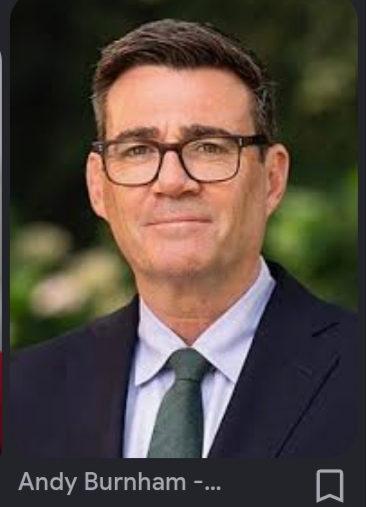
As Prime Minister Andy Burnham acknowledges Britain’s historical role in the transatlantic slave trade, another question of colonial responsibility deserves renewed international examination.
Britain Begins Another Conversation With Its Colonial Past
British Prime Minister Andy Burnham has signaled his willingness to consider a formal apology for Britain’s participation in the transatlantic slave trade, while maintaining his government’s opposition to financial reparations.
His statements, made ahead of the Commonwealth Heads of Government Meeting in the Caribbean, reopen a question that has followed Britain through generations of postcolonial diplomacy: What responsibilities does a modern state bear for historical actions undertaken in its name?
Burnham described the slave trade as a grave historical injustice, acknowledged the suffering it inflicted, and expressed willingness to engage in structured dialogue with affected countries and communities. Yet he drew a firm distinction between acknowledging historical wrongdoing and accepting an obligation to provide financial compensation.
He argued that present-day British citizens should not be made personally responsible for actions committed generations before their birth. Instead, his government has proposed measures addressing debt burdens and contemporary development challenges.
For Caribbean nations, the issue is far from settled. Their longstanding demands for reparatory justice encompass more than an apology and include proposals addressing the enduring economic and social consequences of slavery. But Burnham’s intervention also raises a question extending beyond the Caribbean.
What does Britain’s renewed discussion of historical accountability mean for other territories whose political futures were shaped by British colonial administration? In particular, what does it mean for Southern Cameroons, also known to its independence movement as Ambazonia? The answer requires historical examination rather than an assumption that different colonial grievances possess identical legal foundations.
Southern Cameroons: A Different History, a Related Question
Southern Cameroons was not simply another British colony that obtained independence through the same constitutional process as Ghana or Nigeria. Its twentieth-century political history involved German colonial rule, subsequent British administration, and an international trusteeship established under the United Nations system.
Following the First World War, the former German territory of Kamerun was divided between British and French administration. Southern Cameroons eventually formed part of the Cameroons under British administration, governed through Nigeria but subject to a distinct international legal framework. That distinction matters.
The United Nations trusteeship system imposed obligations concerning the political advancement of trust territories and their development toward self-government or independence. Britain was therefore not merely managing a territorial possession. It was administering a territory within an internationally supervised arrangement.
This makes the legal and diplomatic circumstances surrounding the termination of trusteeship in 1961 a legitimate subject of historical accountability. The central questions concern the obligations of Britain, the role of the United Nations, the choices presented to the people of Southern Cameroons, and the constitutional arrangements established afterward.
These are distinct from claims arising from the transatlantic slave trade. Nevertheless, both debates involve a broader issue: how a former administering or colonial power should respond when aspects of its historical conduct remain contested.
Resolution 1608: The Document at the Centre of the Debate
On April 21, 1961, the United Nations General Assembly adopted Resolution 1608 (XV), concerning the future of the Cameroons under United Kingdom administration. The resolution endorsed the February 1961 plebiscite results. Southern Cameroons had voted to achieve independence by joining the independent Republic of Cameroun rather than Nigeria.
The General Assembly decided that the trusteeship agreement would terminate with respect to Southern Cameroons on October 1, 1961, upon its joining the Republic of Cameroun. Importantly, the resolution also invited Britain, the Government of Southern Cameroons, and the Republic of Cameroun to undertake urgent discussions to finalize arrangements for implementing their agreed policies before that date.
It is this implementation requirement that remains central to competing historical and legal interpretations. Southern Cameroons independence advocates argue that the subsequent constitutional process failed to establish a valid and enduring consensual union.
Other interpretations maintain that the plebiscite and constitutional arrangements created a recognized association, while identifying later disputes over federalism, constitutional change, and political authority. These positions should not be confused. A finding that particular constitutional expectations were frustrated would not, without further legal analysis, prove that the entire union was invalid from its inception.
Conversely, the termination of trusteeship does not eliminate legitimate historical questions about the negotiations, safeguards, or subsequent treatment of Southern Cameroons. A serious examination must begin with the original documents.
Why Britain Cannot Be Omitted From the Historical Inquiry
Discussions about the Southern Cameroons conflict often concentrate on successive governments of La République du Cameroun. That focus reflects grievances concerning constitutional centralization, political representation, language, education, legal institutions, and the conflict that escalated in 2016.
However, the history also involves decisions taken before the two territories entered their intended constitutional relationship. Britain’s role is therefore relevant. – What assurances were made during the transition? – What arrangements did British officials believe necessary to implement the plebiscite outcome? – What protections were discussed for the political and institutional identity of Southern Cameroons? – What concerns were conveyed to the United Nations? – And what records demonstrate whether the implementation arrangements contemplated in Resolution 1608 were finalized?
These questions are appropriate for historians, international lawyers, archivists, and policymakers. They do not presume that every allegation against Britain has been established. Rather, they identify the documentary issues that must be investigated before defensible conclusions can be reached.
The British National Archives, parliamentary records, United Nations trusteeship documents, and constitutional instruments from the period provide starting points. The appropriate historical response is neither automatic exoneration nor automatic condemnation. It is systematic examination.
The Caribbean Reparations Debate Offers a Revealing Comparison
The Caribbean campaign has demonstrated the continuing influence of historical grievances in international diplomacy. Its advocates have pursued acknowledgment, institutional dialogue, and various forms of reparatory justice.
Their objectives have included measures directed toward education, public health, cultural restoration, and economic development, as well as proposals involving financial responsibility. Britain’s current position acknowledges the historical injustice of slavery while rejecting direct financial reparations.
The contrast between those positions illustrates an important distinction. A government may be prepared to discuss past wrongdoing without accepting a particular remedy. It may offer development assistance without acknowledging a legal duty to compensate. It may express regret without making a formal state apology. And it may issue an apology without agreeing that the apology establishes contemporary legal liability.
For Southern Cameroons, the distinction matters because the relevant remedies would depend on the exact historical claim. Demands for disclosure of records, recognition of documented institutional failures, diplomatic engagement, or legal remedies cannot simply borrow their legal foundation from the Caribbean reparations campaign. They must be evaluated on their own merits.
The comparative significance of Burnham’s statements therefore lies in Britain’s willingness to entertain historical dialogue—not in any automatic extension of Caribbean claims to Southern Cameroons.
The Question of Institutional Continuity
Burnham’s argument against financial reparations emphasizes that today’s British population did not personally commit the wrongs of the slave trade. That position raises a broader debate about the distinction between individual responsibility and the continuity of state institutions.
Individuals are not ordinarily considered personally responsible merely because they are descendants of people who committed historical wrongs. States, however, possess institutional continuity across changes in leadership and generations.
Whether that continuity gives rise to a particular obligation depends on the applicable law, historical circumstances, and nature of the conduct at issue. An important distinction must also be maintained between moral responsibility, political responsibility, and legal responsibility.
A state may choose to acknowledge an injustice as a matter of ethics or diplomacy even where no judicially enforceable obligation has been established. Similarly, evidence of a historical wrong does not automatically determine the form of an available remedy.
In the Southern Cameroons context, the question is therefore not whether modern British citizens should be blamed for 1961. It is whether British institutions can contribute to an accurate examination of decisions made by the state during the trusteeship transition. That is a question of historical accountability rather than inherited personal guilt.
The united Nations also had its own responsibility
Britain was not the sole institutional participant in the 1961 transition. The United Nations General Assembly endorsed the plebiscite outcome and established the timetable for the termination of trusteeship. The United Nations had also supervised the plebiscite process through arrangements established for the territory.
Any comprehensive historical examination must therefore address the actions of the international organization itself. – Did the participating institutions adequately document the implementation arrangements? – Were the constitutional terms understood in the same way by all parties? – What evidence exists of disagreements before October 1961? – What safeguards were contemplated? – And how did subsequent developments relate to the expectations expressed during the transition?
These are matters for examination under the governing rules and institutional mandates. It would be premature to describe every contested historical decision as an established violation of international law. But it would be equally inappropriate to treat the passage of time as a reason to avoid examining the records.
The purposes of historical scholarship include identifying institutional decisions, explaining their context, and evaluating their consequences. Historical Recognition Cannot Substitute for Contemporary Human Rights.
There is another dimension to the Southern Cameroons question that must not be overlooked. The modern conflict has caused extensive suffering, including civilian deaths, displacement, disruption of education, and allegations of serious abuses by different armed actors.
Historical research can clarify the roots of a political conflict, but it cannot replace urgent responsibilities toward people affected today. Whatever interpretation is adopted concerning the 1961 settlement, the protection of civilians remains essential.
Allegations of unlawful killings, arbitrary detention, attacks on schools, abductions, and other violations require independent investigation and accountability. Historical claims should not be used to excuse abuses committed by state forces or non-state armed groups. Nor should a debate over constitutional status displace the immediate rights and safety of communities.
An examination of Britain’s historical role and the United Nations’ institutional responsibilities belongs alongside—not instead of—efforts to address contemporary humanitarian and human-rights concerns.
What Would a Serious Historical Dialogue Involve?
Burnham’s proposal for structured dialogue concerning the slave trade provides an example of one governmental approach to contested historical issues. A comparable scholarly examination of Southern Cameroons would involve a different agenda.
It could begin with access to relevant British and United Nations records, systematic review of the 1961 negotiations, and examination of constitutional instruments adopted before and after the termination of trusteeship. Researchers could then distinguish agreements clearly documented in the record from arrangements that were proposed but never finalized.
They could assess competing legal interpretations, identify unresolved questions, and publish findings available for independent scrutiny. Such an investigation would benefit from the participation of qualified historians, constitutional scholars, international lawyers, and specialists in African decolonization.
Its credibility would depend on methodological independence and a willingness to engage with evidence that challenges preferred conclusions. The purpose would be to establish an accurate historical account rather than predetermine an outcome.
A New Generation Is Asking Britain Difficult Questions
The contemporary debate over Britain’s colonial history is unfolding in a world increasingly attentive to historical memory, institutional responsibility, and the economic legacies of empire. Caribbean governments have articulated their claims through sustained diplomatic engagement.
Academic institutions are reassessing historical collections and the origins of institutional wealth. Public discussions are increasingly distinguishing symbolic acknowledgment from material remedies.
Southern Cameroons belongs within the broader scholarly examination of British decolonization, even though its legal history and present political circumstances are distinct. Recent scholarship, including Charles Achaleke Taku’s work on United Nations trusteeship and colonial diplomacy, demonstrates that questions concerning 1961 continue to attract serious legal analysis.
Such scholarship should be critically evaluated, with careful attention to documents, constitutional interpretation, and alternative explanations. The credibility of the historical record matters more than the rhetorical force of any one political position.
Conclusion: If Britain Can Discuss Slavery, It Can Discuss Its Trusteeship History
Prime Minister Andy Burnham’s willingness to consider a formal apology for Britain’s historical participation in the transatlantic slave trade does not establish a new British policy toward Southern Cameroons. It does not prove that the two historical cases are legally equivalent. And it does not predetermine the outcome of any inquiry into the events of 1961.
What it demonstrates is that difficult questions about Britain’s historical conduct remain part of contemporary international diplomacy. Southern Cameroons raises its own questions concerning the operation of the United Nations trusteeship system, the implementation of self-determination, and the constitutional arrangements through which British administration ended.
Those questions deserve careful examination using the historical record. The responsibility of scholars is to distinguish substantiated facts from disputed claims. The responsibility of political institutions is to explain their actions and preserve access to relevant records. And the responsibility of contemporary governments and international organizations is to address present-day human rights and humanitarian concerns regardless of how historical legal disputes are ultimately resolved.
The discussion now taking place between Britain and Caribbean nations offers no automatic resolution to Southern Cameroons’ political controversy. But it does provide a reminder that historical questions do not disappear simply because the governments involved have changed.
Britain is prepared to discuss difficult chapters of its past. The history of its United Nations trusteeship administration in Southern Cameroons is also worthy of an informed, transparent, and independent examination.
Principal Sources
Andy Burnham, “British people can’t be made to pay for the wrongs of slavery – but we must confront our complicated history,” The Guardian, October 30, 2026.
Press Association reporting, “Andy Burnham ‘open’ to calls for British formal apology for slavery,” October 30, 2026.
United Nations General Assembly Resolution 1608 (XV), The Future of the Trust Territory of the Cameroons under United Kingdom Administration, April 21, 1961.
United Nations Digital Library, voting record and documentation concerning Resolution 1608 (XV).
As Amazon associate this site earns from qualifying purchases
Buy copies of the many publications on the southern cameroons revolution By Martin Mungwa on Amazon
https://www.amazon.com/s?k=martin+mungwa&crid=374C0JP35IX74&sprefix=southmartin+mungwa%2Caps%2C1306&linkCode=ll2&tag=njokings-20&linkId=317bb3d7f11773fe74dfe2ad576f7a34&language=en_US&ref_=as_li_ss_tl
Ali Dan Ismael
Senior Editor-in-Chief, The Independentist News
Share This Post:
From Mamfe to Bamenda: Has Archbishop Nkea Traded Faith for Politics?
Related Post
From Mamfe to Bamenda: Has Archbishop Nkea Traded Faith
SOUTHERN CAMEROONS AND THE UN TRUSTEESHIP: CHARLES ACHALEKE TAKU
KING CHARLES III, CARIBBEAN REPARATIONS AND BRITAIN’S UNFINISHED RESPONSIBILITY
Timothy Enongene thanks the Editorial board and publisher of
HOW MANY MORE SONS MUST DIE BEFORE THE HUMAN
THE AFRICAN BAR ASSOCIATION BREAKS THE SILENCE ON SOUTHERN