








Editorial commentary

We are home to news on Cameroon and the CEMAC region. We are dedicated to honest and reliable reporting. We are the voice of the Cameroonian people and their fight for freedom and democracy at a time when the Yaoundé government is silencing dissent and suppressing democratic voices.

For the people of the former British Southern Cameroons, the question is not whether dialogue sounds appealing. It is whether dialogue confronts the issues that have sustained the conflict and offers a credible means of ending the suffering. Political theatre can command attention. It cannot negotiate an agreement, protect a civilian, or settle a constitutional dispute by itself.
By Ali Dan Ismael
Editor-in-Chief, The Independentist News
As Amazon associate this site earns from qualifying purchases
Buy your copies of books on Ambazonia’s productive Sovereignty and statecraft By Martin Mungwa from Amazon
https://www.amazon.com/s?k=martin+mungwa&rh=p_n_special_occasion_browse-bin%3A10152212011&dc=&ds=v1%3A0bZlP0w5V%2BnunEa6LvNY9evOH0NKZVdiqd4VoPq5i5M&crid=3ASZUKJG4IRKV&qid=1792145553&rnid=10152211011&sprefix=Martin+mungwa%2Caps%2C439&linkCode=ll2&tag=njokings-20&linkId=b207298207c8667642db51d3bc8f34ad&language=en_US&ref_=as_li_ss_tl
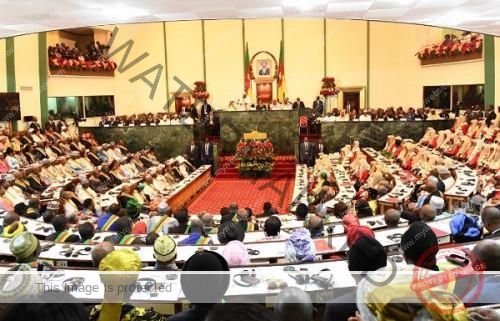
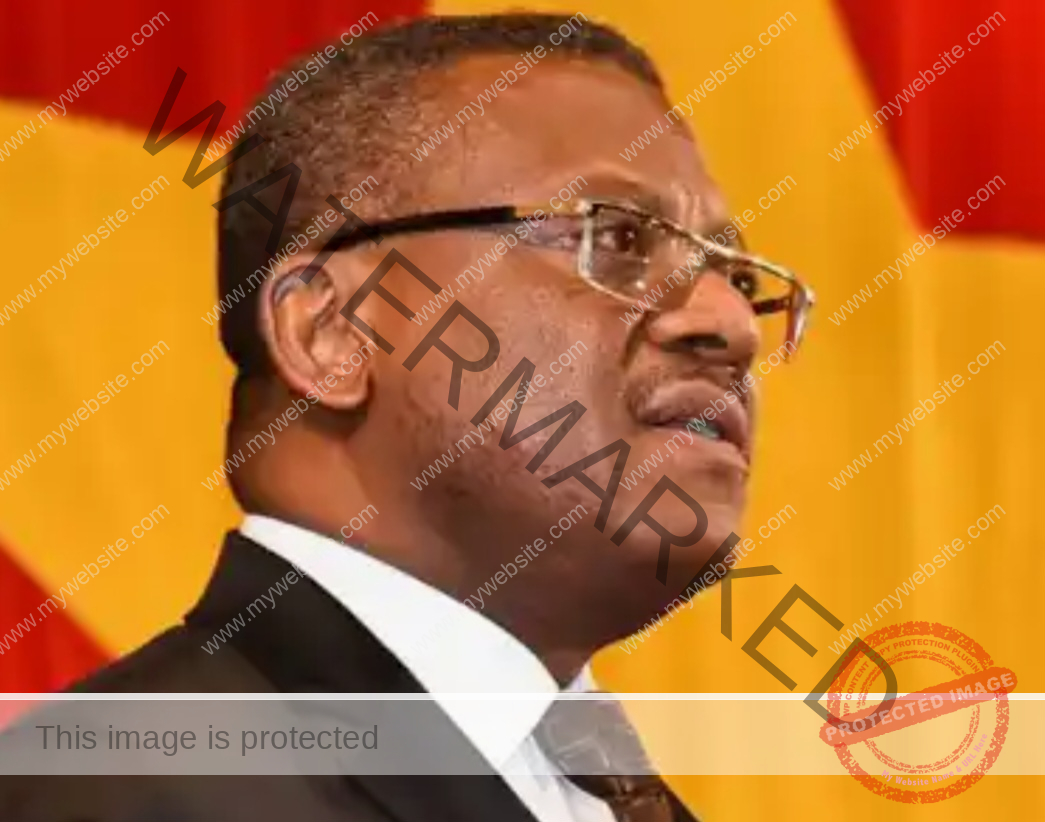
YAOUNDÉ – 17 October 2026 – In the political theatre of La République du Cameroun (LRC), the curtain has been raised once again. The speeches are prepared, the dignitaries assembled, the cameras positioned, and Prime Minister Joseph Dion Ngute has returned to the familiar stage with another promise of dialogue. The audience, however, has heard this production before.
The central political question remains unresolved, the human suffering continues, and the government has introduced yet another initiative carrying the language of reconciliation. For critics of President Paul Biya’s administration, the flashing exit sign is a metaphor for the accumulating pressures on a political system that has repeatedly promised solutions to the Southern Cameroons conflict without securing a negotiated settlement.
The sign does not establish that a change of government is imminent. It asks something more fundamental: How many times can an administration announce a new beginning before it must account for the unfinished business of its previous promises?
DION NGUTE: THE POSTER CLOWN OF A POLITICAL THEATRE
Political satire has always relied on the distinction between the person on the stage and the institution directing the performance. In this theatre, Dion Ngute is the poster clown—not as a judgment about his personal qualities, but as a satirical description of the public role assigned to the prime minister: presenting each new dialogue initiative to a population that has already witnessed years of unsuccessful peace efforts.
In October 2026, Dion Ngute’s community dialogue initiative in Bamenda again brought the government’s message of reconciliation to the North West Region. The initiative emphasized social cohesion, community participation, and restoring peace. These are not inherently objectionable objectives. Communities need reconciliation. Families need security. Schools need to function. Businesses need stability.
But there is a question that no amount of ceremonial language can remove: Can community reconciliation resolve a political conflict when the fundamental disagreement concerns sovereignty, constitutional authority, and the future political status of a territory?
Dion Ngute may preside over the ceremony. He cannot, through ceremony alone, settle that disagreement. And this is where the political satire becomes particularly sharp: the government announces another dialogue, while its critics ask whether the parties whose disagreement sustains the conflict have been brought into meaningful negotiations.
FROM GRAND NATIONAL DIALOGUE TO COMMUNITY DIALOGUE: A CHANGE OF NAME OR A CHANGE OF POLICY?
Cameroon’s September–October 2019 Major National Dialogue was presented as an important initiative for resolving the Anglophone crisis. It generated recommendations, including special status for the North West and South West regions. Yet major separatist leaders did not participate, and the proceedings did not produce agreement on the underlying dispute over the form of the state.
Seven years later, the vocabulary has changed. Yesterday’s Major National Dialogue has given way to today’s Community Dialogue. There are potential differences in purpose and scale: the former was a national political consultation, while the latter emphasizes local reconciliation. Supporters may reasonably argue that grassroots participation is essential to rebuilding trust.
Nevertheless, the question remains whether either process adequately addresses the dispute between Cameroon’s government and the separatist movement. A dialogue about social cohesion and a negotiation over political status are not interchangeable exercises. To confuse them is to risk mistaking a useful supporting measure for a comprehensive peace settlement.
In the language of political theatre, the scenery has been rearranged. Whether the script has fundamentally changed is another matter. The audience has changed seats. The actors have changed costumes. But the fundamental question remains unanswered.
THE TEN-YEAR QUESTION RETURNS TO ITS AUTHOR
Dion Ngute’s latest appeal has revived discussion of the roughly ten years since the Anglophone crisis began in 2016. The conflict originated in protests by lawyers and teachers over the protection of English-language legal and educational systems. It subsequently developed into a broader political confrontation and then armed conflict involving government forces and separatist groups.
The government’s appeal for an end to the violence addresses a genuine human tragedy. But the same ten-year measure invites scrutiny of the government’s own actions. Ten years of conflict also mean ten years in which successive government responses must be examined for their effectiveness.
What did the 2019 dialogue accomplish? What has special status changed? Which grievances remain? What credible mechanism exists for direct negotiations? How can civilians be protected while the parties disagree about sovereignty? These questions concern both the government and armed separatist actors, whose conduct must also be subject to accountability.
An administration cannot reasonably ask communities to reflect upon a decade of suffering without accepting scrutiny of its own policies over that same decade. The ten-year question is therefore not simply a demand that ordinary people abandon conflict. It is also a demand for governments and armed groups to explain what they have done—and what they will do differently—to end it.
A CONFLICT IS NOT RESOLVED BY RENAMING IT
At the heart of the Southern Cameroons question lies a disagreement that cannot be reduced entirely to community relationships. Supporters of Ambazonian independence argue that the former British Southern Cameroons possesses a distinct historical and political claim to self-determination.
Cameroon’s government maintains the country’s territorial integrity and has pursued decentralization and special-status measures within the existing state. These positions are not reconciled merely because elders, chiefs, religious leaders, and community representatives attend a public meeting.
Such participants may make essential contributions to peace, but they cannot automatically substitute for negotiations with the political and armed actors at the centre of the dispute. For the Southern Cameroons independence movement, a credible political process must address the territory’s historical status, competing claims of sovereignty, and the conditions under which its people could determine their political future.
For the Cameroon government, the challenge is whether it can discuss constitutional questions without treating its preferred outcome as the only permissible starting point. For civilians, the immediate priorities are even more urgent: safety, freedom of movement, education, livelihoods, and the protection of fundamental rights. A durable settlement must take all these dimensions seriously. You cannot resolve a sovereignty dispute by pretending that it is merely a disagreement between neighbours.
THE THEATRE OF POLITICAL SURVIVAL
The lasting danger for any government is not that it organizes too many meetings. It is that public consultation may begin to resemble a substitute for measurable political progress. Every new initiative creates expectations. Every announcement raises questions about results. Every carefully organized ceremony invites comparison with what came before.
The government’s recent community dialogue activities in Buea and Bamenda suggest an effort to take its reconciliation message to both Anglophone regions. Whether that effort develops into a consequential peace process depends on what follows the ceremonies.
Will it produce a credible negotiating framework? Will the government engage directly with relevant separatist representatives? Will there be independent mediation, confidence-building measures, and verifiable protections for civilians? Will the authorities demonstrate how local consultations connect to a political settlement? These questions matter more than the number of participants photographed at a podium.
The public does not need to be persuaded that peace is desirable. After years of deaths, displacement, interrupted education, and economic disruption, the importance of peace is already painfully evident. What remains in dispute is the means of achieving it. That is the distinction the political theatre must not conceal. A government cannot declare a political problem solved simply because it has organized another event to discuss its consequences.
THE EXIT SIGN: A WARNING, NOT A PREDICTION
In this political satire, the flashing exit sign represents an unresolved question of political accountability. It is not a forecast of President Biya’s departure. It is a warning about the limits of ceremonial politics.
A government may retain institutional authority while facing profound questions about the effectiveness of its policies. It may announce reconciliation while significant constituencies remain outside the process. It may claim progress while civilians continue to experience insecurity. None of those contradictions is resolved by changing the title of a conference.
Nor should the Southern Cameroons conflict be treated solely as a contest over political legitimacy. Its central human reality is that people continue to bear the consequences of decisions made by governments and armed movements. There is room for community reconciliation. There is also a need for political negotiation. The first must not be advertised as a replacement for the second.
If the latest initiative produces tangible security improvements, restores trust, and opens a path to genuine negotiations, those outcomes deserve recognition. If it merely repeats familiar appeals without addressing the underlying dispute, critics will have grounds to describe it as another episode of political theatre.
CONCLUSION: WHEN THE CURTAIN FALLS, THE QUESTION REMAINS
Joseph Dion Ngute is the visible messenger of Cameroon’s latest community dialogue initiative. President Paul Biya’s government bears responsibility for explaining how that initiative fits into a broader strategy for resolving the conflict. The prime minister’s visits, the speeches, the ceremonial gatherings, and the appeals for peace should ultimately be judged by what they accomplish.
For the people of the former British Southern Cameroons, the question is not whether dialogue sounds appealing. It is whether dialogue confronts the issues that have sustained the conflict and offers a credible means of ending the suffering. Political theatre can command attention. It cannot negotiate an agreement, protect a civilian, or settle a constitutional dispute by itself.
And so the metaphor returns. The exit sign is flashing—not as proof that a government is about to fall, but as a reminder that a political performance must eventually give way to an accountable peace process. The curtain cannot remain open forever.
As Amazon associate this site earns from qualifying purchases
Buy your copies of books on Ambazonia’s productive Sovereignty and statecraft By Martin Mungwa from Amazon
https://www.amazon.com/s?k=martin+mungwa&rh=p_n_special_occasion_browse-bin%3A10152212011&dc=&ds=v1%3A0bZlP0w5V%2BnunEa6LvNY9evOH0NKZVdiqd4VoPq5i5M&crid=3ASZUKJG4IRKV&qid=1792145553&rnid=10152211011&sprefix=Martin+mungwa%2Caps%2C439&linkCode=ll2&tag=njokings-20&linkId=b207298207c8667642db51d3bc8f34ad&language=en_US&ref_=as_li_ss_tl
Ali Dan Ismael
Editor-in-Chief, The Independentist News
Editorial note: This article is political satire and commentary. Its theatrical imagery and characterizations express the author’s interpretation of the Cameroon government’s dialogue initiatives rather than established factual conclusions or predictions.
Share This Post:
WHEN DIALOGUE FAILS, STATECRAFT TAKES THE STAGE: Another Consultative Conference, Another Political Costume — But Who Will Address the Sovereignty Question?
Related Post
WHEN DIALOGUE FAILS, STATECRAFT TAKES THE STAGE: Another Consultative
ANALYSIS OF A DECREPIT REGIME: From Biya’s War Policy
CHIEF DR. DION NGUTE, FROM 10-15 YEARS OF NATURAL
K-TOWN: THE GOOD, THE BAD & THE UGLY, The
THE RISE OF AFRICA: A NEW BRAZIL–AFRICA PARTNERSHIP; From
“IS TEN YEARS NOT ENOUGH?” — THE QUESTION MUST