











The question, therefore, is not only whether Ambazonia is justified in its claims. It is whether those claims are being presented in a way that aligns with how the international system actually functions. In that alignment lies the possibility of movement. Without it, even the most compelling cases risk remaining unheard.
By Ali Dan Ismael, Editor-in-Chief, The Independentist News
The illusion must end.
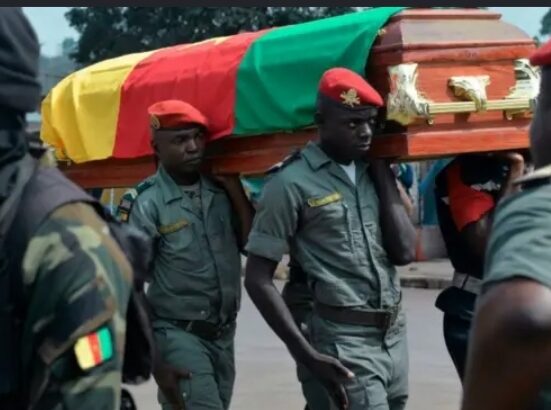
While policy discussions on “stability” continue in diplomatic circles, communities in Bui and Ngoketunjia are experiencing sustained insecurity, displacement, and loss. Families bury their dead with little visibility beyond their immediate environment. For those affected, this is not an abstract geopolitical issue. It is immediate, lived, and enduring. Yet the international response remains cautious, measured—and, in many respects, limited.
For years, Ambazonian voices have appealed to international law, historical commitments, and humanitarian principles. These appeals have often referenced the values associated with the Commonwealth of Nations, the traditions of common law, and broader international norms on human rights and self-determination.
These frameworks remain important. However, their application in practice is frequently mediated by another reality: States act primarily in accordance with perceived interests.
This is not a new development. It reflects a long-standing principle associated with figures such as Lord Palmerston, who articulated the view that national policy is guided less by permanent alliances than by enduring interests. While expressed in a different era, the underlying logic continues to shape contemporary international relations. Historical memory adds complexity to this dynamic.
Communities from the former British Southern Cameroons contributed to the Allied effort during World War II, serving under the broader Commonwealth framework. Many individuals participated in military and logistical support structures that contributed to the war effort. For some, these contributions came at significant personal cost, including lives lost and long-term hardship among those who returned.
These experiences form part of a shared history. At the same time, they have not translated into a clearly defined or consistently acknowledged framework of political reciprocity in the present context.
This gap between historical contribution and contemporary policy underscores a broader reality: Past alignment does not guarantee present support. A similar tension can be observed in the internal dynamics of the Cameroonian state. Scholars, including Bernard Fonlon, have engaged critically with questions of language, identity, and national narrative. His work in translating and adapting official texts reflects an effort to bridge linguistic and cultural divides within a complex post-colonial state. These efforts highlight longstanding challenges in reconciling differing historical and political traditions.
Today, external actors—including the United Kingdom and other international partners—continue to engage with the government in Yaoundé led by Paul Biya, while also expressing concern over humanitarian conditions in affected regions. This dual-track approach reflects a balancing act between stability, diplomatic engagement, and human rights considerations.
Such balancing is not unusual. It reflects the competing priorities that shape foreign policy decision-making. Recent shifts in global political discourse have made these dynamics more visible. During the administration of Donald Trump, the emphasis on explicitly interest-based policy—often described as “America First”—highlighted a more transactional approach to international engagement. While not fundamentally new, this framing reduced the distance between stated values and operational priorities.
The implication for conflicts such as Ambazonia is significant: International attention is not driven solely by the severity of a crisis, but also by its perceived strategic relevance. This presents a difficult but necessary conclusion.
If Ambazonia is framed exclusively as a humanitarian issue, it risks remaining within the category of concern without becoming a priority. If, however, it is also understood as a factor in regional stability, maritime security in the Gulf of Guinea, and broader geopolitical dynamics, it becomes more likely to enter strategic calculations. This does not diminish the moral dimension of the crisis. It situates it within the framework through which decisions are made.
The Gulf of Guinea is an increasingly important corridor for global trade and energy flows. Prolonged instability in coastal or near-coastal regions has implications that extend beyond national borders, including risks related to maritime security, economic disruption, and the potential emergence of ungoverned spaces. In this context, the trajectory of the conflict is not merely a domestic issue. It intersects with wider regional and international concerns.
For Ambazonian stakeholders, the strategic implication is clear: Engagement with the international system must operate on multiple levels. Humanitarian documentation, legal argumentation, and advocacy remain essential. At the same time, there is a need to articulate how different policy options affect broader interests—security, economic stability, and geopolitical balance. This is not a shift away from principle. It is an alignment of principle with policy reality.
International actors are unlikely to respond to moral claims alone. However, when moral claims intersect with clearly defined interests, the likelihood of engagement increases. This creates an opportunity—but also a responsibility.
The opportunity lies in reframing the issue in a way that is legible within policy frameworks. The responsibility lies in doing so without losing the human reality at the core of the crisis. Ambazonia now stands at a critical juncture.
It can continue to rely primarily on appeals to principle, or it can complement those appeals with a structured articulation of strategic relevance. These approaches are not mutually exclusive. In fact, they are most effective when combined. A system driven by interests does not negate the importance of justice. But it does shape the conditions under which justice is pursued, recognized, and, ultimately, acted upon.
The question, therefore, is not only whether Ambazonia is justified in its claims. It is whether those claims are being presented in a way that aligns with how the international system actually functions. In that alignment lies the possibility of movement. Without it, even the most compelling cases risk remaining unheard.
Ali Dan Ismael, Editor-in-Chief, The Independentist News




Leave feedback about this