Cameroon’s history suggests that mediation without documentation, guarantees, or institutional backing is vulnerable to strategic reversal. The Ndongmo Affair is not merely a historical tragedy; it is a structural warning. For the Ambazonian conflict, the implication is clear: any future dialogue that relies on private assurances rather than recorded mandates risks reproducing the failures of the past.
By Timothy Enongene Guest Editor-in-Chief The Independentistnews
Political mediation in post-colonial states often unfolds in the shadow of coercion. In Cameroon, historical precedent suggests that informal dialogue has repeatedly functioned less as a pathway to settlement than as a tactical instrument—used to manage insurgency, buy time, or isolate opponents, and later disavowed when its utility expires. This pattern, visible in the 1970 Ndongmo Affair, remains relevant to contemporary efforts to resolve the conflict in the Southern Cameroons, commonly referred to as the Ambazonian War of Independence.
Historical precedent: mediation without protection
In the mid-1960s, President Ahmadou Ahidjo sought to neutralize the final phase of the Bamiléké insurgency by opening discreet channels to Ernest Ouandié, the last senior leader of the Union of the Peoples of Cameroon (UPC). Bishop Albert Ndongmo of Nkongsamba was privately encouraged to act as an intermediary. Over several years, he conducted clandestine contacts with rebel elements, operating under the assumption that he enjoyed presidential backing for a negotiated surrender.
By 1970, Ouandié’s position had become untenable. According to Ndongmo’s later testimony, the Bishop provided temporary shelter to Ouandié in the belief that he was acting consistently with the state’s private instructions. Crucially, this mediation was never formalized through public documentation or institutional authorization.
That absence proved decisive. Following Ouandié’s capture on 19 August 1970, the state abruptly reversed its posture. Ndongmo was arrested upon returning from church duties abroad, and officials advanced a new narrative alleging a conspiracy against the head of state. The mediation mandate was denied in its entirety. A military tribunal recast the mediator as a conspirator, and state media reinforced the claim that no official authorization had ever existed.
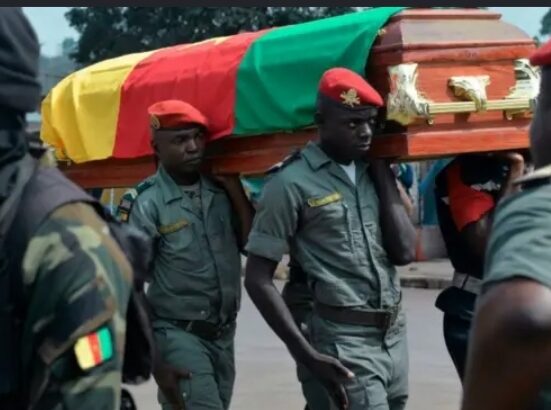
In 1971, Ouandié was sentenced to death and executed by firing squad in Bafoussam. Ndongmo was also sentenced to death, though international pressure—particularly from the Vatican—led to commutation to life imprisonment. The episode established a durable lesson in Cameroonian political memory: informal mediation offers no protection once state objectives shift.
Contemporary echoes in the Ambazonian conflict
As the conflict in the Southern Cameroons approaches its ninth year, many Ambazonian actors interpret recent peace initiatives through this historical lens. Since 2016, several episodes have reinforced perceptions of engagement followed by denial.
First, during early talks between Anglophone civil society leaders and the government in Bamenda in 2016, parallel public messaging by senior ministers dismissed the negotiations and minimized grievances, suggesting a lack of internal coherence—or sincerity—within the state’s approach.
Second, reported contacts in 2020 between government officials and the imprisoned Ambazonian leader Sisiku Ayuk Tabe were later publicly downplayed, with no formal process emerging.
Third, the Swiss-facilitated initiative (2019–2022) proceeded for years on the basis of an asserted mandate from Yaoundé, only for the government to withdraw and reaffirm its preference for a military solution and an internally managed dialogue.
Finally, Canada’s announcement in January 2023 that it had hosted discreet talks was followed by an official denial from Cameroonian authorities that any foreign mediation had been authorized.
From Yaoundé’s perspective, such denials are often framed as necessary assertions of sovereignty or clarifications of informal contacts. From the Ambazonian side, they are seen as evidence of a consistent state practice: engage privately, deny publicly.
Strategic caution and institutional memory
This history helps explain the caution adopted by the Ambazonian leadership under Dr. Samuel Ikome Sako. While critics characterize this posture as inflexible, supporters argue that it reflects institutional learning rather than ideological rigidity. The Ndongmo Affair serves as a warning against reliance on private assurances or informal channels lacking senior-level, publicly recorded authorization.
In this reading, the core issue is not trust but structure. Mediation conducted without binding guarantees allows one party to benefit tactically while retaining the option of repudiation.
The case for external guarantees
The demand for international involvement is therefore less about externalization of the conflict than about risk mitigation. The failure of the Ndongmo mediation lay not in dialogue itself, but in the absence of verifiable authorization and third-party accountability.
For a credible peace process in 2026, proponents argue that mediation must be embedded in a multilateral framework with recognized guarantors. The involvement of major powers—particularly the United States and key allies—would provide leverage to sustain engagement. A United Nations–supported framework would internationalize oversight, register commitments, and constrain unilateral denial.
Conclusion
Cameroon’s history suggests that mediation without documentation, guarantees, or institutional backing is vulnerable to strategic reversal. The Ndongmo Affair is not merely a historical tragedy; it is a structural warning. For the Ambazonian conflict, the implication is clear: any future dialogue that relies on private assurances rather than recorded mandates risks reproducing the failures of the past.
Peace, in this context, requires not only willingness to talk but mechanisms that make denial costly. Without such safeguards, mediation remains a high-risk exercise—one side empowered to act discreetly and disavow publicly.
Timothy Enongene Guest Editor-in-Chief