

What remains clear is that the SDF stands at a crossroads. Whether it rebuilds or disappears will depend not only on leadership choices, but on whether it can rediscover the spirit that once made it the voice of millions seeking democratic change. For many Cameroonians, the question is no longer who buried the party—but whether it can still rise again.
By Lester Maddox, Guest Writer
Independentistnews, Oakland County, California
BAMENDA 11 February 2026 – The Social Democratic Front (SDF), once the most formidable opposition force in Cameroon, now faces one of the most difficult moments in its history. Under the chairmanship of Joshua Osih, the party’s influence has visibly declined, raising uncomfortable questions about leadership, strategy, and the future of opposition politics in the country.
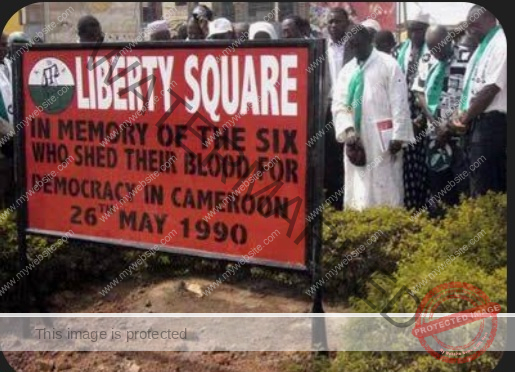
The October 2025 presidential election did not simply deliver another defeat; for many observers, it symbolized how far the party has drifted from the mass movement that once electrified Liberty Square in Bamenda and inspired millions across the country. Yet the story is not merely one of personal failure. It is also the story of a political system that has grown increasingly resistant to opposition success, internal party fragmentation, and an electorate losing faith in traditional opposition structures.
From Opposition Giant to Political Margins
The numbers themselves have fueled much of the criticism directed at Osih’s leadership. The SDF’s presidential vote share fell from 3.3% in 2018 to roughly 1.2% in 2025. For supporters who remember when the SDF was considered a genuine alternative to the ruling establishment, this decline feels devastating.
Critics argue that the party has gradually shifted from being a government-in-waiting to a party struggling for relevance. They accuse Osih of failing to mobilize supporters and failing to renew the party’s message in a rapidly changing political landscape.
However, others point out that the environment for opposition politics has also deteriorated. Electoral disputes, low voter confidence, security challenges, and opposition fragmentation have weakened nearly all opposition parties, not just the SDF. In that sense, Osih inherited a party already facing steep decline after the passing of its charismatic founder, Ni John Fru Ndi.
Coalition Politics and Strategic Missteps
One of the sharpest points of contention during the 2025 election cycle concerned calls for a unified opposition coalition. Osih dismissed coalition demands, arguing that the SDF already had partnerships and grassroots alliances capable of carrying its campaign.
But when results showed minimal electoral traction, critics accused the leadership of misreading public sentiment. For many opposition supporters, unity now appears less optional and more necessary in a political environment dominated by entrenched incumbency.
Osih’s decision to acknowledge and accept official election results also triggered backlash from sections of the opposition, who saw the move as legitimizing a process they considered flawed. His supporters, on the other hand, argue that respecting institutional processes—even imperfect ones—prevents political instability and protects the party’s survival in a tense national climate.
Legal Challenge and Sudden Withdrawal
Further controversy followed when the SDF initially filed a petition challenging election results, citing irregularities. The later withdrawal of that petition without detailed public explanation deepened frustration among some party supporters.
To critics, the move symbolized retreat at a moment demanding resistance. To defenders, it reflected political pragmatism in a legal environment where opposition victories through the courts have historically been rare.
The truth likely lies somewhere between political calculation and institutional constraints, but the episode intensified perceptions that the SDF leadership had grown cautious where it once appeared bold.
Between Survival and Renewal
Another persistent accusation is that the party leadership has sought accommodation rather than confrontation with the ruling establishment. References are often made to past actions, including Osih’s participation in documents or initiatives perceived by some activists as aligning too closely with government positions.
Yet some party insiders argue that survival strategies are sometimes necessary to keep political space open, especially when opposition parties face legal, administrative, and security pressures. Without adaptation, they warn, opposition movements risk total marginalization.
A Party at a Turning Point
The more difficult question now is not simply whether Joshua Osih succeeded or failed, but whether the SDF itself can reinvent its role in contemporary Cameroonian politics.
The emotional memory of Liberty Square, where thousands once rallied under the slogan “Power to the People,” still resonates with older supporters. But younger voters appear increasingly disconnected from that legacy, seeking new political platforms or disengaging altogether.
The SDF’s challenge is therefore generational as much as organizational. Leadership renewal, clearer positioning, and reconnecting with grassroots concerns may determine whether the party regains relevance or fades into history.
Beyond Personal Blame
It is tempting in politics to reduce institutional decline to a single individual. But political parties are collective structures shaped by history, leadership transitions, national crises, and voter expectations.
Joshua Osih’s leadership period will likely remain controversial. To critics, it marks the burial of a once-powerful opposition movement. To defenders, it reflects the struggle of keeping a legacy party alive in an increasingly restrictive political environment.
What remains clear is that the SDF stands at a crossroads. Whether it rebuilds or disappears will depend not only on leadership choices, but on whether it can rediscover the spirit that once made it the voice of millions seeking democratic change. For many Cameroonians, the question is no longer who buried the party—but whether it can still rise again.
Lester Maddox, Guest Writer
Independentistnews, Oakland County, California