

If decolonization is to retain meaning, it cannot remain selective. If international principles are to retain credibility, they cannot remain conditional.Because history does not disappear. It waits. And when it returns, it does not ask quietly
By Ali Dan Ismael Editor-in-Chief The Independentist News
For decades, the language of empire has been softened. It has been reframed as partnership, redefined as cooperation, rebranded as history. But history does not disappear. It accumulates. And sooner or later, it asks to be answered.
A Direct Question to Two Capitals
This is no longer a theoretical debate. It is a question directed—clearly and without ambiguity—to France and United Kingdom. What is your position on a people who were never fully decolonized?
Paris: The Architecture That Remains
France’s role in Africa did not end in 1960. It evolved. Through monetary systems, military agreements, and political alignment structures, Paris maintained a level of influence that has shaped outcomes across generations. This is not contested. It is documented. The system widely described as Françafrique is not a conspiracy theory. It is a geopolitical reality. And within that reality lies an uncomfortable truth: states operating within this structure often reflect external stability before internal legitimacy.
London: The Responsibility That Was Transferred
The case of Southern Cameroons raises a different—but equally serious—question for the United Kingdom. Decolonization is not merely the act of departure. It is the completion of political responsibility. In transferring Southern Cameroons into a post-colonial arrangement without ensuring a sustainable and self-determined outcome, Britain did not conclude its role. It deferred its consequences. A people who contributed under the Commonwealth framework—who stood in global conflicts that shaped the modern international order—were not granted a clear and independent political trajectory. They were redirected. That redirection is now at the center of an unresolved crisis.
Cameroun: Where These Legacies Converge
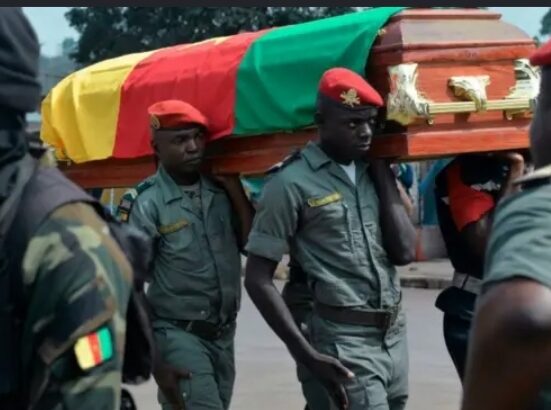
Today, Cameroon represents the intersection of these two legacies: a post-colonial state influenced by French structural design and a territory integrated through British administrative transition. Under Paul Biya, this convergence has not produced cohesion. It has produced contradiction. A system expected to function as a unified state continues to exhibit the characteristics of layered, unresolved authority.
Ambazonia: The Unresolved Case
Ambazonia exists within this contradiction. It is not simply a regional issue. It is a case that exposes a gap between principle and practice in international governance. If the principle of self-determination is universally recognized, then its selective application raises questions that cannot be indefinitely postponed.
Silence as Policy
Both Paris and London have maintained a position that can best be described as strategic restraint. But restraint, over time, becomes indistinguishable from position. Silence, over time, becomes indistinguishable from consent. The absence of clear engagement does not neutralize responsibility. It extends it.
A Changing Global Context
The international system that once insulated historical arrangements is evolving. Long-standing assumptions about alliances, influence, and responsibility are being reassessed. In this environment, unresolved questions do not fade. They gain visibility.
What Is Being Asked
This is not a call for rhetoric. It is a call for clarity. Does France acknowledge the continuing structural influence it maintains in the region? Does the United Kingdom consider its decolonization process in Southern Cameroons complete? Do either believe that the current situation reflects a stable and legitimate outcome? These are not hostile questions. They are necessary ones.
The Cost of Avoidance
History has shown that unresolved political arrangements do not remain static. They evolve—often in ways that are more complex and more difficult to address later. Avoidance does not reduce responsibility. It compounds it.
A Narrowing Window
Ambazonia is not the only case where historical structures are being revisited. But it is one of the clearest. Because it sits precisely at the intersection of two imperial legacies that were never fully reconciled.
The Decision Facing Paris and London
There are, ultimately, only two paths: continue to treat Ambazonia as an internal matter within Cameroun, or recognize that its origins, structure, and persistence are tied to decisions made beyond its borders.
The Question That Will Remain
If decolonization is to retain meaning, it cannot remain selective. If international principles are to retain credibility, they cannot remain conditional.Because history does not disappear. It waits. And when it returns, it does not ask quietly.
Ali Dan Ismael Editor-in-Chief The Independentist News