

The question has remained open for six decades. It cannot remain open any longer. We have seen the consequences of hesitation. We have lived the cost of delay. We have witnessed the erosion he described. Now, the answer must be given—not in words, but in direction. We will not be absorbed. We will not be reduced. We will not be remembered as a people who watched their identity disappear.
By The Independentistnews Editorial desk
13 April 2026
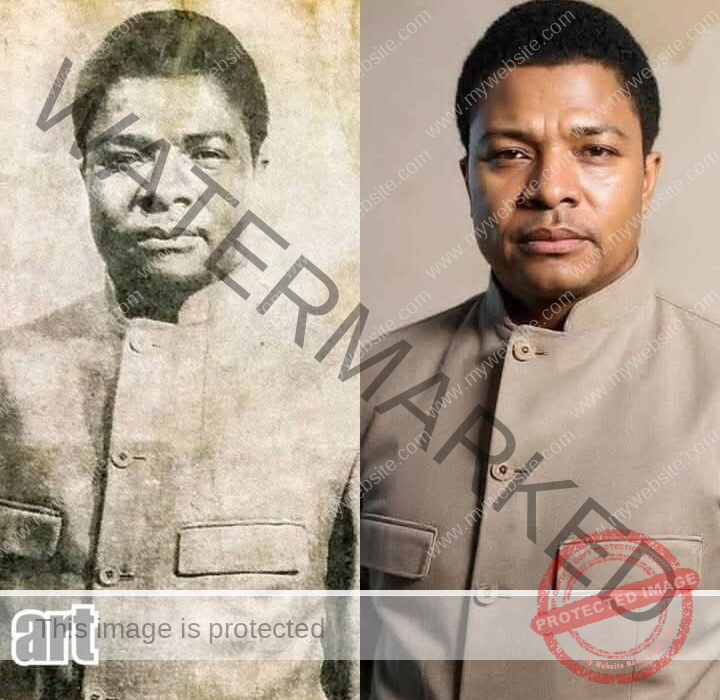
On one side, the past—grainy, prophetic, unresolved.
On the other, the present—clearer, sharper, undeniable. Between these two images lies a question that has outlived its time: Will we make or mar?
In 1964, Bernard Fonlon did not ask this as philosophy. He asked it as a warning. He saw a federation already tilting, already centralizing, already eroding the distinct identity of a people he knew could not survive absorption. He warned that without a radical shift in cultural initiative, that identity would disappear within three generations.
Today, we are that third generation. The moment of inheritance What Fonlon feared is no longer theoretical. It is visible in the erosion of institutions. It is audible in the distortion of language. It is measurable in the disappearance of influence. The question is no longer whether the system is imbalanced. The question is whether we are prepared to correct it—or to inherit it. To quote Fonlon without acting is not homage. It is avoidance.
Reclaiming the cultural initiative
Fonlon understood that power is not only political. It is cultural. Who designs the schools determines the future. Who defines the language shapes the mind. Who controls the institutions controls the outcome. For too long, policy—political, economic, and social—has been shaped externally to the identity it governs. Sovereignty begins the moment that changes. Not through permission. Not through concession. But through assertion. The restoration of accountability, decentralization, and rule of law is not a negotiation point. It is the baseline of existence for a people that understands itself.
From marginal presence to defining influence
Fonlon described the influence of West Cameroon as “practically nil” beyond its frontiers. That observation was not an insult. It was a diagnosis. Today, that diagnosis must be reversed. What was once treated as peripheral must become central. Our legal traditions are not relics. Our linguistic identity is not a limitation. Our institutional framework is not inferior.
They are, in fact, the very structures that much of the continent now seeks—transparency, meritocracy, and procedural integrity. We are not a minority adapting to a system. We are a system that was never allowed to operate.
Breaking the intellectual strait-jacket
Fonlon’s call was not merely political. It was intellectual. He demanded the courage to admit that alternative systems could strengthen the whole. That courage never came from those in control. Which leaves only one conclusion: the responsibility has shifted to the people. Sovereignty is not declared once. It is practiced continuously.
It is practiced when institutions are defended. When values are chosen over convenience. When identity is preserved against dilution. It is lived in decisions—daily, deliberate, and disciplined.
The mandate of the third generation
We are no longer observers of Fonlon’s warning. We are its outcome. The third generation was not meant to inherit confusion. It was meant to correct it. The fear that both African identity and inherited institutional strength would disappear together was not unfounded. But it was not inevitable. What was predicted as loss can still become restoration. But only through action.
Final answer to Fonlon
The question has remained open for six decades. It cannot remain open any longer. We have seen the consequences of hesitation. We have lived the cost of delay. We have witnessed the erosion he described. Now, the answer must be given—not in words, but in direction. We will not be absorbed. We will not be reduced. We will not be remembered as a people who watched their identity disappear.
Closing line
We are no longer the question. we are the answer.
The Independentistnews Editorial desk