









News commentary

We are home to news on Cameroon and the CEMAC region. We are dedicated to honest and reliable reporting. We are the voice of the Cameroonian people and their fight for freedom and democracy at a time when the Yaoundé government is silencing dissent and suppressing democratic voices.

The BBC is not dead. Its authority, however, can no longer be treated as self-validating. Trust must be earned through accuracy, transparency, correction, and accountability. Donald Trump has not yet proved that the BBC owes him $10 billion. The BBC has nevertheless admitted that its editing created a misleading impression. Both facts can be true at the same time. That is the balance the present debate requires.
By Ali Dan Ismael, Editor-in-chief The Independentist News
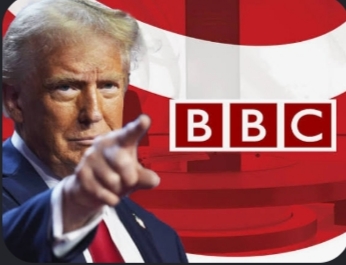
Donald Trump’s $10 billion lawsuit against the British Broadcasting Corporation has produced headlines suggesting that either the BBC is approaching institutional collapse or Trump’s case has spectacularly backfired. Neither conclusion is presently justified.
The BBC has suffered a grave editorial and reputational failure. It acknowledged that a Panorama documentary joined statements delivered at different points in Trump’s January 6, 2021, speech, creating the misleading impression of a more direct call for violent action. The corporation apologized, agreed not to rebroadcast the documentary, and rejected Trump’s demand for compensation. The controversy was serious enough to contribute to senior resignations and renewed scrutiny of the BBC’s editorial culture. PBS reported the BBC’s apology and rejection of Trump’s defamation claim.
Yet acknowledging the BBC’s misconduct does not establish that Trump suffered $10 billion in damages. Nor does the latest ruling requiring disclosure of certain financial records decide whether the BBC committed actionable defamation. It is a discovery ruling: because Trump placed economic injury at the center of his claim, the BBC is entitled to examine financial evidence relevant to whether such injury occurred. The court limited that inquiry to records dating from January 1, 2023, rather than granting an unlimited search into his business affairs. The Guardian reported the scope and purpose of the financial disclosure ruling.
The proper conclusion is therefore neither “the BBC is finished” nor “Trump has lost.” The more defensible conclusion is that the BBC’s credibility has been damaged, while Trump’s extraordinary damages claim remains legally contested and evidentially demanding.
An Editorial Failure Cannot Be Minimized
The BBC’s defenders should resist the temptation to describe the controversy as a harmless technical mistake. Editing is central to journalism. Every documentary compresses time, selects evidence, and arranges events into a narrative. But those editorial choices must not materially change the apparent meaning of a speaker’s words.
Joining statements delivered at different moments without making the separation clear can create an impression that the original speech does not support. Omitting language calling for peaceful conduct can deepen that distortion. When this occurs in a politically consequential documentary, the resulting injury extends beyond the person portrayed. It damages public confidence in the broadcaster’s methods.
The BBC’s global reputation makes the failure more serious, not less. Millions of people encounter the institution not simply as one broadcaster among many but as an authoritative interpreter of international affairs. Its programs shape political understanding far beyond the United Kingdom, particularly in countries where local media institutions possess fewer resources and less international reach. That authority carries a corresponding duty: the BBC must subject its own editing to standards at least as rigorous as those it demands from governments, political movements, and competing media organizations.
A Serious Error Is Not Proof of a $10 Billion Loss
Balance also requires recognizing that editorial wrongdoing and legal damages are different questions. Trump is a public figure. His legal case must overcome demanding protections for political expression and public-interest journalism. The parties also dispute whether the documentary was distributed in the jurisdiction where the case was brought, whether the editing met the legal standard for defamation, and whether Trump can demonstrate measurable reputational or economic harm.
If Trump claims that the broadcast caused enormous financial losses, the BBC is entitled to test that assertion. Evidence that his wealth or business interests increased after the documentary would not automatically excuse the misleading edit, but it could weaken his claim for economic damages. Conversely, a rise in wealth would not prove that the BBC acted responsibly. A person can be misrepresented without becoming poorer. The court must separately consider falsity, fault, publication, causation, jurisdiction, injury, and damages.
The financial-records ruling should therefore not be sensationalized. It is not judicial approval of the BBC’s editing. It is also not proof that Trump’s lawsuit has collapsed. It is part of the ordinary process through which a claimant who demands enormous compensation must produce evidence supporting the alleged loss.
The BBC Is Unlikely to Disappear
The lawsuit is not, by itself, the end of the BBC. The corporation remains one of the world’s largest public-service broadcasters, supported by extensive infrastructure, international operations, legal resources, public funding, and a deeply established institutional presence. Its greater threat is cumulative loss of trust.
Public confidence can be weakened by misleading editing, perceived political selectivity, delayed corrections, opaque internal accountability, and the impression that the institution applies different standards to powerful Western governments, African states, liberation movements, and politically disfavored individuals.
The BBC may survive the lawsuit while emerging with less moral authority. Institutional survival and institutional credibility are not the same thing. The appropriate remedy is not necessarily the destruction of the BBC. A diminished international press would not automatically produce a better-informed world. What is required is transparent correction, stronger editorial controls, independent review, disclosure of material editing decisions, and meaningful accountability when a program creates a false impression.
Society needs powerful journalism capable of investigating presidents and governments. It also needs mechanisms capable of investigating powerful journalists and broadcasters.
Why This Matters to Ambazonia
For Southern Cameroons/Ambazonia, the controversy carries lessons far beyond Donald Trump. Foreign broadcasters possess enormous power to define African conflicts for international audiences. Through terminology, editing, source selection, maps, captions, imagery, and omissions, they can determine which history appears relevant and which political claims appear reasonable.
Describing the Ambazonian conflict merely as an “Anglophone crisis” can reduce a territorial and constitutional dispute to a disagreement over language. Referring exclusively to the “Northwest and Southwest regions” can normalize the administrative framework of La République du Cameroun while obscuring the historical identity of the former British Southern Cameroons. Describing every armed or political actor as a “separatist” can begin the report from the occupying state’s preferred interpretation rather than from a neutral examination of competing claims.
The lesson from the BBC controversy is not that every unfavorable report about Ambazonia is fabricated. Nor should Ambazonians assume that all Western journalists operate according to a single colonial agenda. Such generalizations would be unfair, strategically unwise, and contrary to the evidentiary standards the movement should demand.
The real lesson is narrower and stronger: institutional prestige does not make editorial choices infallible. A broadcaster can use authentic words and images while arranging them in a manner that produces a materially misleading conclusion.
Criticism Must Be Supported by Evidence
Ambazonia should not respond to questionable reporting with anger alone. It should build a professional system for documenting media performance. Complete interviews, speeches, photographs, maps, correspondence, casualty records, eyewitness accounts, and original video footage should be securely preserved. When a broadcast appears misleading, analysts should compare it with the complete source material and identify the precise omission, splice, mistranslation, inaccurate caption, or unsupported characterization.
A credible complaint should include the program title, broadcast date, disputed segment, timestamp, complete source, historical evidence, explanation of the error, and requested correction. Complaints should distinguish among factual falsehood, contested interpretation, incomplete context, and legitimate editorial disagreement. Such discipline would be more effective than declaring every critical journalist hostile to Ambazonia. International media institutions are more likely to respond to verifiable evidence than to generalized accusations of bias.
Ambazonia Must Also Examine Its Own Media
Narrative sovereignty does not mean replacing foreign distortion with domestic propaganda. Ambazonian media organizations must apply to themselves the standards they demand from the BBC. They should avoid manipulated videos, invented quotations, unverified casualty figures, exaggerated diplomatic claims, misleading maps, selective historical evidence, and headlines that promise more than the facts establish.
It would be contradictory to condemn the BBC for rearranging Trump’s speech while circulating edited material that distorts the statements of Ambazonian opponents. It would be equally damaging to criticize international broadcasters for misleading political framing while presenting rumors as confirmed diplomatic breakthroughs.
A liberation movement cannot build credibility by arguing that accuracy is obligatory for its adversaries but optional for its supporters. Every correction made openly strengthens institutional maturity. Every acknowledged uncertainty protects long-term credibility. Every refusal to publish an attractive but unverified allegation demonstrates readiness for responsible government.
Independent Media Capacity Is Essential
Ambazonia cannot depend entirely upon the BBC, CNN, France 24, international newspapers, or social-media algorithms to explain its history and political case. It requires credible institutions capable of producing documented news, investigative reporting, historical analysis, professionally verified maps, diplomatic briefings, multilingual publications, and searchable archives. These institutions must be sufficiently independent to scrutinize Ambazonian leaders as well as La République du Cameroun.
Independentist media should not become the public-relations department of any administration, armed group, faction, or personality. Its first loyalty must be to verifiable truth and the public interest. Ambazonia should train journalists in evidence preservation, conflict-sensitive reporting, media law, digital verification, interviewing, geolocation, data journalism, cybersecurity, and ethical editing. It should develop relationships with responsible foreign correspondents while retaining the capacity to correct them when necessary. The goal is not isolation from international media. It is engagement without dependency.
The Balanced Verdict
The BBC committed a serious and acknowledged editorial failure. Trump has a legitimate basis for demanding accountability for a misleading portrayal. But a justified grievance does not automatically validate a $10 billion damages claim. The latest financial-disclosure ruling is a procedural victory for the BBC because it permits the broadcaster to test Trump’s allegation of economic harm. It is not a verdict vindicating the documentary. The eventual outcome must depend upon evidence and law, not political loyalty to Trump or sentimental loyalty to the BBC.
For Ambazonia, the story is important because it exposes the power hidden within editing and institutional reputation. It demonstrates how an internationally respected broadcaster can materially alter meaning without fabricating every word. It also demonstrates why anyone seeking vast compensation must be prepared to prove actual injury.
The responsible Ambazonian position should neither celebrate the possible destruction of the BBC nor excuse its misconduct. It should defend journalism while demanding accountability from journalists. It should challenge distorted reporting while rejecting distortion within its own ranks.
Conclusion: Question Authority—But Preserve Truth
The BBC is not dead. Its authority, however, can no longer be treated as self-validating. Trust must be earned through accuracy, transparency, correction, and accountability. Donald Trump has not yet proved that the BBC owes him $10 billion. The BBC has nevertheless admitted that its editing created a misleading impression. Both facts can be true at the same time. That is the balance the present debate requires.
Ambazonia should learn from the controversy without exploiting it recklessly. It must preserve original evidence, challenge inaccuracies professionally, build independent media institutions, scrutinize foreign narratives, and impose equally demanding standards upon its own journalists and political leaders.
A people seeking international recognition cannot surrender its story to foreign gatekeepers. But neither can it achieve narrative sovereignty by replacing one form of manipulation with another.
The enduring principle is simple: No broadcaster should possess unquestioned authority. No political leader should be immune from investigation. No claimant should receive damages without proof. And no liberation movement should demand a standard of truth from the world that it is unwilling to practice itself.
Ali Dan Ismael, Editor-in-chief The Independentist News
Share This Post:
DID THE MOSQUITO DO A BETTER JOB OF DECOLONIZING WEST AFRICA? Does Africa’s Smallest and Most Unintentional Defender Deserve a Monument?
WHEN ARTIFICIAL INTELLIGENCE ERASES A CONTINENT: The State Department’s Failed Map, La République du Cameroun’s Schoolbooks, and the Strategic Imperative of Cartographic Sovereignty for Ambazonia
Related Post
TRUMP’S “SUPER INTELLIGENCE” ERA: WHAT IT REALLY MEANS —
Why Is Ambazonia More Powerful Than many Imagine.
THIS DAY IN HISTORY SEPTEMBER 22, 2017: THE DAY
A President Unseen, a Country Waiting: Yaoundé’s Succession Uncertainty
BEYOND THE FLAG: THE HARDER QUESTION OF BUILDING AMBAZONIA
EKONA UNDER FIRE: THREE CIVILIANS REPORTED KILLED AS RESIDENTS