

If this is the new order, it must be judged not by slogans, uniforms, or speeches, but by results. Sovereignty must produce schools. Sovereignty must produce electricity. Sovereignty must produce factories. Sovereignty must produce jobs. Sovereignty must produce dignity. Otherwise, the old exploitation will simply return under a new flag.
By Ali Dan Ismael. Editor-in-chief The Independentist News
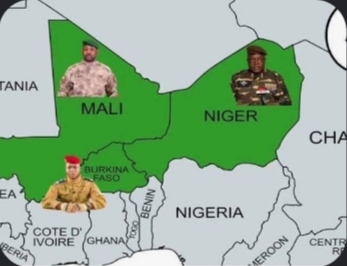
Across the Sahel, a new political and economic message is emerging. Burkina Faso, Mali, and Niger are using state authority, revised mining codes, national legislation, permit reviews, and sovereign institutions to recover greater control over strategic resources. Gold, uranium, mining concessions, tax claims, revenue shares, and foreign corporate privileges are no longer being treated as untouchable arrangements inherited from colonial and post-colonial dependency. They are being reexamined as matters of national survival, economic sovereignty, and state rebuilding.
This shift is already visible. Mali’s revised mining code increased the state’s revenue share and strengthened public ownership in new mining ventures, triggering major disputes with foreign mining companies, including Canadian mining interests. Niger has moved against long-standing French uranium interests after decades in which Nigerien uranium helped power foreign industries while many Nigeriens remained poor. Burkina Faso has also moved to nationalize gold mining assets and strengthen state participation through its own mining structures.
Together, these actions reflect a wider Sahelian trend. African states are beginning to rewrite the rules of resource control and present the move as a campaign against exploitation. No Global Outrage When Africa Uses Its Own Laws
What is striking is that these countries are not merely shouting slogans. They are using legal instruments, constitutional authority, revised mining codes, permit reviews, ownership claims, and state enterprises to assert control. Whether one agrees with every method or not, the broader question is unavoidable: why should African states be condemned for doing what powerful nations have always done—protecting strategic assets, controlling natural wealth, and using law to defend national interest?
For decades, African countries were told that foreign investment must be protected, even when local communities remained poor, infrastructure remained weak, and the state received only a limited share of the wealth extracted from its soil. But when African governments ask who owns the gold, who benefits from the uranium, who controls the mines, and who determines the price of sovereignty, the language suddenly changes. The debate becomes one of “risk,” “instability,” “expropriation,” and “investor confidence.”
Yet rich nations routinely protect energy assets, subsidize industries, block foreign takeovers, control strategic minerals, and defend national champions. When powerful nations protect their productive assets, it is called national security. When African nations attempt to do the same, it is too often called recklessness.
The Real Looters Wear Corporate Suits
For too long, Africa has been told to fear local disorder while ignoring organized extraction by global conglomerates. The real looters of Africa are not always those carrying sacks in the streets. Many wear corporate suits, sit in boardrooms, hire international lawyers, negotiate sweetheart contracts, and move profits through offshore structures while producing countries remain poor. They extract gold, uranium, oil, gas, timber, diamonds, cobalt, lithium, and agricultural wealth under agreements that often favor the foreign operator more than the African people.
This is the quiet looting that rarely provokes global outrage. When a villager steals from a mine, he is called a criminal. When a conglomerate drains billions through unfair contracts, tax avoidance, inflated costs, transfer pricing, political influence, and legal intimidation, it is often called investment. That double standard must end. Africa must distinguish between genuine investors who create value and predatory conglomerates that treat African states as extraction zones.
The issue is not foreign investment itself. Africa needs serious investors, technology partners, engineers, capital, and access to global markets. But investment must be fair, transparent, taxable, accountable, and development-oriented. A company that extracts national wealth without building local industry, protecting the environment, training local workers, paying fair taxes, or supporting community development is not a partner in progress. It is part of the machinery of underdevelopment.
So when Burkina Faso, Mali, and Niger challenge foreign corporate dominance, the world should not rush to condemn them without first asking a deeper question: who has truly been looting Africa? The answer is uncomfortable. In many cases, the most sophisticated looting has not been done with guns or machetes, but with contracts, concessions, shell companies, tax games, diplomatic pressure, and corporate privilege.
The Twenty-First Century Must Become Africa’s Economic Century
The twenty-first century should not become another century in which Africa remains a supplier of raw materials, cheap labor, and strategic minerals for other people’s prosperity. It must become the century in which Africa emerges as a real economic force.
Several factors support this possibility. Africa has the world’s youngest population, vast mineral wealth, enormous agricultural potential, growing urban markets, expanding digital connectivity, strategic maritime access, and a rising generation of educated citizens who understand that political independence without economic control is incomplete.
Burkina Faso, Mali, and Niger are therefore not acting in isolation. They are expressing a wider African demand for economic sovereignty. Their methods may be debated, and their politics may be controversial, but the underlying message is clear: African states can no longer remain passive spectators while foreign companies extract wealth from African soil and leave behind dependency, environmental damage, weak infrastructure, and underdevelopment.
Africa’s future will not be secured by aid, sympathy, foreign lectures, or promises from former colonial powers. It will be secured by ownership, production, industrialization, education, technology, infrastructure, and disciplined governance. The continent must move from exporting raw gold to building financial reserves and industrial capacity. It must move from exporting uranium to building energy security and scientific expertise. It must move from exporting cocoa, coffee, cotton, timber, and minerals to processing, branding, manufacturing, and controlling the value chains that create real wealth.
The Real Question Is Productive Ownership
The deeper issue is not nationalism for its own sake. The real issue is productive ownership. A country that does not control its productive assets cannot control its development. A people who live on gold but remain poor are not sovereign in any meaningful economic sense. A country whose uranium powers foreign industries while its own citizens remain in darkness has not achieved real independence. A state that depends on external companies to define the value of its own resources remains trapped in a colonial economic structure, even if it has a flag, an anthem, and a seat at the United Nations.
This is why the Sahelian actions matter beyond the Sahel. They ask a question every African country must confront: should Africa continue to export raw wealth and import poverty, or should it organize natural resources into national capability?
Productive assets are the foundation of real sovereignty. Land, minerals, ports, energy systems, farms, water resources, data, industries, universities, and human capital are not just economic sectors. They are the engines of national power. Whoever controls them controls the future.
The New Order Must Be More Than Confiscation
But resource recovery alone is not enough. Nationalization without competence can become another form of failure. Taking control of mines does not automatically create prosperity. The state must build technical capacity, transparent management, professional regulation, environmental safeguards, anti-corruption systems, commercial discipline, and credible revenue institutions. Otherwise, foreign exploitation may simply be replaced by domestic mismanagement.
This is where the new African order must be serious. The goal cannot be to chase away one foreign company only to invite another under less transparent terms. It cannot be to replace French, British, Canadian, or Western control with Russian, Chinese, Turkish, Gulf, or local elite capture. True sovereignty means resources are governed for the people, not merely transferred from one power network to another.
Africa’s struggle is not only against foreign exploitation. It is also against weak institutions, corrupt elites, poor planning, underinvestment in people, and the failure to convert natural wealth into productive capacity. The new order must combine sovereignty with competence, ownership with accountability, and national pride with measurable development.
From Extraction to Transformation
The productive-asset question is not only about who owns the mine. It is about what the mine produces for the nation. Does gold revenue build roads, schools, universities, clinics, power systems, processing plants, technology centers, and national industries? Does uranium revenue create energy security, scientific training, engineering capacity, and industrial value chains? Do mining communities receive infrastructure, jobs, health protections, and environmental restoration? Does the nation move from extraction to transformation? That is the standard by which this new order must be judged.
Africa must not remain a continent where minerals leave as raw exports and return as expensive finished products. The continent must build refineries, smelters, processing plants, manufacturing zones, research centers, technical schools, and industrial corridors. It must train engineers, geologists, metallurgists, technicians, managers, financiers, and entrepreneurs who can turn resources into national capability. Natural wealth becomes national power only when it is processed, governed, invested, and transformed.
A Warning to Africa’s Political Class
African leaders must understand that popular anger against foreign exploitation is real, but it is not a blank check. The people want dignity, but they also want bread. They want sovereignty, but they also want competence. They want national control, but they also want accountability. If resource nationalism becomes propaganda without development, the people will eventually see through it.
The recovery of productive assets must therefore be tied to national development plans. Revenues must be audited. Contracts must be published. State mining companies must be professionally governed. Sovereign wealth funds must be protected from political abuse. Local communities must share benefits. Infrastructure must be built. Young people must be trained. Industrial policy must convert raw materials into jobs, exports, and national power.
Sovereignty that does not feed the people will not last. Sovereignty that does not produce electricity will disappoint. Sovereignty that does not build schools, hospitals, factories, and roads will become another empty slogan. The true test of economic independence is not the speech announcing it. It is the visible improvement in the lives of ordinary citizens.
Africa Must Nourish Its Own Productive Base
The lesson for the continent is clear. Africans must stop relying on handouts from rich countries, foreign charities, and governments that benefit from the very poverty they claim to relieve. The only realistic path out of desperation is to nourish the productive assets of African communities: land, minerals, farms, ports, energy systems, human capital, technology, local enterprise, and industrial capacity.
This is not a call for isolation. Africa needs trade, investment, technology, partnerships, and access to global markets. But partnership must no longer mean submission. Investment must no longer mean surrender. Globalization must no longer mean that Africa exports wealth and imports dependency. The new African partnership must be based on mutual respect, fair contracts, local value addition, environmental responsibility, technology transfer, and national development.
Burkina Faso, Mali, and Niger have opened a difficult but necessary debate. The question is no longer whether Africa has resources. Africa has always had resources. The question is whether Africa will finally control, process, protect, and invest those resources for its own people.
If this is the new order, it must be judged not by slogans, uniforms, or speeches, but by results. Sovereignty must produce schools. Sovereignty must produce electricity. Sovereignty must produce factories. Sovereignty must produce jobs. Sovereignty must produce dignity. Otherwise, the old exploitation will simply return under a new flag.