

The Commonwealth will not save Ambazonia by sentiment. If it is to become useful, Ambazonians must make the case impossible to ignore. A people abandoned by history must become too organized to be overlooked.
By The Independentist News editorial desk
A Values-Based Institution or a Club of Convenience?
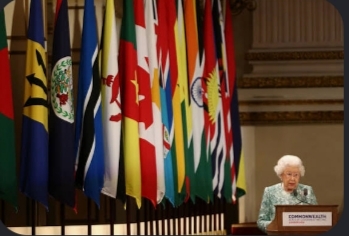
The Commonwealth presents itself as a family of independent and equal nations bound by democracy, human rights, rule of law, good governance, peace, development, and respect for diversity. Its Charter speaks the language of dignity, freedom, constitutionalism, civil society, and accountable government.
Yet for many marginalized peoples, including Ambazonians, the Commonwealth often appears more cautious than courageous. It is polite. It is restrained. It prefers quiet diplomacy. It avoids embarrassing member governments. It speaks with moral vocabulary but acts with institutional hesitation. It may no longer be the old imperial gentleman’s club, but it has not fully become the robust defender of democratic rights many expect it to be. For Ambazonians, this contradiction is not theoretical. It is painfully real.
The Commonwealth’s Moral Promise
The Commonwealth’s principles are not supposed to be decorative. They are meant to guide member states and give the institution moral authority. Democracy, human rights, rule of law, freedom of expression, separation of powers, sustainable development, and respect for diversity are central to its stated identity.
The Commonwealth also has mechanisms for addressing serious violations of its values. It can observe elections, issue statements, encourage dialogue, support legal reform, offer technical assistance, and, in extreme cases, suspend members from certain Commonwealth councils. But its power rests largely on persuasion, moral pressure, diplomacy, and political embarrassment.
This is where the contradiction becomes unavoidable. If the Commonwealth believes in democracy, human rights, rule of law, minority protection, and institutional diversity, why has the crisis in Cameroon’s English-speaking regions remained so marginal in Commonwealth diplomacy? If the Commonwealth claims to respect British constitutional traditions, why has it been so cautious regarding a people whose legal, educational, parliamentary, and administrative identity was shaped under British colonial administration?
The Commonwealth’s Position on Ambazonia
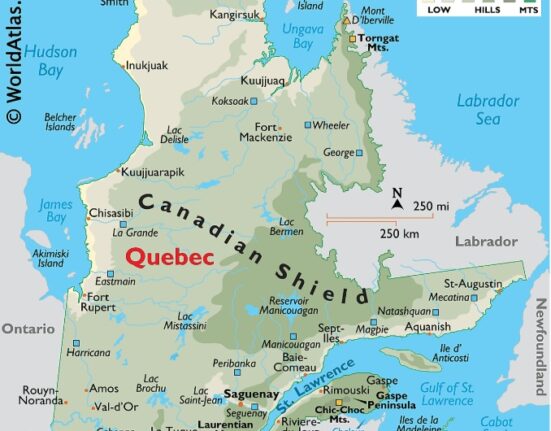
The Commonwealth’s practical position on Ambazonia is cautious, state-centered, and limited. It does not recognize Ambazonia as a sovereign state. It recognizes Cameroon as the member state. Its formal language therefore emphasizes Cameroon’s unity, stability, constitutional order, dialogue, human rights, and peaceful resolution, rather than Ambazonian self-determination or independence.
This does not mean the Commonwealth is unaware of the crisis. It means the institution has chosen to treat the conflict largely as an internal crisis within a member state rather than as an unresolved decolonization, constitutional, self-determination, or sovereignty question. That distinction matters.
Once the issue is treated only as an internal crisis, the people of Southern Cameroons/Ambazonia become a “minority problem” inside Cameroon rather than a people with a distinct historical and constitutional claim. The language then shifts from self-determination to decentralization, from historical justice to internal reform, from sovereignty to administrative adjustment.
For Ambazonians, this is the central problem. The Commonwealth celebrates democracy, rule of law, human rights, and institutional diversity, yet it has not treated Ambazonia as a major test of those principles. It has not forced a serious Commonwealth-wide debate on the historical status of Southern Cameroons. It has not pressed hard enough for a credible negotiated political settlement. It has not treated the destruction, displacement, arrests, school disruption, civilian suffering, and erosion of Anglophone institutions as a crisis requiring urgent collective Commonwealth attention.
The Commonwealth’s position is therefore not openly hostile to Ambazonia, but neither is it meaningfully supportive. It is restrained, deferential to the recognized state of Cameroon, and reluctant to confront the deeper historical question. For many Ambazonians, that silence feels less like neutrality and more like abandonment.
Why Ambazonia Has Been Ignored
Ambazonia has been ignored for several reasons, none morally convincing, but all politically revealing. First, Cameroon is a recognized member state of the Commonwealth. The Commonwealth is an association of states, not peoples. It normally deals with governments, not independence movements. That gives Yaoundé the advantage of diplomatic recognition, even when the grievances come from a historically distinct English-speaking people whose legal traditions, institutions, and political identity arose from the British colonial inheritance.
Second, the Commonwealth is structurally weak. It has moral language but limited enforcement power. It is not a military alliance. It is not a sanctions regime. It is not a court. Its strongest instrument is political embarrassment, and even that is used cautiously.
Third, Britain has not treated the Southern Cameroons question as a core strategic priority. This remains one of the great failures of post-colonial responsibility. The territory that became Southern Cameroons was administered under British authority, yet Britain often acts as if the consequences of that arrangement ended with decolonization. The result is a moral gap: Britain helped shape the historical conditions that produced the crisis, but has not shown the urgency one might expect from a former administering power.
Fourth, the conflict has suffered from international invisibility. The Anglophone crisis has caused thousands of deaths, mass displacement, educational disruption, destruction of villages, and deep humanitarian suffering, yet it remains one of Africa’s most neglected conflicts.
Fifth, Ambazonians have not always spoken with one diplomatic voice. Internal divisions, competing leadership claims, fragmented messaging, and the militarization of the struggle have made it easier for international actors to avoid engagement. When a people facing injustice cannot present a disciplined diplomatic front, powerful institutions find excuses to look away.
Sixth, the Commonwealth fears precedent. If it takes Ambazonia seriously as a question of self-determination, historical injustice, and failed federation, it may open difficult questions elsewhere. Many member states contain minority nations, disputed territories, linguistic grievances, or separatist claims. The institution therefore often prefers stability over justice.
When Were the People of Ambazonia Consulted About Their Future?
This is the question that exposes the deepest historical wound: when were the people of Southern Cameroons/Ambazonia truly consulted about their future? The usual answer is the 1961 United Nations plebiscite. But that answer is incomplete.
On February 11, 1961, the people of British Cameroons were asked whether they wished to achieve independence by joining the Federation of Nigeria or by joining the Republic of Cameroon. Southern Cameroons voted to join Cameroon, while Northern Cameroons voted to join Nigeria. The critical fact is that full separate independence was not offered as an option. The people were not asked whether they wished to become an independent state in their own right.
This is the heart of the Ambazonian grievance. A people cannot be said to have fully determined their future when the most direct option—independence—was excluded from the ballot. The 1961 plebiscite consulted the people, but only within a restricted framework designed by international and colonial authorities. It asked them to choose between attachment to two neighboring states. It did not ask them whether they wished to stand alone.
After 1961, the people of Southern Cameroons were not given another internationally supervised referendum to decide whether they wished to remain in a federation, renegotiate the union, restore independence, or pursue another constitutional arrangement. The 1972 referendum that abolished the federal system was organized by the Cameroon state, not by the United Nations as a neutral act of self-determination for Southern Cameroons. Many Ambazonians regard that referendum as the moment when the federal bargain was dismantled and their distinct constitutional status was absorbed into a centralized state.
That means the last internationally supervised consultation was in 1961, and even that consultation did not include the option many Ambazonians now argue should have been available: sovereign independence.
This question should haunt the Commonwealth. If Southern Cameroons inherited British political, legal, educational, and administrative traditions, and if the 1961 settlement was supposed to protect its identity through federation, then what is the Commonwealth’s responsibility when that settlement collapses? When exactly did the people of Ambazonia freely consent to the centralized order that replaced the federation? When did they vote under neutral international supervision to surrender their distinct constitutional identity? When did they authorize the erosion of the common-law protections, educational traditions, and political autonomy they believed they were carrying into union? These are not rhetorical questions. They are questions of legitimacy.
Ambazonia Is Not Alone in History
Ambazonia is not the only former trust or colonial territory whose people believe their right to self-determination was restricted, mismanaged, or subordinated to the convenience of larger states. History offers several comparisons, and these comparisons strengthen rather than weaken the Ambazonian case.
The closest African parallel is British Togoland, today often associated with the Western Togoland question in Ghana. Like Southern Cameroons, British Togoland was once part of a German colony. After Germany lost its colonies following the First World War, Togoland was divided between Britain and France. The British-administered portion later became a United Nations Trust Territory. In 1956, its people were asked whether they wished to integrate with the Gold Coast, which became Ghana, or remain under trusteeship pending developments in French Togoland.
Many Western Togoland activists have long argued that this arrangement did not provide a fully satisfying self-determination outcome. The territory was absorbed into Ghana, and those who objected to that arrangement have continued to raise questions about identity, autonomy, and historical consent. This case is not identical to Ambazonia, but it is close enough to matter. It shows how British-administered trust territories could be guided into union with neighboring states without fully resolving the deeper question of independent political identity.
The Southern Cameroons case is arguably sharper because the 1961 plebiscite did not offer continuation as a trust territory or full separate independence. The people were offered only two external attachments: join Nigeria or join the Republic of Cameroon. In that sense, Ambazonia’s grievance is unusually direct. The people were consulted, but not with all legitimate options on the table.
Another powerful comparison is West Papua, though it was not a United Nations Trust Territory in the same formal sense. West Papua passed through a controversial international process before being incorporated into Indonesia. The 1969 so-called Act of Free Choice was widely criticized because only a small number of selected representatives participated under conditions many Papuans and observers considered coercive. The moral similarity is clear: a people’s future was determined through a process later condemned by many of the affected people as a denial of genuine self-determination.
Namibia offers a different lesson. Formerly South West Africa, it was a League of Nations mandate whose future became one of the great unresolved international questions of the twentieth century. South Africa resisted international pressure for decades before Namibia finally achieved independence in 1990. Namibia shows that unresolved colonial questions can remain alive for generations and that international law, persistence, documentation, diplomacy, and political organization can eventually change outcomes.
These comparisons matter because they show that Ambazonia’s claim is not imaginary. The world has seen other cases where colonial administration, international supervision, restricted consultation, and strategic convenience produced long-term grievances. British Togoland shows the danger of absorption without sufficient settlement. West Papua shows the moral cost of flawed consultation. Namibia shows that unresolved colonial questions can survive decades of denial. Ambazonia belongs in this broader historical conversation.
Would France Have Ignored a Comparable Francophone Case?
This is the uncomfortable question Ambazonians are right to ask: would France have ignored a French-speaking territory with the same colonial history, institutional identity, and political grievance? The honest answer is that France would probably not have ignored it in the same way.
France has historically treated Francophone Africa as a zone of strategic, cultural, military, economic, and diplomatic interest. Whether one admires or criticizes that policy, France has rarely been indifferent when its language, influence, citizens, military access, or political networks are affected in Francophone Africa.
If a Francophone people with a French legal, educational, administrative, and linguistic inheritance were trapped in a violent constitutional crisis rooted in colonial partition, France would likely frame the matter as a question of influence, stability, culture, security, and national interest. It might intervene diplomatically, convene talks, pressure regional actors, mobilize Francophone networks, or seek a negotiated outcome that protected its strategic and cultural footprint.
Britain and the Commonwealth, by contrast, have often treated English-speaking Southern Cameroons as an inconvenient historical leftover rather than a living political responsibility. That is why Ambazonians feel abandoned. They inherited British legal traditions, English-language education, common law, parliamentary expectations, and a distinct political identity, yet the very Commonwealth that celebrates such traditions has offered little more than polite distance.
This does not mean France is morally superior. France’s record in Africa is deeply controversial, and many Africans accuse it of neo-colonial influence, military manipulation, currency control, and political interference. But France understands power. It understands networks. It protects influence. Britain and the Commonwealth, in the Ambazonian case, have largely hidden behind diplomacy, caution, and institutional politeness.
A Moral Duty, Not Empty Sentiment
Britain and the Commonwealth may not wish to inherit every unresolved problem created by colonial history. But they cannot pretend that history has no moral consequences. Southern Cameroons did not emerge from nowhere. Its institutions, legal culture, education system, political expectations, and constitutional identity were shaped under British administration. Its future was then redirected through a restricted plebiscite that denied the people the option of full independence. That history creates a moral responsibility.
This does not mean Britain must impose a solution. It does not mean the Commonwealth must automatically recognize Ambazonia. It does not mean British politicians should irresponsibly inflame a conflict. But it does mean Britain, the British public, Commonwealth civil society, and Commonwealth politicians have a moral duty to ensure that the people of Southern Cameroons/Ambazonia are not erased from the historical record, ignored in diplomatic forums, or reduced to a security problem inside Cameroon.
The duty is not to dictate the outcome. The duty is to insist that the people be heard. The duty is to support credible dialogue, humanitarian protection, accountability for abuses, respect for the historical status of Southern Cameroons, and an internationally credible process through which the people can meaningfully address their political future. That is not extremism. That is moral consistency.
The Gentleman’s Club Problem
This is where the Commonwealth’s old gentleman’s club culture remains visible. The institution prefers calm language even when the facts are brutal. It prefers private conversation even when public accountability is needed. It avoids naming uncomfortable truths because doing so may offend a member government.
That is why the Commonwealth can speak about democracy while tolerating democratic decay. It can speak about human rights while avoiding strong action on mass suffering. It can speak about rule of law while saying little about the erosion of common law protections in Anglophone Cameroon. It can celebrate diversity while failing to defend a people whose distinct legal, educational, and linguistic identity is at the center of the conflict.
In that sense, the Commonwealth is not merely a gentleman’s club, but it still carries the habits of one. It values manners over urgency. It values stability over justice. It values state comfort over the cries of marginalized peoples.
Ambazonia and the Limits of Commonwealth Values
The Ambazonian case exposes the gap between Commonwealth values and Commonwealth action. The crisis is not only about language. It is about constitutional betrayal, legal identity, institutional assimilation, political marginalization, historical memory, and the failure to protect a people whose status was shaped by British colonial administration and an incomplete decolonization process.
The conflict also reveals the limits of international morality. Institutions rarely act because people are suffering. They act when suffering becomes strategically unavoidable. They act when victims organize, document, lobby, litigate, build alliances, shape media narratives, and create diplomatic cost for silence.
This is the hard lesson Ambazonians must learn. Moral claims are necessary, but they are not sufficient. History matters, but history alone does not move institutions. The Commonwealth will not act simply because Ambazonia has a strong historical case. It will act only when the case becomes diplomatically unavoidable.
What Ambazonia Must Do Next
Ambazonians should not abandon the Commonwealth. It remains a useful diplomatic platform. The historical connection to British Southern Cameroons gives Ambazonians an argument that should be pressed in London, Ottawa, Canberra, Wellington, Abuja, Accra, Pretoria, and at Commonwealth forums. The Commonwealth’s own Charter provides language that can be used to challenge its silence on democracy, human rights, rule of law, minority protection, and good governance.
But Ambazonians must not romanticize the Commonwealth. It is not a savior. It is a platform. It must be engaged with strategy, evidence, legal discipline, political unity, and professional diplomacy.
Ambazonia must build a serious Commonwealth strategy. That strategy should include legal briefs on the decolonization question, documentation of human rights violations, testimony from victims, parliamentary outreach in Commonwealth countries, academic partnerships, diaspora lobbying, engagement with civil society organizations, and sustained media work. The objective should be to make silence more costly than engagement.
Ambazonians must organize their case around one powerful question: when were the people of Southern Cameroons freely and fully consulted about their future, with all legitimate options on the table?
That question must be taken to parliaments, universities, churches, bar associations, human rights organizations, media platforms, and Commonwealth networks. It must be framed not as anger alone, but as a matter of historical justice, constitutional legitimacy, and democratic principle.
Ambazonians must also present a credible vision of the future. The world does not listen only to grievance; it listens to organized capacity. A people seeking recognition must demonstrate discipline, institutional seriousness, humanitarian responsibility, democratic culture, economic imagination, and readiness for accountable governance. The case for Ambazonia must therefore combine memory with strategy, suffering with documentation, and aspiration with a credible national plan.
The Deeper Lesson
The Commonwealth’s treatment of Ambazonia teaches one painful lesson: oppressed peoples cannot rely on historical sentiment alone. Shared language is not enough. Shared legal tradition is not enough. A British colonial past is not enough. Even moral legitimacy is not enough unless it is organized into diplomatic pressure.
France would likely not ignore a comparable Francophone case because France understands that language, culture, law, and influence are instruments of power. The Commonwealth has not acted with the same seriousness toward Ambazonia because it has become too comfortable with symbolic values and too reluctant to confront hard political realities. That is why Ambazonians must stop waiting for the Commonwealth to remember them. They must compel it to remember.
Conclusion: Use the Commonwealth, but Do Not Worship It
The Commonwealth is not merely a gentleman’s club, but it has not fully escaped the habits of one. It has institutions, values, charters, meetings, and committees. It also has caution, hierarchy, silence, and selective accountability.
For Ambazonia, the conclusion is clear. Use the Commonwealth. Challenge it with its own Charter. Remind it of its historical responsibility. Ask the central question: when were the people of Ambazonia freely and fully consulted about their future, with all legitimate options on the table? Build alliances inside the Commonwealth. Demand hearings, reports, and parliamentary debates. But do not worship it.
The Commonwealth will not save Ambazonia by sentiment. If it is to become useful, Ambazonians must make the case impossible to ignore. A people abandoned by history must become too organized to be overlooked.
Editorial