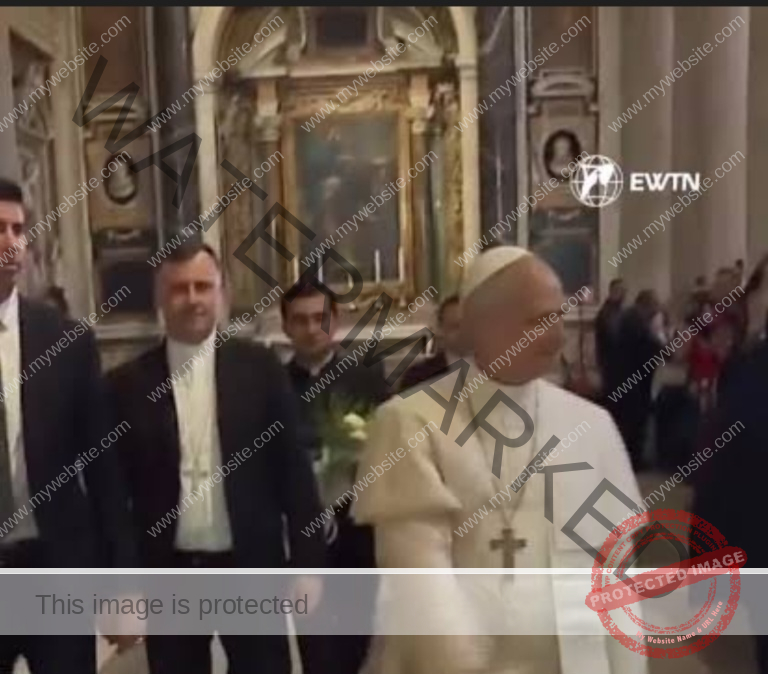


As Pope Leo XIV prepares to arrive in Bamenda, the world will be watching closely to see whether the visit of a global religious figure—often described as a messenger of reconciliation—can unfold peacefully in a land that has long been searching for it.
By The Independentistnews | Investigative Desk
BAMENDA – March 10, 2026 – As preparations intensify for the anticipated arrival of Pope Leo XIV in Bamenda on April 15, 2026, authorities, church officials, and international security teams are coordinating an unprecedented set of protocols for what could become one of the most sensitive papal visits in recent memory.
Unlike previous papal journeys in Africa, this pilgrimage is unfolding within a region affected by years of armed conflict. The visit has therefore prompted a complex and delicate collaboration involving the Vatican Gendarmerie, the Apostolic Nunciature in Cameroon, local Catholic authorities, and regional administrative officials.
At the center of the planning effort is a single challenge: how to ensure the safety of tens of thousands of pilgrims expected to travel into Bamenda, many of them coming from rural communities that have experienced prolonged insecurity.
- The “Truce of God” and the Proposed Corridor of Peace
Archbishop Andrew Nkea Fuanya of Bamenda has publicly called for what he described as a “Truce of God”—a temporary cessation of hostilities during the four days of the papal visit.
Church leaders have begun quiet consultations with community stakeholders across the North West and South West to encourage restraint during the pilgrimage period.
Part of this effort involves the creation of informal “Corridors of Peace.” These travel routes would allow pilgrims from rural areas—including communities in Bui, Boyo, and Ngoketunjia—to journey to Bamenda without encountering intimidation or disruption along the way.
While not formally negotiated as a ceasefire, the corridors represent a humanitarian appeal aimed at ensuring that religious pilgrims can travel safely.
- Specialized Security Sub-Committees
The regional administration, under Governor Adolphe Lele Lafrique, has established several security and logistics committees tasked with preparing the city for the expected influx of visitors.
Key elements of the security framework include:
Neutral Observation Zones:
Major entry points into Bamenda—including Up Station and Mile 2 Junction—will have enhanced monitoring designed to manage large crowds and prevent security breaches.
Vatican Security Oversight:
A technical delegation from the Vatican Gendarmerie has already conducted preliminary inspections of Bamenda Airport and the grounds of St. Joseph’s Metropolitan Cathedral, where the central Mass is expected to take place.
The Vatican team is working alongside local authorities to ensure that the papal motorcade route remains secure and that the open-air Mass site meets international security standards used during papal visits worldwide.
Community-Based Crowd Management:
Church volunteers, including parish wardens and newly recruited “Peace Volunteers,” are being trained to assist with crowd control.
Identified by yellow-and-white armbands, these volunteers will help guide pilgrims, manage queues, and de-escalate tensions if necessary. Many of them are also receiving basic training in psychological first aid to assist individuals who may have experienced trauma related to the conflict.
- Managing Pilgrims from Conflict-Affected Areas
One of the most sensitive logistical challenges involves the movement of displaced persons and pilgrims traveling from remote or conflict-affected communities.
To address this, the Catholic Church has designated several “Sanctuary Points” in parishes located along key transportation corridors.
Pilgrims from rural areas will be encouraged to gather at these locations before traveling to Bamenda in organized convoys. Church officials believe this approach will provide greater safety and clearer identification of pilgrims, reducing the risk of misunderstandings at checkpoints.
The strategy is designed to ensure that civilians traveling to the pilgrimage are not mistakenly perceived as participants in armed activity.
- The Political Sensitivity of the Visit
The papal pilgrimage carries not only religious significance but also considerable political sensitivity.
Regional authorities have emphasized the state’s responsibility to ensure security throughout the visit. At the same time, the Apostolic Nunciature has stressed that the presence of security forces must remain “discreet but effective.”
Church officials are particularly concerned that excessive displays of force could undermine the pastoral nature of the visit.
The Vatican’s approach appears to focus on maintaining a protective environment around the Pope while preserving the accessibility that typically defines papal encounters with the faithful.
Conclusion
For the people of Bamenda and the wider region, the 2026 papal visit represents far more than a ceremonial event. It is a rare moment in which religious faith, humanitarian hope, and political reality intersect.
The success of the pilgrimage will depend on whether the fragile atmosphere of restraint envisioned by church leaders can hold.
As Pope Leo XIV prepares to arrive in Bamenda, the world will be watching closely to see whether the visit of a global religious figure—often described as a messenger of reconciliation—can unfold peacefully in a land that has long been searching for it.
The Independentistnews | Investigative Desk