

If the Church, the international community, and political intermediaries continue to frame this crisis as a mutual failure rather than a structural one, they will not be remembered as peacemakers. They will be remembered as witnesses who saw clearly, spoke carefully, and ultimately failed to act truthfully.
By Ali Dan Ismael, Editor-in-Chief, The Independentist News
The Seduction of Neutral Language
The language of peace is seductive. It calms nerves, projects responsibility, and cloaks itself in moral authority. Yet when peace is invoked without truth, it ceases to be a solution and becomes an illusion. The recent episcopal statement following the tragedy in Bui—measured, balanced, and seemingly responsible—falls into this trap. It condemns violence, urges dialogue, and calls for a moral reset. But beneath its composure lies a critical omission: history.
The Problem with “Both Sides”
To speak of “both sides” in the Southern Cameroons conflict is not neutrality—it is distortion. It suggests symmetry where none exists. It places a state—with its monopoly on force, institutions, and international recognition—on the same moral plane as fragmented armed groups that emerged from a grievance. This framing does not clarify the crisis; it compresses it into a convenient narrative that absolves deeper responsibility.
A Crisis Without a Beginning?
Every conflict has an origin. When that origin is erased, the conflict itself becomes unintelligible. The Southern Cameroons crisis did not begin with gunfire. It began with an unresolved decolonisation process, followed by constitutional dismantling, political marginalisation, and decades of assimilation. To discuss violence without acknowledging this trajectory is to diagnose symptoms while ignoring the disease.
From Protest to War
In 2016, lawyers and teachers took to the streets to defend legal and educational systems rooted in a distinct historical identity. Their demands were not revolutionary—they were restorative. The response they received was not dialogue, but repression. Arrests, brutality, and militarisation transformed civic protest into armed resistance. That transformation was not spontaneous; it was produced.
Moral authority vs political precision.
The Archbishop is right to condemn violence. He is right to insist that human life cannot be subordinated to conflict. He is right to warn that war has become profitable to some. But moral clarity without political precision is insufficient. When the analysis stops at condemning “all actors,” it fails to distinguish between cause and consequence, between origin and reaction.
The Papal Contrast
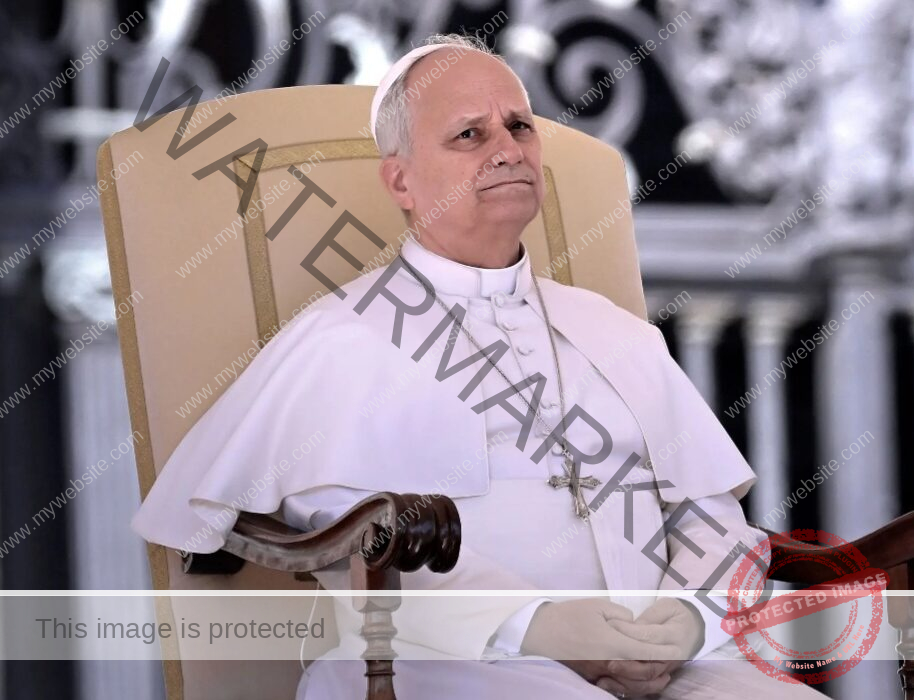
The recent visit of Pope Leo XIV to Bamenda offered a more nuanced posture. Without inflaming tensions, the Pope recognized a wounded people and a fractured history. His message did not collapse the crisis into a simplistic equivalence. It acknowledged—subtly but unmistakably—that suffering has a context, and that peace must be rooted in that context.
Bui: The Failure of Incomplete Diagnosis
The renewed violence in Bui, coming in the wake of solemn calls for peace, is not a contradiction—it is a revelation. It exposes the limits of moral appeals that are detached from structural realities. When violence persists immediately after appeals for calm, it is not because peace is undesirable. It is because the diagnosis is incomplete. You cannot heal what you refuse to fully understand.
The Economy of War
Yes, war creates beneficiaries. There are individuals—on multiple fronts—who have adapted to conflict as a system of survival or gain. But to elevate this observation into a central explanatory framework is misleading. Opportunism is a feature of conflict, not its foundation. The foundation lies in unresolved political questions that created the environment in which opportunism thrives.
Dialogue Without Definition
“Dialogue” has become the most repeated word in discussions of the crisis. But dialogue about what? Under what terms? Between which parties? Without defining the subject of negotiation, dialogue becomes ritualistic—a performance rather than a process. Dialogue that avoids the core issue risks becoming an instrument for delay, not resolution.
Justice Before Peace
Peace is not merely the absence of gunfire. It is the presence of justice. A negotiated settlement that does not address the underlying grievances will not endure. The call for peace must therefore be anchored in a clear articulation of injustice—legal, political, and historical. Without that, peace becomes a temporary silence, not a transformation.
Decolonisation as the Missing Framework
At the heart of the crisis lies a question that is too often avoided: the incomplete decolonisation of Southern Cameroons. This is not a rhetorical claim; it is a structural reality embedded in history and international law. Any framework that excludes this dimension is inherently limited. It may manage tensions, but it cannot resolve them.
Beyond Conflict Management
What is currently being proposed—implicitly or explicitly—is conflict management: reduce violence, encourage talks, maintain stability. But the situation demands conflict resolution. Management preserves the status quo; resolution transforms it. Without a shift in approach, the cycle of violence and temporary calm will continue indefinitely.
Peace Without Truth Is Postponement
The Archbishop’s intervention is morally compelling but politically incomplete. It speaks to the conscience but not fully to the structure. It calls for reconciliation without fully confronting the conditions that make reconciliation necessary. In doing so, it risks reinforcing a narrative that postpones resolution rather than advancing it.
A Final Warning to History
History is not kind to illusions. Nations that choose comfort over truth do not find peace—they inherit prolonged conflict. The tragedy of Southern Cameroons is not merely that violence persists; it is that the language used to end it often refuses to confront its origin. If the international community, moral authorities, and political actors continue to substitute balance for truth, they will not resolve this crisis—they will extend it. Peace built on omission is fragile. Peace built on truth endures. The choice is no longer philosophical—it is historical.
The Cost of Neutrality in an Asymmetrical Conflict
There is a deeper danger in the language of “both sides” that must be confronted without hesitation. When power is asymmetrical, neutrality is not balance—it is alignment with the stronger force. To equate a state that commands armies, controls institutions, and defines legality with a population that rose from protest into resistance is not moral clarity; it is historical erasure. And history has shown, time and again, that when institutions refuse to name the source of injustice, they do not stand above the conflict—they become part of its prolongation.
If the Church, the international community, and political intermediaries continue to frame this crisis as a mutual failure rather than a structural one, they will not be remembered as peacemakers. They will be remembered as witnesses who saw clearly, spoke carefully, and ultimately failed to act truthfully.
Ali Dan Ismael, Editor-in-Chief, The Independentist News