

His recognition that the way forward may rest on acknowledging Ambazonia’s right to self-determination should not be dismissed as mere academic speculation. It is a call for realism, conscience, and moral responsibility — qualities that have been too rare in the country’s long and painful history.
By The Independentist Political Desk
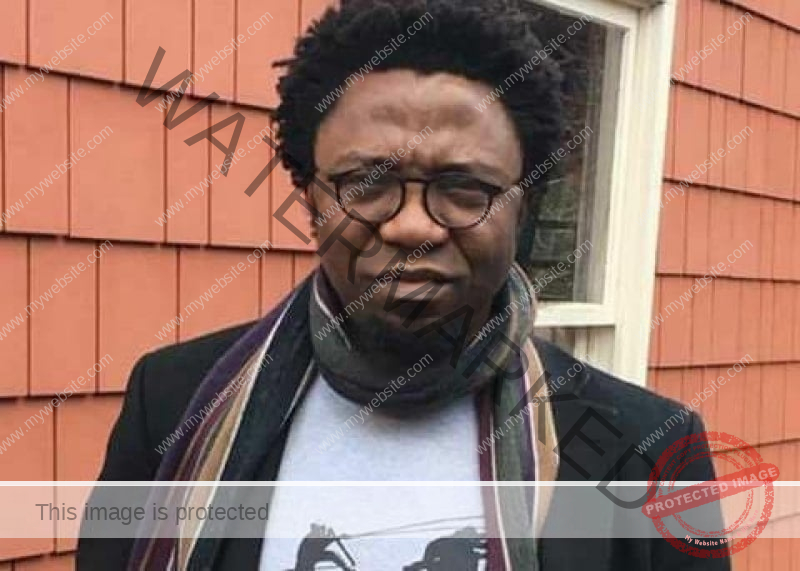
Professor Patrice Nganang has long occupied a unique place in the intellectual and political debate over Cameroon’s future — a voice that combines scholarship with civic courage, and conviction with critical independence. Known across academic and political circles as a sharp analyst of postcolonial Africa, he remains one of the few Cameroonian thinkers capable of speaking with authority to both the Francophone establishment and the Ambazonian liberation movement.
Born in Yaoundé and educated in Cameroon and Germany, Professor Nganang earned his Ph.D. in comparative literature from Johann Wolfgang Goethe University (Frankfurt am Main) and currently serves as Professor of Comparative Literature and Cultural Studies at Stony Brook University (State University of New York). His research and writing traverse African literature, history, and political philosophy — often linking questions of language, power, and colonial memory with the living struggles of contemporary Africa.
A Federalist Voice Anchored in Historical Honesty
For much of his public career, Professor Nganang has been associated with federalist reformism — the belief that Cameroon’s salvation lay in reviving the original spirit of the 1961 federation between French Cameroun and the former British Southern Cameroons. In essays, lectures, and social media interventions, he consistently denounced the centralized dictatorship that emerged after the federation’s dissolution in 1972. He argued that the country’s descent into violence stemmed from Yaoundé’s refusal to recognize Cameroon’s dual colonial heritage — the coexistence of two distinct legal, educational, and cultural systems.
While this position often drew criticism from Ambazonian nationalists, it also earned him respect as a principled federalist — a thinker who sought balance, fairness, and structural justice without resorting to easy populism. Even his detractors recognized his intellectual honesty and the moral clarity that underpinned his reasoning.
The Turning Point: Prison, Exile, and La Révolte Anglophone
Nganang’s 2017 arrest in Douala — following an article critical of Paul Biya’s handling of the Anglophone crisis — marked a profound transformation in his thinking. Detained for several weeks and later expelled to the United States, he experienced firsthand the authoritarian machinery of the state he had once believed could reform itself.
In his 2022 book, La Révolte Anglophone: Essais de liberté, de prison et d’exil, he fuses the personal and the political, the analytical and the experiential. The work stands as both testimony and treatise — a lucid reflection on the Anglophone crisis, written by one who lived its consequences.
There, Nganang reframes the “Anglophone problem” not as a mere linguistic tension but as an unfinished decolonization process. He contends that the crisis reveals the persistence of French colonial structures in Cameroon’s governance and questions whether genuine reform is still possible under the current system.
An Evolution in Thought: From Federalism to Recognition
In recent commentaries, Professor Nganang has gone further than ever before. Without abandoning his intellectual roots in federalist analysis, he now suggests that the recognition of Ambazonia’s right to self-determination may represent the only viable path out of the present impasse.
This evolution is not a reversal of conviction but rather the product of analytical realism — an acknowledgment that facts on the ground have changed. After years of war, repression, and failed dialogue, he concedes that continued denial of Ambazonia’s sovereignty will only perpetuate bloodshed and moral decay.
In his words, “recognizing the right to self-determination is not the end of unity, but the beginning of truth.” For Nganang, this is not a political slogan but a statement of historical honesty and philosophical maturity — one that future leaders of Cameroon, including its next president, would do well to take seriously.
A Balanced Intellectual Voice in a Polarized Debate

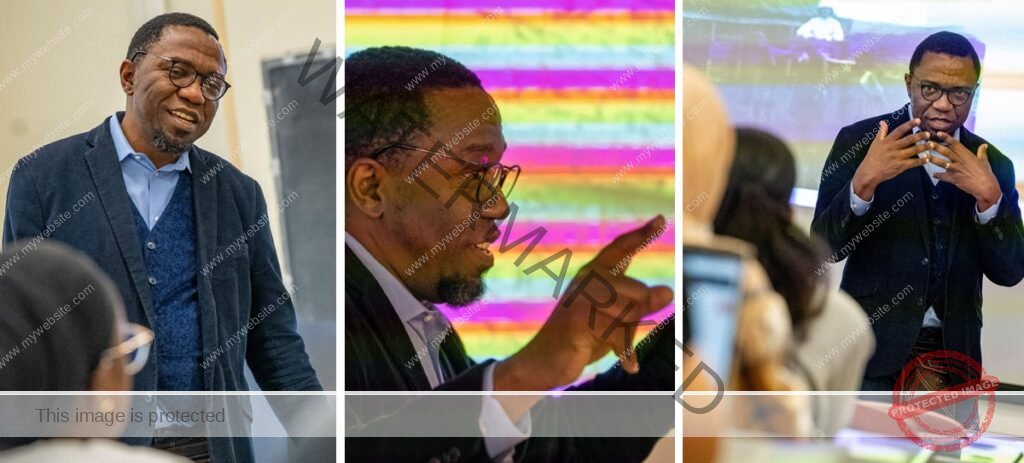
To be fair, Professor Nganang has not always aligned with the independence camp. For years, his writings reflected a deep attachment to the federal ideal — a Cameroon reconciled under a just system of shared governance. His evolution toward endorsing self-determination represents an adjustment of reason, not a leap of ideology.
It is precisely this shift — measured, thoughtful, and empirically grounded — that makes his recent conclusions so significant. They come not from an activist’s passion but from a scholar’s realism, formed in the crucible of experience and moral reflection.
Among both Francophone reformers and Ambazonian policymakers, his new position is being taken seriously as a sober framework for peace — a bridge between two camps long divided by suspicion and propaganda.
The Broader Significance
Professor Nganang’s contribution transcends partisanship. His intellectual journey embodies the struggle of an entire generation of Cameroonians seeking to reconcile truth, identity, and justice. By daring to rethink his earlier positions, he has reopened a critical space for dialogue — one that invites leaders, scholars, and citizens on both sides to confront the historical and legal realities long buried under political denial.
In a landscape often dominated by polemic and polarization, his evolution signals a new possibility: that the path toward peace may begin not with uniformity of opinion, but with the courage to change one’s mind.
Conclusion
The Independentist Political Desk regards Professor Patrice Nganang as a transformative analyst of Cameroon’s political condition — not because he has joined any camp, but because he has outgrown the intellectual rigidity of all camps.
His recognition that the way forward may rest on acknowledging Ambazonia’s right to self-determination should not be dismissed as mere academic speculation. It is a call for realism, conscience, and moral responsibility — qualities that have been too rare in the country’s long and painful history.
For that reason, his voice deserves to be heard — not as the echo of partisanship, but as the reasoned conscience of a nation at the crossroads of history.
The Independentist Political desk