








Editorial commentary

We are home to news on Cameroon and the CEMAC region. We are dedicated to honest and reliable reporting. We are the voice of the Cameroonian people and their fight for freedom and democracy at a time when the Yaoundé government is silencing dissent and suppressing democratic voices.

It requires negotiations, credible guarantees, institutional responsibility, and protection of the people whose lives have been defined by a decade of conflict. The decisive test for the Biya–Ngute administration is not whether it can announce another dialogue. It is whether it can demonstrate that this dialogue offers something substantively different from those that came before it.
By Ali Dan Ismael
Editor-in-Chief, The Independentist News
As Amazon associate this site earns from qualifying purchases
Buy your copies of books on Ambazonia’s productive Sovereignty and statecraft By Martin Mungwa from Amazon
https://www.amazon.com/s?k=martin+mungwa&rh=p_n_special_occasion_browse-bin%3A10152212011&dc=&ds=v1%3A0bZlP0w5V%2BnunEa6LvNY9evOH0NKZVdiqd4VoPq5i5M&crid=3ASZUKJG4IRKV&qid=1792145553&rnid=10152211011&sprefix=Martin+mungwa%2Caps%2C439&linkCode=ll2&tag=njokings-20&linkId=84a8e50d9fa1c2a52c3513afe9bd3244&language=en_US&ref_=as_li_ss_tl
WHEN A GOVERNMENT REPEATS THE SAME EXPERIMENT
YAOUNDÉ – 17 October 2026 – There is a troubling question emerging from the latest political initiative of President Paul Biya’s administration in La République du Cameroun (LRC): Is the government making a serious strategic miscalculation, deliberately containing the Southern Cameroons question, or genuinely attempting to open another path toward peace?
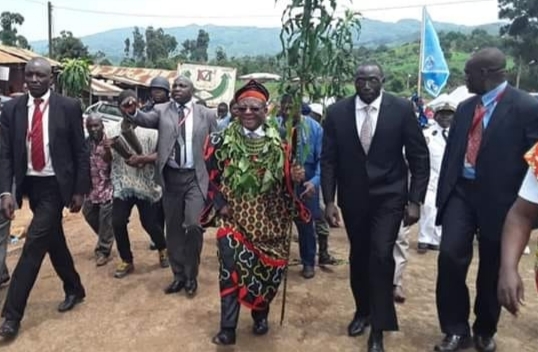
The question follows the appearance of colonial Prime Minister Joseph Dion Ngute in Bamenda on 15 October 2026 to launch another community dialogue initiative, nearly ten years after the Anglophone crisis erupted in 2016.
For a government that has already organized a Major National Dialogue, introduced special-status arrangements, and repeatedly appealed for reconciliation, the latest initiative raises an unavoidable question: What has fundamentally changed?
The people of the former British Southern Cameroons have endured a decade of bloodshed, displacement, economic disruption, educational uncertainty, and fractured communities. Yet the fundamental political disagreement remains unresolved.
The government’s latest approach deserves examination not because dialogue is objectionable, but because dialogue can become politically counterproductive when its design avoids the issues that require negotiation.
A government that repeatedly convenes discussions without addressing the central dispute risks confusing the appearance of consultation with the achievement of peace.
THE DION NGUTE PROBLEM: MESSENGER, NEGOTIATOR, OR MASTER OF CEREMONIES?
Joseph Dion Ngute occupies an unusual position in the administration’s response to the Southern Cameroons conflict. He chaired the 2019 Major National Dialogue. Seven years later, he remains one of the principal public figures presenting the government’s latest reconciliation initiative.
His return to Bamenda places him at the centre of a familiar political controversy. Is the prime minister authorized to negotiate the fundamental issues surrounding political status, constitutional arrangements, and competing sovereignty claims? Or is his responsibility restricted to promoting reconciliation within a constitutional framework already determined by Yaoundé? These are fundamentally different assignments.
A negotiator must have authority to examine competing proposals. A ceremonial representative may only explain or promote an established government position. If the substance of the dispute is excluded before discussions begin, the process may serve useful local purposes, but it cannot reasonably be described as comprehensive political negotiation.
Dion Ngute’s personal intentions are not the central issue. The central issue is the authority attached to his mission. A prime minister cannot resolve by ceremony what his government has not authorized him to negotiate.
THE GHOST OF THE 2019 GRAND NATIONAL DIALOGUE
History provides a concrete basis for examining the present initiative. Between 30 September and 4 October 2019, the Biya administration convened the Major National Dialogue in Yaoundé. The gathering brought together government representatives and other participants, but leading separatist groups did not participate. Critics also questioned the scope of the discussions and the absence of meaningful negotiations over the form of the state.
The principal institutional outcome included special-status arrangements for the North West and South West regions. These arrangements were presented by the government as a response to Anglophone grievances. However, they did not settle the fundamental political disagreement.
For supporters of independence, special status did not address their claim to self-determination. For some federalists, the proposed reforms fell short of the constitutional restructuring they sought. The experience raises important questions about the design of subsequent dialogue initiatives.
What lessons were drawn from 2019? Which recommendations were successfully implemented? Which failed to change conditions on the ground? Why were the principal disagreements not resolved? Without credible answers, a new dialogue may inherit the legitimacy problems of its predecessor.
The difference between political innovation and political repetition is not the title attached to an initiative. It is whether the new process corrects the weaknesses of the previous one.
COMMUNITY DIALOGUE AND THE MISDIAGNOSIS OF A POLITICAL CONFLICT
The Southern Cameroons conflict has undoubtedly damaged communities. Families have been separated. Schools have suffered disruption. Businesses have closed or struggled to operate. Communities have experienced fear, displacement, and loss. Local reconciliation is therefore an important part of any durable peace process.
Traditional rulers, religious leaders, civil society organizations, women, young people, and other community representatives all have roles to play. But there is a distinction between rebuilding community relationships and resolving the political dispute that underlies the conflict.
The former British Southern Cameroons entered its postcolonial constitutional relationship with French Cameroun following the 1961 United Nations-supervised plebiscite. The subsequent federation, constitutional changes, centralization of authority, and competing interpretations of the territory’s political status form part of the historical foundation of today’s disagreement.
Supporters of Ambazonian independence regard the conflict as an unresolved question of self-determination and sovereignty. The Cameroon government maintains the country’s territorial integrity and advocates solutions within its constitutional order. These competing positions cannot simply be transformed into a neighborhood disagreement.
Community reconciliation can contribute to a settlement. It cannot determine constitutional status on behalf of political parties that have not agreed to the process. The danger is not community dialogue itself. The danger is presenting community dialogue as a substitute for negotiations over the political question.
POLITICAL MISCALCULATION: THE DANGER OF REPEATING AN INEFFECTIVE APPROACH
One explanation for the government’s current strategy is political miscalculation. Under this interpretation, the administration may believe that continued engagement with community leaders, traditional authorities, and local institutions will gradually reduce support for armed confrontation.
This approach may produce some benefits. Local leaders can encourage civilian protection, help displaced families return, facilitate access to education, and rebuild relationships damaged by the conflict. But community confidence depends upon more than the frequency of official visits.
Where previous initiatives have failed to settle the conflict, public expectations may be shaped by experience. The risk is that repeated announcements, without demonstrable changes, can deepen skepticism about the government’s willingness or ability to pursue a political settlement.
This problem is especially significant when the language of reconciliation appears to place responsibility primarily upon communities while leaving the decisions of central authorities outside comparable scrutiny. If the government seeks broader public confidence, it must demonstrate what distinguishes its present initiative from the earlier Major National Dialogue. The evidence of progress must be measurable.
STRATEGIC CONTAINMENT: IS THE OBJECTIVE PEACE OR THE MANAGEMENT OF CONFLICT?
A second interpretation concerns political containment. Under this hypothesis, community dialogue may be intended to reduce local tensions and manage the consequences of conflict without reopening the fundamental constitutional question. Containment is not necessarily identical to resolution.
A government may seek to restore schools, markets, transport networks, and public administration while declining to reconsider the constitutional order. Those improvements can be valuable to civilians. But they do not necessarily settle the disagreement over political authority.
The essential question is whether the government sees community reconciliation as one component of a broader negotiated settlement or as the final destination of its political strategy. There is insufficient public evidence to establish that the latest initiative is deliberately designed to avoid substantive negotiations. Nevertheless, its structure and subsequent actions can be evaluated.
Does the government establish a credible mechanism for engaging separatist representatives? Does it permit discussion of competing constitutional arrangements? Does it support independent facilitation? Does it specify procedures for monitoring implementation? Answers to these questions would help distinguish genuine political opening from a policy primarily concerned with conflict management.
THE TEN-YEAR QUESTION: ACCOUNTABILITY CANNOT BE ONE-SIDED
Dion Ngute’s appeal in Bamenda drew attention to nearly ten years of conflict. It is a legitimate concern. The destruction of lives, livelihoods, and public infrastructure demands urgent attention. But a decade of suffering also creates responsibilities for those who have exercised political authority throughout that period.
The government must explain the results of its security and reconciliation policies. Armed separatist movements must also answer for actions that endanger civilians, disrupt schooling, or violate fundamental rights. No side should treat civilian suffering as politically useful evidence while escaping scrutiny of its own conduct.
The questions confronting the Biya administration are substantial. Why has the conflict endured despite successive initiatives? What obstacles have prevented meaningful negotiations? Which political proposals have been rejected, and on what grounds? What guarantees could make a future settlement credible? Equally, those seeking an alternative political future must demonstrate how they would protect civilians, establish accountable institutions, and prevent renewed violence.
Ten years is sufficient time to demand serious answers from all those exercising political or armed authority. Peace requires more than an appeal for the fighting to stop. It requires a credible framework for resolving the disagreements that sustain it.
THE RISKS FOR THE BIYA–NGUTE ADMINISTRATION
The political risks of another limited initiative can be understood without predicting the collapse or survival of the government. The first is a loss of public confidence. Each new announcement creates expectations that must eventually be measured against outcomes.
The second is institutional credibility. When a government repeats initiatives without clearly explaining their results, observers may question whether its policy has evolved. The third is diplomatic credibility. International partners examining the conflict need evidence that peace initiatives are sufficiently inclusive, legitimate, and capable of implementation.
The fourth is the danger of continued human suffering. Every period without meaningful progress exposes civilians to further insecurity and economic damage. Yet there is another possibility.
If community dialogue leads to stronger civilian protections, renewed educational access, local reconciliation, and eventually a credible political negotiating framework, it could contribute to a broader settlement. The latest initiative must therefore be judged by its design and results rather than by its official description alone.
WHAT A CREDIBLE CHANGE OF STRATEGY WOULD REQUIRE
A consequential change of approach would need to recognize the distinction between immediate humanitarian needs and the longer-term constitutional disagreement. Community dialogue could address local reconciliation, the restoration of public services, the protection of civilians, and the rebuilding of social trust.
A separate but connected political process could address constitutional arrangements, the competing claims over sovereignty, security guarantees, implementation mechanisms, and the role of neutral facilitators. Such a process would require the participation of relevant political actors, arrangements acceptable enough to permit meaningful engagement, and safeguards against renewed violence.
Neither government representatives nor separatist leaders should assume that a settlement will be durable merely because an agreement has been announced. A credible process must also address the needs of civilians who have no control over military or political decisions but bear their consequences. Peace is not measured only by the number of conferences held.
It is measured by reduced violence, protected rights, restored services, and the ability of political opponents to resolve disputes through legitimate institutions.
CONCLUSION: POLITICAL SUICIDE, STRATEGIC MISCALCULATION, OR A MISSED OPPORTUNITY?
The question posed by Dion Ngute’s latest community dialogue initiative is ultimately about the relationship between political language and political substance. Cameroon has already experienced a major national dialogue, legislative reforms, local consultations, and repeated appeals for reconciliation.
The continued conflict makes it necessary to examine what those measures have accomplished and what remains unresolved. There is no need to speculate about the personal intelligence or hidden intentions of President Biya and Prime Minister Dion Ngute.
Their political strategy can be examined through observable decisions, the authority granted to negotiators, the range of issues permitted for discussion, and the results achieved. If the latest initiative strengthens communities while opening the door to substantive political negotiations, it may contribute to peace.
If it excludes the fundamental constitutional disagreement, its ability to resolve the conflict will remain limited. For the people of the former British Southern Cameroons, the central question remains: Can there be a political process in which their future is genuinely discussed rather than decided before negotiations begin? That question cannot be answered by another ceremony.
It requires negotiations, credible guarantees, institutional responsibility, and protection of the people whose lives have been defined by a decade of conflict. The decisive test for the Biya–Ngute administration is not whether it can announce another dialogue. It is whether it can demonstrate that this dialogue offers something substantively different from those that came before it.
As Amazon associate this site earns from qualifying purchases
Buy your copies of books on Ambazonia’s productive Sovereignty and statecraft By Martin Mungwa from Amazon
https://www.amazon.com/s?k=martin+mungwa&rh=p_n_special_occasion_browse-bin%3A10152212011&dc=&ds=v1%3A0bZlP0w5V%2BnunEa6LvNY9evOH0NKZVdiqd4VoPq5i5M&crid=3ASZUKJG4IRKV&qid=1792145553&rnid=10152211011&sprefix=Martin+mungwa%2Caps%2C439&linkCode=ll2&tag=njokings-20&linkId=84a8e50d9fa1c2a52c3513afe9bd3244&language=en_US&ref_=as_li_ss_tl
Ali Dan Ismael
Editor-in-Chief, The Independentist News
Share This Post:
UNFINISHED BUSINESS IN AFRICA: WHEN A REVOLUTION MUST ANSWER THE QUESTIONS OF HISTORY, LEADERSHIP, AND STATECRAFT
THE EXIT SIGN IS FLASHING, DION NGUTE AND THE THEATRE OF BIYA’S DECLINING REGIME: When Political Dialogue Becomes Political Theatre — and the Unresolved Southern Cameroons Question Returns to Centre Stage
Related Post
“YOU CANNOT HIDE THE DEATH OF A HEAD OF
BOOK LAUNCH! BOOK LAUNCH! BOOK LAUNCH! The Sako Leadership
THE SECOND RETURN By Dr. Martin S. Mungwa is
UNFINISHED BUSINESS IN AFRICA: WHEN A REVOLUTION MUST ANSWER
THE EXIT SIGN IS FLASHING, DION NGUTE AND THE
WHEN DIALOGUE FAILS, STATECRAFT TAKES THE STAGE: Another Consultative