







News commentary

We are home to news on Cameroon and the CEMAC region. We are dedicated to honest and reliable reporting. We are the voice of the Cameroonian people and their fight for freedom and democracy at a time when the Yaoundé government is silencing dissent and suppressing democratic voices.

Patrick Asa’ah Ndangoh’s body has left the prison. But his case has not left history. His name now belongs to the record. His suffering now belongs to the evidence. And his death now demands justice
By Ali Dan Ismael Editor-in-Chief The independentist news
The death of Senior Comrade Patrick Asa’ah Ndangoh on May 9, 2026, must not be treated as an ordinary prison death. It stands as one of the clearest moral indictments of the Cameroon state’s treatment of Ambazonian detainees.
He was not merely a detainee. He was a witness. He was a survivor. He was a man whose body, according to Ambazonian sources, carried the long evidence of arrest, isolation, alleged torture, delayed justice, and medical neglect. His death is therefore not only a personal tragedy. It is a political document written on the body of a man who entered custody alive and left custody dead.
The Arrest and the Bunker
Patrick Asa’ah Ndangoh, a former deputy mayor and businessman who had returned from the United States, was arrested in 2017. He reportedly described his capture not as a lawful arrest but as a kidnapping by state agents. He was taken to the Secretariat of State for Defence, SED, in Yaoundé, where Ambazonian sources say he was held incommunicado under brutal conditions.
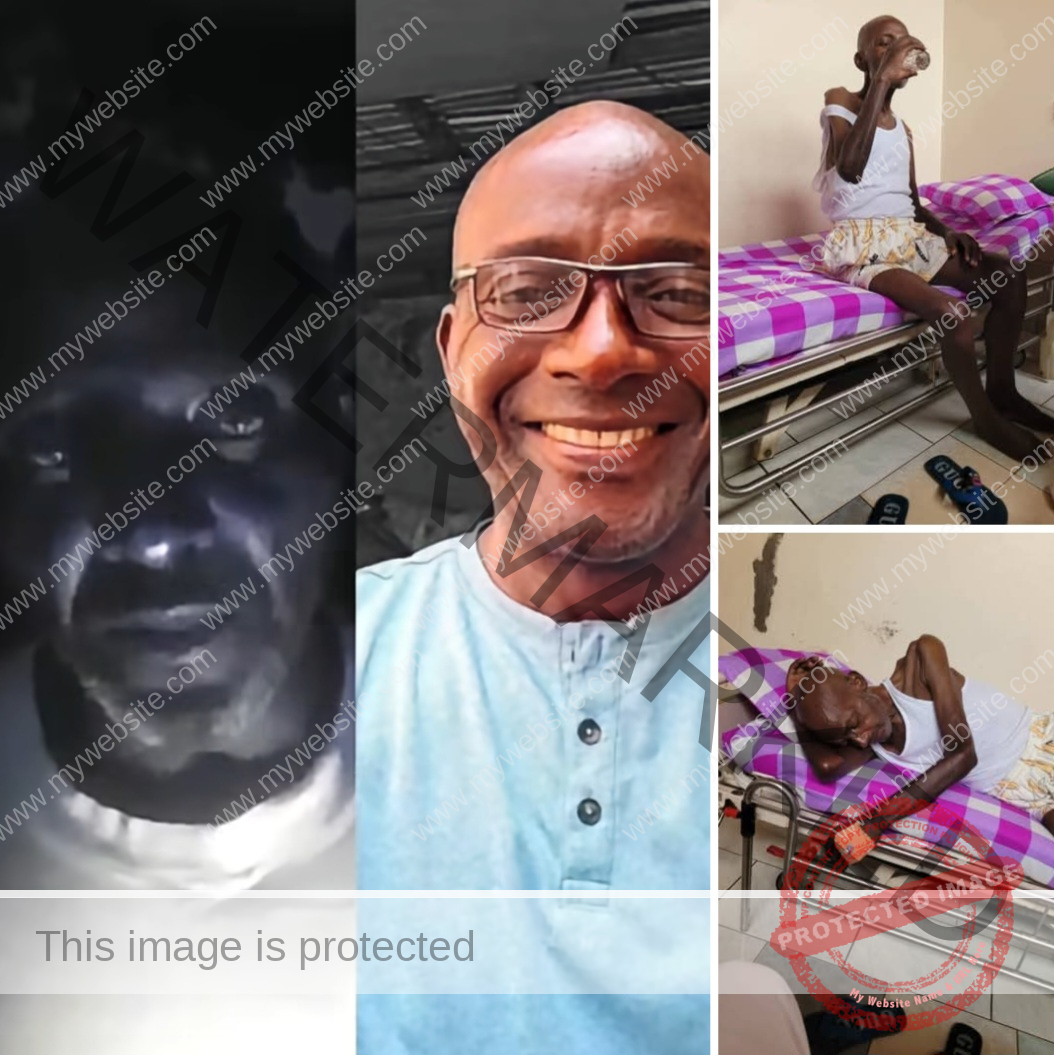
It was from this dark machinery of detention that Ndangoh became internationally known. He was linked to the clandestine “Bunker” video, a piece of visual evidence that exposed underground detention conditions and the suffering of Anglophone detainees. That video gave the world a glimpse into what many Ambazonians had already been saying: that the Cameroon state was not simply policing dissent; it was breaking human beings.
According to the Government of the Federal Republic of Ambazonia, the first six months at SED permanently damaged Ndangoh’s health. Whether described as torture, state abuse, or custodial cruelty, the moral question remains the same: what happened to his body while he was under the exclusive control of the state?
Nearly Nine Years in Detention
After SED, Ndangoh was transferred to Kondengui Principal Prison, where he spent nearly nine years. His case became part of the broader story of Anglophone political detainees caught in a system where arrest came quickly, trial moved slowly, and punishment began long before judgment.
In 2020, he was reportedly targeted for assassination while at the Military Garnison in Yaoundé. He survived, but survival in that environment did not mean safety. It meant continuing to live under surveillance, military pressure, uncertainty, and deteriorating health.
Some reports suggested he was chained in his final months. Ambazonian sources close to the matter dispute that detail, saying he was not chained but remained under heavy military guard even as his health visibly collapsed. That distinction matters. But it does not absolve the state. A dying man does not need chains for custody to remain oppressive. Constant military control over a frail prisoner is itself a message: even in sickness, the state saw him as an enemy before it saw him as a human being.
Medical Neglect as Slow Death
The most disturbing part of Ndangoh’s final journey is the allegation of medical neglect. He reportedly spent fourteen weeks at the military hospital in Ngousso. During that time, according to Ambazonian accounts, he received no effective medical care despite a visible collapse in his condition.
He reportedly slipped into coma three or four times. That detail alone should trigger international scrutiny. A detainee repeatedly entering coma while under state custody is not a private medical matter. It is a custodial emergency. It demands transparency, medical records, independent review, and accountability.
Instead, according to the timeline presented by Ambazonian sources, he was returned to Kondengui despite his critical state, then later transferred to Hadassah clinic in Simbock, where he eventually died. That sequence raises grave questions. Why was a prisoner in such a condition moved back to prison? Who evaluated him? Who signed the medical orders? Who decided he was fit for continued detention? Who refused or delayed specialized care? Who is responsible for the final outcome?
These are not emotional questions. They are legal questions. They are human-rights questions. They are questions for investigators.
The Sentencing of a Dying Man
On March 18, 2026, the Yaoundé Military Tribunal sentenced Patrick Asa’ah Ndangoh to nine years in prison. That sentence was reportedly a reduction from a previous twenty-year conviction handed down in 2024. Because he had already spent nearly nine years in custody since 2017, administrative calculations reportedly placed his expected release around October 2026.
But the state did not release him into recovery. It sentenced him while he was already visibly frail. Ambazonian sources say he had slipped into coma multiple times in the fourteen months before the final sentencing. In that context, the March 2026 judgment appears less like the conclusion of justice and more like the formal stamping of a dying man’s file.
He was sentenced for secession and terrorism. But the deeper question is whether the state had already imposed a punishment far greater than the court record shows. Years of detention. Alleged torture. Medical deterioration. Delayed proceedings. A body reduced to fragility before judgment was complete. Less than two months after that final sentence, he was dead.
A Death That Must Enter the International Record
Patrick Asa’ah Ndangoh died on May 9, 2026, after prolonged detention connected to the Anglophone crisis. Post-mortem images reportedly showing a severely emaciated body intensified public outrage. For Ambazonians, those images are not merely images of death. They are evidence of what they call custodial martyrdom.
The Republic of Cameroon did not merely detain Patrick Asa’ah Ndangoh. It held him until his body collapsed. That is why this case must not disappear into the silence that often follows prison deaths. His death requires an independent investigation. His medical records must be preserved. His detention history must be reviewed. The role of SED, Kondengui, the military hospital, the tribunal, and all officials responsible for his custody must be examined.
For the Government of the Federal Republic of Ambazonia, this death now becomes part of the larger evidentiary archive of the conflict: arrests, secret detention, military trials, prison suffering, medical neglect, and death under state control.
Patrick Asa’ah Ndangoh’s body has left the prison. But his case has not left history. His name now belongs to the record. His suffering now belongs to the evidence. And his death now demands justice.
Ali Dan Ismael Editor-in-Chief The independentist news
Share This Post:
Ambazonia’s President Dr. Samuel Ikome Sako addressed the recent APP meeting with strategic orientation
France’s African Rebranding Campaign and the Crisis of Post-Colonial Credibility – Paris Wants a New Beginning. Africa Wants Accountability.
Related Post
IS THE WORLD LISTENING: THREE DAYS FOUR FRONTLINES, ASA
SEPTEMBER 24, 1965, THIS DAY IN HISTORY: From Equal
AMBAZONIA’S WAR- IS BIGGER THAN YAOUNDÉ: BRITAIN, FRANCE AND
THE DAY SEPTEMBER 22 1961: — WHAT AMBAZONIA CAN
TRUMP’S “SUPER INTELLIGENCE” ERA: WHAT IT REALLY MEANS —
Why Is Ambazonia More Powerful Than many Imagine.