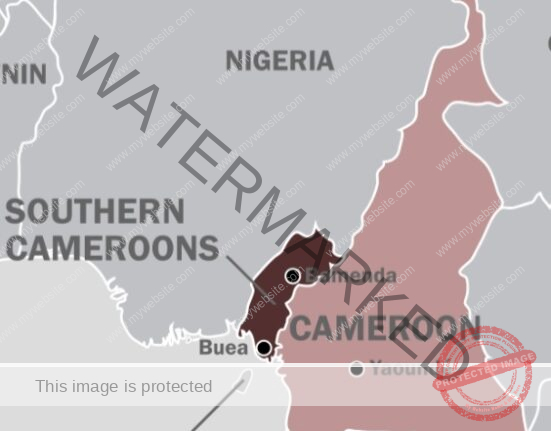





Let no Ambazonian mistake publicity for political legitimacy. Let no political leader imagine that favorable headlines automatically confer a national mandate. Let no media establishment, whether in Yaoundé or elsewhere, become the unquestioned arbiter of Ambazonian leadership.
By Lester Maddox
Guest Contributor, The Independentist News
Oakland, California
As Amazon associate this site earns from qualifying purchases
Follow the Amazon link below to get your copies of publications on the Ambazonian revolution By Martin Mungwa
YAOUNDÉ – November 20, 2026 – There is a profound political lesson in a warning commonly associated with Malcolm X: “Be careful of the Black man whom the white establishment praises.”
The warning must be understood in its historical context. It is not an argument that praise from outsiders automatically establishes betrayal. Rather, it challenges oppressed peoples to examine the political interests behind recognition, approval and the elevation of selected personalities.
For Ambazonians struggling to secure their right to self-determination, that warning is particularly relevant. When individuals claiming to represent the Ambazonian independence movement suddenly become prominent headlines in media outlets operating within La République du Cameroun (LRC), the Ambazonian people have every reason to ask three fundamental questions:
Why this personality? Why this particular moment? Whose political interests does the publicity serve? These questions are not accusations. They are instruments of political vigilance.
THE POLITICS OF SELECTIVE RECOGNITION
Media attention is not necessarily a neutral reflection of political importance. Through editorial selection, repetition, framing and selective amplification, news organizations can influence which political figures appear credible, moderate, influential or representative.
This is especially consequential during a contested struggle for self-determination. A political personality may receive repeated interviews, favorable headlines and descriptions suggesting exceptional leadership. Yet none of those privileges establishes that the individual possesses a legitimate mandate from the people.
Who conferred that authority? Was it the Ambazonian people through a credible and accountable political process? Or was the appearance of legitimacy constructed through publicity? These questions become even more important when the media institution operates within a political environment shaped by the interests of the state whose authority the independence movement challenges.
Not every favorable report constitutes state-directed propaganda. Not every journalist is an agent of government policy. Nevertheless, editorial favoritism, political influence and deliberate narrative management are legitimate subjects of public scrutiny.
A headline is not a mandate. An interview is not an endorsement. Publicity is not legitimacy. No Ambazonian should confuse these fundamentally different concepts.
WHEN THE ADVERSARY HELPS DEFINE YOUR LEADERSHIP
One of the greatest dangers confronting a fragmented political movement is the possibility that an opposing political establishment may influence perceptions of who deserves to speak on behalf of the movement. This does not necessarily require censorship, intimidation or direct political intervention. Sometimes, selective recognition is enough.
A particular individual may be repeatedly presented as pragmatic, reasonable or indispensable, while competing voices receive little attention or are portrayed as obstacles to peace. Over time, audiences may begin to confuse media prominence with political authority.
The danger is not simply that a leader becomes visible in Yaoundé. The danger is that visibility may acquire an authority it has not earned. Ambazonia cannot permit its political legitimacy to be determined by the editorial preferences of institutions operating under the sovereignty it contests. The people must determine their representatives. The headlines must not determine the people.
COMMUNICATION IS NOT COLLABORATION — BUT VIGILANCE IS ESSENTIAL
Let us establish an important distinction. An Ambazonian leader does not become disloyal simply by granting an interview to a Cameroonian newspaper, appearing on a television channel based in Yaoundé or participating in a debate with opponents of independence. Indeed, responsible communication across political divisions can be necessary.
Political representatives should be capable of explaining their positions, defending historical claims, condemning violence against civilians and engaging critically with hostile or skeptical audiences. The question is not whether someone speaks to an adversary.
The question is whether that engagement advances the people’s declared political objectives or enables others to redefine them without public accountability. – Does the leader defend the right to self-determination? – Does the leader explain the historical and constitutional issues surrounding the former British Southern Cameroons? – Does the leader support credible dialogue that addresses the underlying political dispute? – Or does the message gradually abandon the independence objective while claiming to speak for people who have not authorized such a change? Those questions deserve serious answers.
Political disagreement is legitimate. Alternative constitutional proposals can be debated. But no individual should present a personal compromise as the binding decision of an entire people without a credible mandate.
BEWARE OF MANUFACTURED HEROES
Political movements do not collapse only through external pressure. They may also be weakened by rivalry, personality worship, unaccountable leadership and the substitution of spectacle for substance.
Ambazonians have witnessed enough political fragmentation to understand the costs of competing claims to authority. The danger increases when media prominence becomes a substitute for popular confidence.
A leader may command interviews without commanding public trust. A leader may obtain favorable coverage without demonstrating accountability. A leader may be celebrated as a peacemaker without possessing the authority to negotiate on behalf of the people. These distinctions must never disappear.
Leadership is not established through television appearances, honorary titles, diplomatic photographs or favorable newspaper headlines. Leadership must be judged by integrity, consistency, transparency, responsibility and the ability to articulate a political program that those represented can scrutinize. No political personality should be placed above these standards.
THE AMBAZONIAN PEOPLE MUST RETAIN THEIR POLITICAL JUDGMENT
The responsibility for evaluating leadership belongs to the people. Ambazonians must reject the temptation to treat every criticism of a prominent leader as betrayal. Equally, they must resist the temptation to interpret every favorable media appearance as evidence of political success.
Political judgment requires evidence. – What has the individual actually said? – What commitments have been made? – What negotiations, if any, have occurred? – What authority was granted, and by whom? – What measurable results have been achieved? These questions apply to every political camp, every leader and every claimant to national authority. They must be asked without intimidation, factional favoritism or personal hatred.
A movement that cannot question its own leaders risks reproducing the very concentration of power against which it protests. Accountability is not disloyalty. Critical thinking is not treason. Demanding evidence is not an attack on the national cause. These are essential safeguards for any people seeking political freedom.
SELF-DETERMINATION MUST NOT BE REDUCED TO A MEDIA PERFORMANCE
The Southern Cameroons question cannot be resolved by public relations alone. Its historical foundations, constitutional disputes, human-rights concerns and competing claims to sovereignty require substantive political engagement.
The debate must address the circumstances surrounding the 1961 reunification process, the constitutional transformations that followed, and the grievances that contributed to the present conflict. Nor should a meaningful settlement be confused with a publicity campaign presenting selected personalities as convenient representatives.
Whatever political outcome ultimately emerges must rest on legitimate participation, respect for human rights, credible representation and the freely expressed will of the affected population. No newspaper can substitute for these requirements. No television studio can manufacture a democratic mandate. And no externally favored personality can legitimately impose a political settlement simply because the cameras have declared that person important.
THE STRUGGLE IS BIGGER THAN PERSONALITIES
Ambazonia’s political future is not the property of a president, minister, activist, faction, government-in-exile or media personality. It concerns the rights and future of an entire people. That future must never be reduced to competition for publicity, personal prestige or the approval of institutions whose political priorities may differ sharply from those of the independence movement.
The measure of leadership must not be popularity in Yaoundé. Neither should it be popularity on social media or the number of followers attached to a political title. The measure must be principled conduct, public accountability, a credible strategy and respect for the people whose interests a leader claims to defend.
This is where Malcolm X’s historical warning retains its political force. Those seeking freedom must not surrender their independent judgment to the applause of powerful institutions. Praise may be sincere. It may be incidental. It may also serve political purposes. The responsible response is not automatic suspicion, but careful examination of the evidence.
A FINAL WARNING TO AMBAZONIANS
Let no Ambazonian mistake publicity for political legitimacy. Let no political leader imagine that favorable headlines automatically confer a national mandate. Let no media establishment, whether in Yaoundé or elsewhere, become the unquestioned arbiter of Ambazonian leadership.
And let no political faction exploit legitimate concerns about media manipulation to silence criticism or manufacture accusations against its rivals. The people must remain vigilant, informed and independent in their judgment.
They must examine the message, scrutinize the evidence, question the interests behind selective publicity and demand accountability from everyone who claims to represent them. The colonial master does not have to endorse your freedom to find your words politically useful. That is the warning. That is the responsibility. And that is why political vigilance must never be surrendered to the seduction of favorable headlines.
AMBAZONIA’S FUTURE MUST BE DETERMINED BY THE AMBAZONIAN PEOPLE — NOT MANUFACTURED IN THE NEWSROOMS OF LA RÉPUBLIQUE DU CAMEROUN.
EDITORIAL NOTE — HISTORICAL ATTRIBUTION
The opening warning is a popular paraphrase associated with Malcolm X. An FBI record reporting remarks he made in 1957 contains a closely related warning about praise of Black individuals by white figures. The archival report supports the historical association but should not be treated as independent verification of every word attributed to him.
This article is political commentary. Its discussion of selective media recognition concerns risks and mechanisms of political influence; it does not establish that any particular individual or media organization has engaged in covert coordination.
Lester Maddox, Guests Contributor, The Independentist News
Independent Commentary | Political Analysis | on The Southern Cameroons–Ambazonia