

And if a new dawn eventually rises over the hills of Buea, it will be because the women of the land carried the light through the long night.
By Carl Sanders, Guest Writer
Independentist News, Soho, London
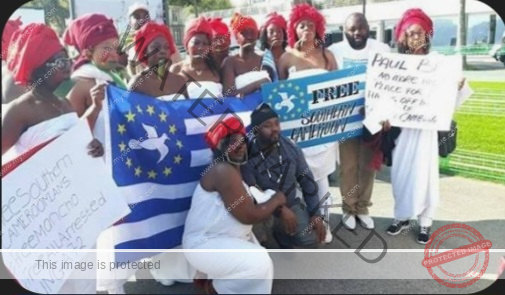
BUEA – March 8, 2026 – On this International Women’s Day, as much of the world reflects on gender equality and professional advancement, the women of the former Southern Cameroons mark something far more elemental: endurance. For nearly a decade of conflict and uncertainty, the mothers, daughters, and sisters of the territory many call Ambazonia have carried an extraordinary burden—sustaining families, communities, and cultural identity in the midst of a protracted crisis.
While political leaders debate sovereignty and diplomats discuss negotiations, it is often women who have quietly held together the fabric of daily life. Across towns and villages affected by the conflict, women have endured displacement, economic disruption, and the constant anxiety of raising children in a landscape marked by instability.
Yet in the midst of these hardships, they have continued to rebuild. Homes destroyed by violence have been repaired through collective effort. Markets—so often the economic heart of communities—have been revived through the resilience of women traders who refuse to allow local economies to collapse. Families separated by displacement have been sustained through networks of care organized largely by women.
The Invisible Architecture of Resistance
Throughout the conflict, women have played roles that rarely receive international attention. They have acted as community mediators, humanitarian organizers, educators, and caretakers of the displaced.
In refugee settlements across the Nigerian border, women have worked to preserve cultural continuity for children growing up far from their ancestral communities. In towns and villages across the North West and South West, women’s associations have organized relief efforts, supported victims of violence, and helped maintain social cohesion in the face of deep uncertainty.
In this sense, the Ambazonian woman has become more than a participant in history—she has become one of its principal architects.
From the Margins to the Center
Supporters of the Ambazonian political leadership argue that the role of women within the movement has increasingly moved from the margins toward the center of civic life.
Women now serve as organizers in diaspora advocacy networks, voices in community diplomacy, and leaders in humanitarian initiatives aimed at sustaining communities affected by the conflict. Their influence is not measured only in formal titles but in the daily acts of resilience that sustain society during crisis.
From the bustling markets of Bamenda to refugee settlements across the Nigerian border, the determination of women has helped maintain a sense of normalcy where circumstances often seem designed to extinguish hope.
A Quiet Power
The strength of Ambazonian women lies not in spectacle but in persistence. Their power is found in the quiet refusal to allow violence and uncertainty to define the destiny of their children.
It is visible in the mother who continues to send her child to school despite the risks. It is heard in the voice of a woman who organizes her community to protect the vulnerable. It is felt in the countless small acts of courage that sustain societies even in the darkest moments.
These acts rarely make headlines, yet they form the invisible architecture that holds communities together.
A Tribute Beyond One Day
International Women’s Day offers a moment to recognize this resilience. But for the women of Ambazonia, recognition alone is not enough.
What many hope for is a future in which their sacrifices give way to stability, dignity, and lasting peace. A future in which the mothers who carried communities through years of hardship will help shape the institutions that guide the society that emerges afterward.
The women of Ambazonia are not merely witnesses to history; they are among those who have ensured that history continues.
A Final Reflection
Nations are often born in moments of conflict, but they endure because of the courage of ordinary people who refuse to surrender their humanity. In the story of Ambazonia, the names of political leaders and military commanders may dominate the headlines. Yet when the history of this period is finally written, it may be the quiet resilience of women—the mothers who rebuilt homes, sustained families, and kept hope alive—that defines the true spirit of the nation.
And if a new dawn eventually rises over the hills of Buea, it will be because the women of the land carried the light through the long night.
Carl Sanders, Guest Writer The Independentistnews,