



After Mbengwi and the developments in Meme County, will anyone still casually accuse the Ambazonian State Army of kidnapping and collecting ransom without first establishing the facts? The burden of proof must apply to everyone. Truth cannot have two standards, and justice cannot be selective.
By Timothy Enongene
Editor-in-Chief, The Independentist News
BAMENDA – 26 November 2026 – The reported events in Mbengwi on 25 November 2026 raise serious questions that cannot be brushed aside — particularly about the conduct of law enforcement, and the persistent tendency to attribute virtually every kidnapping in Ambazonia to Ambazonian fighters.
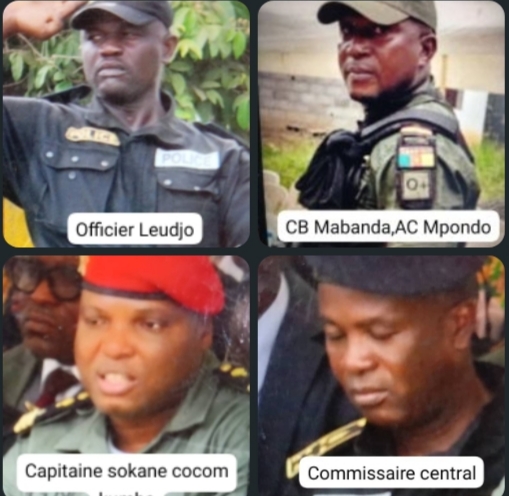
According to information circulating from Mbengwi, members of the local population apprehended two suspected kidnappers and handed them over to officers of La République du Cameroun (LRC) police. The same population reportedly later encountered the suspects dining with police officers, before the suspects were released that same day.
If this account is accurate, it is an extraordinary development that demands an explanation. – Who were these suspects? – What investigation was conducted? – Why were they released so quickly? – What happened to the evidence and testimonies provided by those who apprehended them? – And why should a population that took the initiative to apprehend suspected criminals be left questioning the very authorities to whom it handed them over?
Mbengwi is not an isolated case. Developments elsewhere — particularly in Meme County in the Atlantic Zone — have increasingly challenged the simplistic narrative that kidnapping in Ambazonia is exclusively the work of Ambazonian fighters. Consider what reportedly happened in Wone, Konye Subdivision, Meme County, on 21 October 2026. Three suspected kidnappers were reportedly apprehended by local youths following the abduction of two people. According to reporting by Mimi Mefo Info, the suspects alleged they were working with gendarmes stationed along Buea Road in Kumba.
The same report carried the account of the head of the Meme vigilante committee, who described an alleged network involving former separatist fighters and a military officer. These allegations require independent investigation, but they raise questions that cannot responsibly be ignored.
The incident attracted further attention following reports of alleged links between suspected kidnappers, LRC security personnel, and criminal networks operating under the cover of the ongoing conflict. What, then, are we to make of these developments?
For years, sections of the population were conditioned to believe that virtually every kidnapping, ransom demand, and criminal operation in the so-called North West and South West Regions was the work of “Amba Boys.” Some commentators became so comfortable with this narrative that they stopped asking questions about the identities, affiliations, and possible sponsors of the perpetrators.
Every kidnapping became an automatic indictment of the Ambazonian independence struggle. Evidence was often secondary; political convenience came first. But when communities themselves apprehend suspected criminals, and allegations emerge involving uniformed personnel, former fighters, and criminal proxies, the narrative becomes considerably more complicated.
Could some individuals be exploiting the conflict to carry out criminal activities while creating the impression that their operations are connected to the independence movement? Could criminal networks be operating through multiple affiliations, including people with connections to security personnel and former armed groups?
These are questions that deserve serious investigation. More importantly, will those who have consistently blamed the Ambazonian State Army (ASA) for kidnapping and ransom-taking now reconsider their conclusions? Will they finally distinguish between genuine Ambazonian self-defence forces and criminal elements who exploit the name, identity, and circumstances of the struggle?
Let us be clear: no individual or armed formation should be above accountability. If members of the ASA commit kidnapping, extortion, or other crimes against civilians, they must be investigated on the basis of credible evidence. Equally, if LRC uniformed personnel, former fighters, or their proxies are involved in kidnapping operations, they must face the same scrutiny.
The problem is not the demand for accountability. The problem is selective accountability. You cannot spend years accusing one side of being responsible for every kidnapping while overlooking allegations involving the other side. You cannot claim to be interested in truth while refusing to investigate evidence that challenges your preferred narrative.
The people of Mbengwi deserve answers. The people of Meme County deserve answers. Indeed, every civilian living under the insecurity of this conflict deserves protection, regardless of political affiliation or geographical location.
Half-baked analyses have a short lifespan. They collapse when facts emerge that their authors never bothered to examine. And when they do, they expose the intellectual short-sightedness of those who mistake political accusations for serious journalism.
The time has come to abandon convenient narratives and follow the evidence wherever it leads. Kidnapping is kidnapping, whoever commits it. A uniform does not confer innocence, just as the label of an independence fighter does not automatically establish guilt.
So, after Mbengwi and the developments in Meme County, will anyone still casually accuse the Ambazonian State Army of kidnapping and collecting ransom without first establishing the facts? The burden of proof must apply to everyone. Truth cannot have two standards, and justice cannot be selective.
Timothy Enongene
Editor-in-Chief, The Independentist News