



Southern Cameroons did not enter the union without institutions, economic ambitions, or a distinct political identity. The question is what happened to those institutions, who made the decisions that transformed them, and whether successive governments have adequately addressed the consequences. Until those questions are confronted honestly, the historical grievances underlying the Anglophone crisis will remain an important obstacle to lasting peace in Cameroon.
By Ali Dan Ismael
Senior Editor, The Independentist News
The economic decline of Southern Cameroons cannot be separated from the political decisions that followed reunification in 1961. What began as a federal arrangement between two territories with different colonial histories gradually became a highly centralised state — one in which former West Cameroon lost its institutional and economic autonomy.
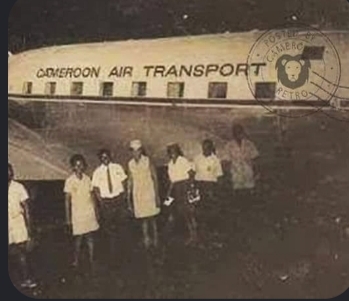
One revealing example is the fate of Cameroon Air Transport (CAT), the aviation enterprise associated with West Cameroon’s development ambitions. CAT was more than an airline. It proved that the territory could build its own commercial institutions, connect its communities, and participate in regional and international economic life.
Its demise, followed by the creation of Cameroon Airlines in 1971, became part of a wider transformation of the country’s aviation industry. Historical records indicate that CAT and Air Cameroon had entered bankruptcy before Camair was established. The claim that Ahidjo deliberately destroyed a flourishing Southern Cameroons airline therefore still requires further documentary evidence.
Even so, the disappearance of a distinct West Cameroonian aviation institution raises a legitimate question: what happened to regional economic capacity after reunification? That question goes far beyond aviation.
THE 1972 REFERENDUM: A TURNING POINT
The most consequential political development was the abolition of the federal system on 20 May 1972 under President Ahmadou Ahidjo. The 1961 Federal Constitution had established two federated states: East Cameroon and West Cameroon. Article 47 contained provisions protecting the unity and integrity of the federation.
Ahidjo’s decision to replace the federation with a unitary state remains one of the most contested constitutional acts in Cameroon’s history. Critics, including constitutional scholars, have questioned its legality and argued that the referendum circumvented constitutional safeguards.
For Southern Cameroons, the consequences went beyond constitutional terminology. The former West Cameroon lost its status as a federated state and was reorganised into administrative provinces, later becoming the North-West and South-West regions. Centralisation of political authority also closed the space for autonomous regional economic decision-making.
FROM ECONOMIC AUTONOMY TO DEPENDENCY
The dismantling of regional institutions affected far more than aviation. Southern Cameroons had developed economic and administrative structures to manage its own development priorities — in transport, agricultural development, local administration, and commerce.
The decline of those institutions, combined with growing central control over national resources and investment decisions, fuelled a perception that the former West Cameroon was losing its economic independence. Consider the strategic importance of Tiko, Victoria (now Limbe), Buea, Kumba, and other commercial centres.
The territory possessed agricultural resources, commercial opportunities, ports, and transport infrastructure that could have supported a more integrated regional economy. Yet the question increasingly became whether those resources and facilities were being developed in ways that adequately benefited the communities that produced them.
The historical concentration of major transport investments around Douala and other parts of former French Cameroon has also featured in academic research on regional development disparities. The problem was not simply that Southern Cameroons lacked resources. It was whether its people retained sufficient institutional power to determine how those resources should be developed and used.
THE BIYA YEARS: CONTINUITY OF CENTRALISATION
When Paul Biya succeeded Ahidjo in 1982, there were expectations that the new leadership might reconsider aspects of the centralised arrangement. That did not happen. The major constitutional and administrative structure established under Ahidjo remained.
In 1984, the country reverted from the name United Republic of Cameroon to the Republic of Cameroon — another development that generated political controversy among Southern Cameroonians. Although decentralisation was later introduced and regional institutions were created, questions about the actual distribution of political authority, resources, and decision-making power persisted.
The World Bank’s research into the North-West and South-West crisis documents longstanding perceptions of political and economic marginalisation, including concerns about the distribution of development resources and the erosion of regional autonomy. These grievances did not emerge overnight. They accumulated over decades.
HOW ECONOMIC GRIEVANCES FED THE AMBAZONIAN WAR
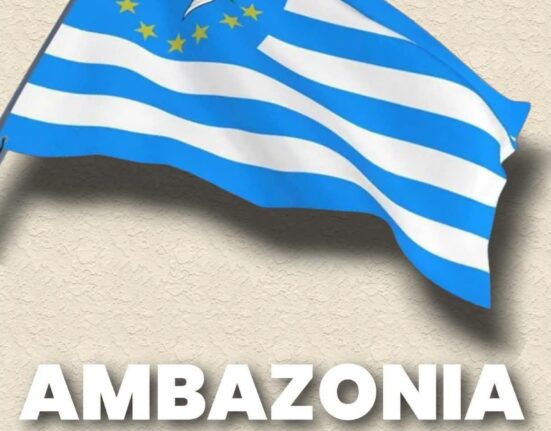
The Ambazonian independence struggle cannot be explained by economic marginalisation alone. Its origins also involve constitutional disagreements, questions of identity, the protection of the English-language educational and legal systems, political representation, and competing interpretations of the 1961 union. Nevertheless, economic grievances formed an important part of the wider discontent.
When communities believe their institutions have been weakened, their development priorities neglected, and their economic opportunities constrained by decisions made elsewhere, confidence in the political arrangement governing them inevitably comes under pressure.
The protests that began in 2016 around lawyers’ and teachers’ grievances eventually evolved into a much wider political and security crisis. What followed has been devastating: armed confrontation, displacement, destruction of businesses, school disruption, loss of livelihoods, and insecurity have further damaged the economies of the North-West and South-West. The conflict has deepened the very economic hardship that helped fuel the grievances.
THE QUESTION CAMEROON MUST ANSWER
The historical experience of Southern Cameroons raises a fundamental question: why should a territory with its own political history, institutions, agricultural potential, commercial centres, and development ambitions have to continually struggle for meaningful control over its economic future?
Ahidjo’s centralisation project fundamentally changed the relationship between the two former federated states. Successive administrations inherited and maintained much of that structure, while regional development inequalities and political grievances continued to generate controversy.
Restoring confidence will require more than revisiting historical grievances. It will require an honest examination of constitutional history, transparent distribution of public resources, meaningful regional autonomy, institutional accountability, and a credible political settlement.
The aviation story is therefore more than a nostalgic reminder of a lost enterprise. It symbolises a larger debate about ownership, economic participation, and the right of communities to shape their own development.
Southern Cameroons did not enter the union without institutions, economic ambitions, or a distinct political identity. The question is what happened to those institutions, who made the decisions that transformed them, and whether successive governments have adequately addressed the consequences. Until those questions are confronted honestly, the historical grievances underlying the Anglophone crisis will remain an important obstacle to lasting peace in Cameroon.
Ali Dan Ismael
Senior Editor, The Independentist News
Historical sources consulted
- Cameroon Civil Aviation Authority: Historical account of the establishment of Cameroon Airlines and the fate of earlier aviation companies. http://ccaa.aero
- International Crisis Group: https://crisisgroup-staging.sbx.so/rpt/africa/cameroon/250-cameroons-anglophone-crisis-crossroads — historical and political background to the abolition of federalism.
- World Bank: https://documents1.worldbank.org/curated/en/795921624338364910/pdf/The-Socio-Political-Crisis-in-the-Northwest-and-Southwest-Regions-of-Cameroon-Assessing-the-Economic-and-Social-Impacts.pdf — economic and social consequences of the crisis.
- Academic constitutional research: https://www.scielo.org.za/scielo.php?pid=S1021-545X2015000200005&script=sci_arttext — the 1972 referendum and constitutional controversy.