



They must also recognize the possibility that individuals fleeing persecution may legitimately continue peaceful political advocacy abroad. Where evidence establishes criminal conduct, the law must take its course. Where accusations rest merely on political association, nationality or peaceful advocacy, fundamental freedoms must be protected.
By Ali Dan Ismael
Senior Editor, The Independentist News
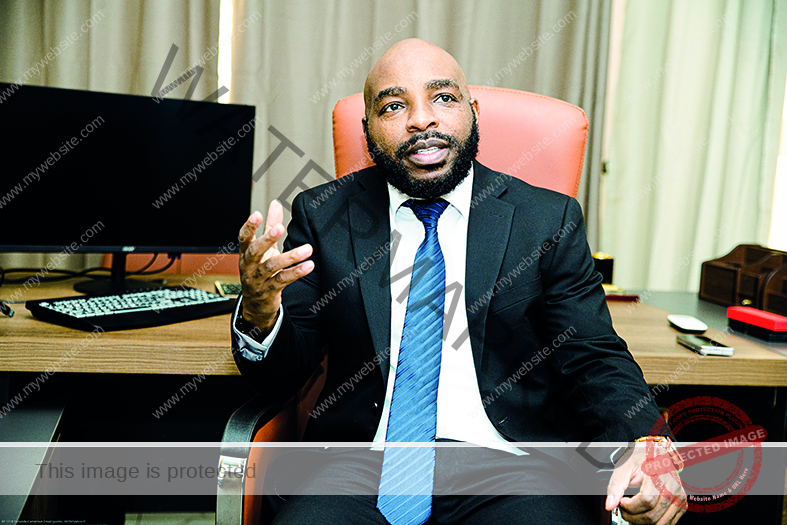
YAOUNDÉ – November 24, 2026 – There is a fundamental difference between the pursuit of justice and the pursuit of political adversaries through the instruments of justice. The international legal campaign undertaken by Barrister Emmanuel Nsahlai deserves scrutiny precisely because of that distinction.
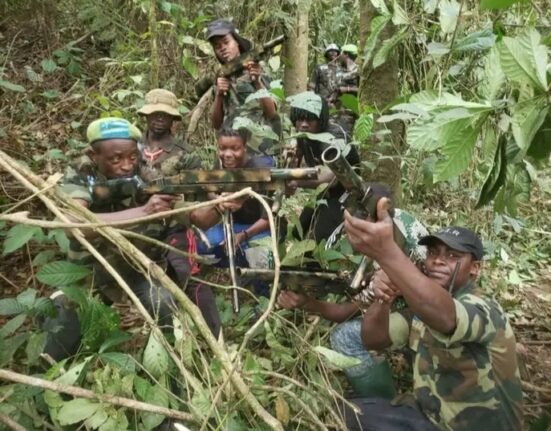
From California to Norway, and increasingly across Europe, Canada and South Africa, Nsahlai has positioned himself as a legal campaigner against individuals and organizations he associates with Ambazonian terrorism.
But an important question remains: where does the pursuit of individual criminal responsibility end, and where does the international criminalization of a political cause begin?
THE INTERNATIONAL “TERRORIST HUNTER”
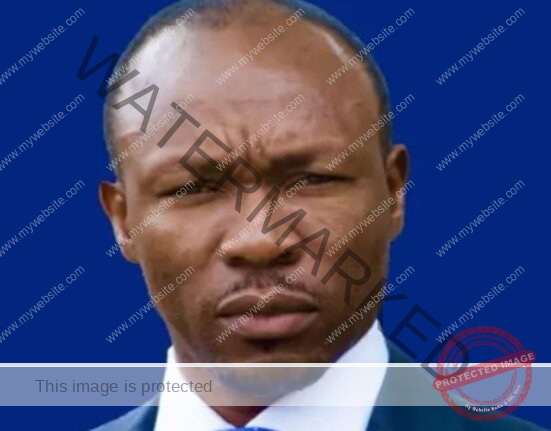
Emmanuel Kongnyuy Nsahlai has been a member of the California Bar since June 2000. His professional qualifications are not in dispute. What warrants examination is the scope, consistency and consequences of his international campaign.
In an interview published by Mutations on September 9, 2026, Nsahlai claimed that his law firm had submitted complaints and information concerning more than 200 individuals since 2018. He also claimed: – More than 30 arrests internationally.– More than 28 cases resulting in criminal prosecutions in the United States. – More than 19 convictions in the United States. – Legal interventions across several European, African and North American jurisdictions.
These are his reported figures rather than independently audited measures of his firm’s achievements. On September 30, 2026, Mutations reportedly described Nsahlai’s expanding campaign under a strategy of disrupting, dismantling and defeating networks allegedly supporting armed violence.
The terminology sounds remarkably like the language of a military campaign. Yet the institutions being approached are courts of law, whose responsibilities extend beyond the political objectives of any complainant.
WHEN JUSTICE LOOKS IN ONLY ONE DIRECTION
Every innocent civilian killed, kidnapped, tortured or terrorized by an armed separatist organization deserves justice. So does every innocent Southern Cameroonian killed, tortured, unlawfully detained or displaced by government forces. Human Rights Watch has documented serious abuses by both armed separatists and Cameroonian security forces, including extrajudicial killings, arbitrary detention, torture and the destruction of civilian homes.
That documented record raises questions for Barrister Nsahlai. – Where are the international dossiers concerning military commanders implicated in atrocities against Southern Cameroonian civilians? – Where are the petitions seeking accountability for government officials suspected of authorizing unlawful military operations? – Where are the international legal campaigns demanding adequate compensation for victims of state violence? – Where is the equivalent determination to investigate the destruction of civilian communities?
An attorney is entitled to represent particular clients. He is under no general obligation to represent every victim of a conflict. But a campaign presented as a broader pursuit of human rights must withstand examination of whose rights it addresses and whose suffering remains outside its scope. The nationality, uniform or political allegiance of an alleged perpetrator cannot determine whether a victim deserves justice.
NGARBUH: THE QUESTION THAT WILL NOT DISAPPEAR
In February 2026, Human Rights Watch criticized the outcome of the Ngarbuh massacre trial, describing the sentences imposed as inadequate and highlighting failures to hold senior military officials accountable and compensate victims’ families. Here is an opportunity for lawyers advocating international accountability to demonstrate the universality of their principles.
Will the victims of Ngarbuh receive the same international attention as victims of separatist violence? – Will allegations against senior military commanders attract the same determination to pursue evidence across national borders? – Will their families receive the same legal advocacy?
A mother’s grief does not become less significant because the person accused of killing her child wore a government uniform. Justice cannot reasonably be measured by the political identity of the accused.
THE TERRORISM LABEL AND POLITICAL DISSENT
One of the most consequential issues surrounding Nsahlai’s campaign is the potential conflation of political advocacy with criminal conduct. There are important legal distinctions between advocating Southern Cameroonian independence, publishing historical and legal arguments concerning sovereignty, organizing peaceful demonstrations, providing legitimate humanitarian assistance, and financing or directing violent criminal activities.
Peaceful political activities cannot automatically be equated with violent criminal conduct. In 2024, the United Nations human rights chief called for changes to Cameroon’s anti-terrorism legislation amid concerns that it had been used to suppress dissent. Foreign courts and immigration authorities must therefore assess allegations against diaspora activists on the basis of individualized, credible evidence rather than political affiliation.
An accusation of terrorism is not a conviction. A political disagreement is not evidence of criminality. A demand for independence does not, by itself, establish participation in violence. International lawyers, of all people, should appreciate these fundamental distinctions.
WHEN THE ACCUSER BECOMES THE ACCUSED
In March 2025, Ivo Tanku Tapang filed a civil action against Nsahlai in the United States District Court for the Central District of California. Tapang alleged that Nsahlai had made defamatory accusations concerning terrorism and immigration fraud. Nsahlai subsequently sought to strike or dismiss the complaint. The case is recorded as Ivo Tanku Tapang v. Emmanuel Nsahlai, No. 2:25-cv-01794.
The filing does not establish that Nsahlai committed defamation, just as his accusations against others do not independently establish their guilt. Nevertheless, the dispute illustrates why allegations carrying such severe reputational, immigration and legal consequences must be subject to rigorous evidentiary scrutiny. The standards demanded of the accused must also apply to the accuser.
NORWAY IS NOT YAOUNDÉ
The Norwegian criminal proceedings involving Ayaba Cho Lucas represent an exercise of independent judicial authority. The prosecution must establish its allegations under applicable law, and the defendant must receive the protections of a fair trial. Whatever the eventual judgment, the criminal responsibility of an individual cannot settle the historical, constitutional and political questions underlying the Southern Cameroons conflict.
A courtroom judgment against an individual is not a referendum on the political aspirations of an entire population. Nor does the prosecution of an armed movement’s leader automatically extinguish peaceful claims to self-determination. Foreign judicial institutions must maintain their independence and ensure that criminal proceedings remain grounded in evidence and applicable law.
IS NSAHLAI ACTING FOR THE CAMEROONIAN GOVERNMENT?
In his reported September 9, 2026 interview with Mutations, Nsahlai denied being an agent of the Cameroonian government. That denial deserves to be included in any fair examination of his activities. It does not, however, prevent legitimate questions about the relationship between his legal campaign and Yaoundé’s political objectives.
Transparency concerning institutional relationships, funding arrangements, clients and the selection of cases would help the public understand the nature of his international campaign. – Who commissions these international legal interventions? – Who finances them? – What criteria determine which alleged perpetrators are pursued and which cases remain outside the campaign? The distinction between independent legal representation and politically coordinated activity should be established through evidence, not speculation.
CAN A POLITICAL CONFLICT BE PROSECUTED OUT OF EXISTENCE?
The Southern Cameroons conflict cannot be understood exclusively through indictments, arrests, immigration proceedings and criminal prosecutions. Its historical dimensions precede the contemporary armed conflict by decades. Its escalation followed protests by lawyers and teachers in 2016, a government crackdown and the subsequent emergence of armed separatist movements.
Criminal accountability is necessary wherever credible evidence establishes individual responsibility. But it cannot substitute for addressing the political grievances, constitutional disputes and historical disagreements that underpin the conflict. Even the successful prosecution of every person against whom Nsahlai has filed a complaint would leave those underlying questions requiring answers.
The constitutional controversies surrounding the events of 1961, the 1972 referendum and the subsequent transformation of the relationship between the former British Southern Cameroons and the Republic of Cameroon remain central to the political dispute. These questions require historical examination, legal analysis and political engagement. A criminal court can determine criminal responsibility. It cannot, through that function alone, manufacture political reconciliation.
THE RESPONSIBILITY OF FOREIGN GOVERNMENTS
The United States, United Kingdom, Canada, Norway, Germany, South Africa and other countries approached in connection with the Southern Cameroons conflict have an obligation to uphold their own legal standards. Their judicial and immigration institutions must distinguish between substantiated criminal allegations and politically motivated accusations.
They must also recognize the possibility that individuals fleeing persecution may legitimately continue peaceful political advocacy abroad. Where evidence establishes criminal conduct, the law must take its course. Where accusations rest merely on political association, nationality or peaceful advocacy, fundamental freedoms must be protected. International cooperation against terrorism must never become a substitute for independent judicial examination.
CONCLUSION: WHO SPEAKS FOR ALL THE VICTIMS?
The international community must apply consistent standards to allegations against armed separatists, government soldiers, political leaders, financiers and military commanders.
Barrister Emmanuel Nsahlai is entitled to pursue lawful remedies on behalf of his clients. His public campaign is equally open to public examination, criticism and demands for transparency. The real test of international justice is whether accountability extends beyond political loyalties. Let credible evidence be examined. Let the innocent be protected. Let those proven responsible for atrocities answer for their crimes, irrespective of their affiliations.
And let no allegation of terrorism become an automatic instrument for extinguishing lawful political dissent. The victims of Southern Cameroons deserve justice in its entirety—not merely the portion that corresponds with the interests of one party to the conflict. Justice must have no preferred uniform, flag, government or political movement.
Ali Dan Ismael
Senior Editor, The Independentist News