








News commentary

We are home to news on Cameroon and the CEMAC region. We are dedicated to honest and reliable reporting. We are the voice of the Cameroonian people and their fight for freedom and democracy at a time when the Yaoundé government is silencing dissent and suppressing democratic voices.

This is the central contradiction confronting the Cameroonian state today. The very machinery designed to suppress Ambazonian identity may ultimately have consolidated it. And that is why the old playbook no longer guarantees the old results.
By Mankah Rosa Parks
Senior Investigative Correspondent, The Independentist News
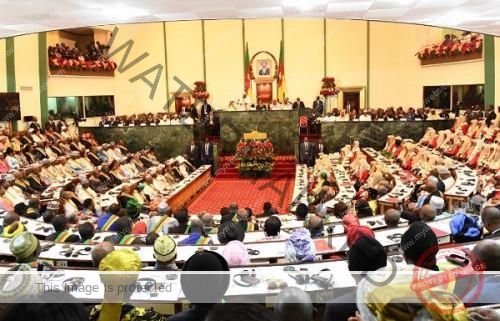
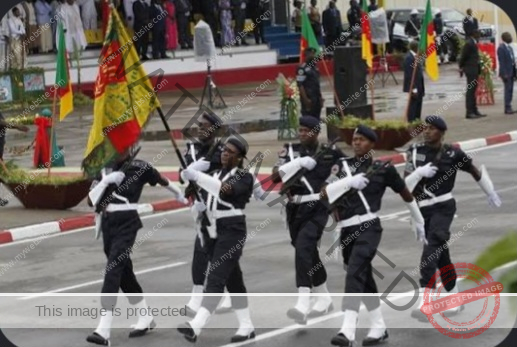
YAOUNDE – 25 May 2026 – Every year, the regime in Yaoundé stages elaborate military parades and choreographed celebrations to commemorate what it calls “National Unity Day.” Tanks roll through the streets. Schoolchildren wave flags. Government officials preach patriotism while state television projects images of national harmony across the country.
Yet for many in Southern Cameroons (Ambazonia), May 20th represents not unity, but the formal burial of a fragile federal arrangement and the beginning of systematic political absorption into a centralized Francophone state.
To understand the current conflict in Ambazonia, one must understand that Yaoundé’s strategy has never fundamentally changed. The tools evolve. The slogans change. The faces rotate. But the architecture of control remains remarkably consistent: co-optation, fragmentation, intimidation, controlled intermediaries, and selective violence designed to weaken collective resistance from within. What the world is witnessing today in Ambazonia is not a new strategy. It is an old colonial playbook being recycled under modern conditions.
The historical pattern stretches back to the collapse of the federal arrangement that once governed relations between former British Southern Cameroons and La République du Cameroun. The promise presented during reunification negotiations was one of coexistence between two equal entities. But critics of the process have long argued that the federal system gradually became a mechanism through which Anglophone institutions, legal traditions, and political autonomy were incrementally dismantled under the authority of an increasingly centralized state.
Central to that historic debate remains the legacy of John Ngu Foncha, the former Prime Minister of Southern Cameroons and one of the principal architects of reunification. To many Ambazonian nationalists today, Foncha’s later political trajectory symbolizes the dangers of negotiated incorporation without enforceable constitutional safeguards. Yaoundé elevated him into the office of Vice President within the federal structure, presenting his inclusion as proof of national partnership. Yet many critics later concluded that the federal arrangement itself had become increasingly hollow, with meaningful autonomy steadily eroded while symbolic inclusion remained intact.
The article of history most often recalled by older Southern Cameroons nationalists is not merely the political marginalisation of Foncha, but the broader dismantling of the intellectual and organizational networks surrounding him. Among those repeatedly referenced in nationalist memory is Zacharias Abendong, viewed by many as an influential political actor within the early Southern Cameroons resistance tradition. His death remains politically symbolic within Ambazonian discourse because it is interpreted as part of a wider effort to isolate nationalist leadership structures and weaken alternative centres of political legitimacy.
This broader strategy of fragmentation did not remain confined to Southern Cameroons. During earlier periods of unrest in Cameroun itself, particularly surrounding the UPC rebellion, the regime also developed a sophisticated system of political patronage and selective incorporation. Critics of the regime have long alleged that Yaoundé cultivated loyalist intermediaries, particularly among elite commercial and administrative circles, granting economic advantages and political protection in exchange for alignment with state interests.
The late UPC figure Augustin Frédéric Kodock himself publicly alluded to aspects of this system during televised discussions surrounding state patronage, political loyalty, and economic dependency, exposing the complex relationship between power and survival inside the Cameroonian political order. Whether through licenses, monopolies, appointments, or direct financial patronage, Yaoundé mastered the art of manufacturing dependency while projecting the appearance of national consensus.
Today, according to Ambazonian activists and local observers, the same structural logic is being deployed against the Ambazonian resistance movement. Unable to secure decisive military victory despite years of conflict, the state has increasingly relied on localized proxy structures, vigilante formations, and competing armed actors operating within highly fragmented conditions. The official narrative presented by Yaoundé frames these efforts as anti-terrorism and community protection operations. However, critics argue that such fragmentation serves an additional political purpose: transforming the conflict into an internally self-consuming crisis where Ambazonians become trapped in cycles of distrust, fear, reprisals, and mutual suspicion.
Particular controversy surrounds allegations regarding so-called vigilante committees operating under the supervision or encouragement of elements linked to the Ministry of Territorial Administration. Rights advocates and local activists allege that certain community defense structures have functioned not simply as security auxiliaries, but as instruments of intimidation and political destabilization. In this interpretation, the objective is not merely military control, but the destruction of social cohesion itself.
Equally sensitive are recurring allegations that rogue armed factions operating in conflict zones have, at times, functioned in ways beneficial to state interests by committing abuses that damage the broader legitimacy of the Ambazonian cause. These allegations remain heavily contested, but they continue to circulate widely among local populations deeply traumatized by years of violence, kidnappings, assassinations, extortion, and displacement. In modern counterinsurgency warfare, perception itself becomes a battlefield. The struggle is no longer simply about territory; it is about legitimacy, exhaustion, and psychological control.
Yet the most significant difference between the present and the past may lie in the transformation of Ambazonian political consciousness itself. Previous generations often operated within fragmented political realities, constrained by limited information flows, centralized state media, and elite-controlled communication systems. Today, however, a generation shaped by exile, digital media, mass displacement, and collective trauma has developed a far more decentralized political awareness. The conflict has internationalized Ambazonian identity in ways that the architects of reunification likely never anticipated.
Ironically, many analysts now argue that the prolonged military approach pursued by Yaoundé may have produced the exact opposite of its intended objective. Rather than dissolving separatist sentiment, the war has deepened historical consciousness, strengthened perceptions of distinct nationhood, and radicalized younger generations who no longer view the conflict primarily through the lens of constitutional reform, but through the language of decolonization and national liberation.
This is the central contradiction confronting the Cameroonian state today. The very machinery designed to suppress Ambazonian identity may ultimately have consolidated it. And that is why the old playbook no longer guarantees the old results.
Mankah Rosa Parks
Senior Investigative Correspondent, Soho London
Share This Post:
Propaganda Parades and False Normalcy: Why the International Community Must Intervene in Ambazonia
The Weapon of Faulty Intelligence: How the Junta Uses Our People to Depopulate Us
Related Post
QUEBEC VOTED FOR INDEPENDENCE AS AN OPTION, WHY WAS
PROPHECY, POLITICS, AND THE AMBAZONIAN QUESTION (PART III) Why
WHEN YAOUNDÉ’S ALLIES SUDDENLY ENDORSE AYUK TABE: SOLIDARITY OR
THE SECOND RETURN: FROM THE PAIN OF SEPARATION TO
WHEN THE REGULATOR BENDS: WHAT THE VISION 4 AFFAIR
PROPHECY, POLITICS, AND THE AMBAZONIAN QUESTION (PART II) :