

Yaoundé may close landing sites. It may deploy security forces and redirect trade through its customs posts. But it cannot extinguish the geographic, historical, and economic relationship between the Fako coastline and the wider West African maritime region. Nor can it indefinitely conceal economic strangulation beneath the language of security.
By Timothy Enongene
Associate Editor-in-Chief, Independentist News
VICTORIA—July 19, 2026 – The decision by the Yaoundé administration to close unauthorized coastal landing sites throughout Fako Division represents far more than an ordinary campaign against smuggling. It is an attempt to bring the historic maritime economy of Southern Cameroons under tighter military, customs, and fiscal control at a time when coastal communities are already suffering from conflict, unemployment, declining production, inflation, and years of institutional neglect.
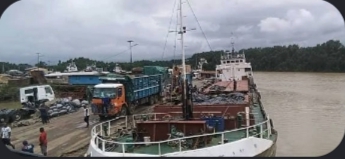
Southwest Regional Governor Bernard Okalia Bilai issued the closure directive following a security meeting in Victoria in early July 2026. Administrative officials were instructed to shut down landing points used by coastal communities in Wovia, Botaland, Dockyard, Limbola, Ngeme, Batoke, Debundscha, and other locations. All maritime imports and exports must now pass through the officially recognized facilities at Idenau, Bota, and Tiko.
The administration presents the operation as a response to the trafficking of fuel, drugs, weapons, ammunition, and undocumented persons. Officials also point to the discovery of a makeshift oil refinery and the loss of customs revenue caused by goods entering through unregulated beaches.
Those concerns cannot simply be dismissed. Uncontrolled maritime routes can be exploited by criminal organizations, arms traffickers, narcotics dealers, human smugglers, and predatory officials. Every responsible coastal administration has a duty to protect residents, inspect dangerous cargo, prevent trafficking, and secure its territorial waters.
But legitimate security responsibilities do not justify indiscriminate economic punishment. Nor should accusations of criminality be used to place generations-old trading communities under military control without consultation, alternatives, compensation, or transparent legal procedures.
The essential question is not whether maritime trade should be regulated. It should be. The question is whether regulation is being used to protect coastal communities or to extend Yaoundé’s political and fiscal authority over an economy it has repeatedly failed to develop.
An Administrative Closure With Blockade Effects
The governor’s directive may not formally be described as a naval blockade, but its economic effects could resemble one for the communities affected. When numerous landing sites are closed simultaneously, security forces are instructed to intensify surveillance, night operations are prohibited, and all trade is channeled through a small number of government-controlled facilities, local commerce becomes subject to a centralized system of permission.
For a large trader with capital, documentation, transportation, and political connections, passing through an authorized port may be inconvenient but manageable. For a small fisherman, fuel vendor, boat operator, market woman, or community trader, the additional distance, inspections, fees, delays, and informal payments can destroy the narrow margin upon which survival depends.
A government can therefore claim that it has not prohibited trade while imposing conditions that make lawful participation unaffordable for much of the population.
The closure order should be evaluated by its consequences. How many landing sites have been affected? How many families depend upon them? What volume of legitimate food, fuel, fishing equipment, household goods, and agricultural products passes through these routes? What will it cost traders to relocate operations to Idenau, Bota, or Tiko? Do those facilities possess enough capacity to handle the redirected traffic? What protections exist against bribery, confiscation, harassment, and arbitrary detention?
No credible socioeconomic assessment has been publicly presented. No transition program has been announced for affected communities. No transparent process has been established through which landing sites can be inspected, registered, upgraded, and reopened. Instead, the administration has relied upon prohibition backed by security enforcement. That is why coastal residents are entitled to regard the measure not merely as regulation but as economic coercion.
The Historic Maritime Economy of Fako
The Fako coastline has never been economically isolated. Long before the present boundaries and customs systems were imposed, coastal communities traded across the Gulf of Guinea and maintained relationships with neighboring territories. Fishing, boat construction, coastal transportation, agricultural exchange, and small-scale maritime trade formed part of the region’s economic life.
The maritime relationship between Southern Cameroons and Nigeria is especially significant. Geography naturally connects Fako, Ndian, Manyu, and other parts of Ambazonia to Nigerian commercial centers. Families, languages, markets, and transport routes developed across boundaries that were later formalized by colonial administrations.
These connections did not disappear when Southern Cameroons joined La République du Cameroun. Coastal residents continued to depend upon Nigerian markets for fuel, food, fishing supplies, household goods, transportation, and employment. For many communities, these routes were not criminal inventions but practical responses to geography and government neglect.
When roads were poor, formal port facilities inadequate, and legitimate commercial financing unavailable, informal coastal trade filled the gap. When Yaoundé failed to provide reliable employment and economic infrastructure, families survived through fishing, boat transport, petty commerce, and cross-border exchange.
The state tolerated these activities when tolerance served its interests. Officials now acknowledge that some landing sites were permitted to operate informally after the May 2019 fire at the National Oil Refining Company disrupted domestic refining. Fuel brought from Nigeria helped supply communities during a failure created not by coastal traders but by the collapse of a strategic state-controlled facility.
It is therefore inconsistent for Yaoundé to rely upon informal trade during a national supply emergency and later condemn the same maritime economy wholesale as a criminal threat.
SONARA, Fuel and the Failure of the State
The controversy over zoazoa—fuel brought informally from Nigeria—cannot be separated from the history of SONARA. The refinery was built on the Ambazonian coastline and became one of the most strategically important industrial facilities in the country. Yet its presence did not create energy sovereignty for the surrounding population. Centralized political control, questionable management, accumulated financial difficulties, and the devastating 2019 fire left the country dependent upon imported refined petroleum. Coastal communities did not create that failure.
Informal fuel entered because a market existed, formal supplies were unreliable or expensive, and Nigerian petroleum networks were geographically accessible. This does not make unsafe transportation or illegal refining acceptable. Petroleum is hazardous, and uncontrolled handling can cause fires, pollution, injury, and death. But enforcement that targets only the final boat operator or roadside seller ignores the institutional conditions that created the market.
If the administration wants to eliminate dangerous fuel smuggling, it must provide an affordable, reliable, and accessible alternative. It must secure the formal supply chain, rebuild strategic refining capacity, regulate safe community distribution, and prevent public officials from profiting through corruption.
Closing landing sites without addressing demand will not necessarily eliminate the trade. It may push it further underground, increase the price of fuel, enrich better-connected smugglers, and expose residents to even greater danger. Prohibition frequently strengthens the most powerful illegal networks while destroying the small operators who lack political protection.
Security Claims and the Burden of Proof
Governor Okalia Bilai has linked unauthorized landing sites to drugs, weapons, ammunition, undocumented migration, and the operation of an illegal refinery. These are serious allegations and should be supported by publicly available evidence.
How many weapons have been intercepted at each site? What quantities of narcotics were seized? How many trafficking networks have been prosecuted? Which officials or commercial actors enabled the operations? What evidence connects particular communities to the alleged crimes?
A responsible security policy should distinguish between a fisherman, a small trader, a fuel transporter, an arms trafficker, and a narcotics dealer. Treating every person who uses an unauthorized beach as part of the same criminal system abandons both proportionality and due process.
The administration must also explain why regulatory enforcement took the form of a sweeping closure rather than a registration and inspection program. Landing points could have been documented, operators licensed, cargo manifests required, safety rules introduced, and community monitoring committees established. Sites presenting genuine security dangers could then have been closed based on evidence. Instead, an entire informal economy has been placed under suspicion.
In a territory experiencing armed conflict, claims of security carry particular dangers. Emergency language can turn ordinary economic activity into presumed insurgency. Traders may be detained without clear evidence. Goods may be confiscated. Fishermen may be treated as security suspects. Communities may become subject to surveillance and collective punishment. Security cannot become a permanent exemption from accountability.
Revenue Collection Behind the Security Language
Government officials have acknowledged that the use of unofficial landing points reduces customs revenue because goods bypass authorized ports where duties and taxes are collected. This admission exposes an important fiscal dimension of the operation.
The policy is not solely about drugs, weapons, or public safety. It is also about forcing maritime commerce into checkpoints where the centralized state can identify, tax, inspect, and control every shipment.
Every state has a legitimate interest in collecting reasonable customs duties. But taxation derives its legitimacy from representation, accountability, legality, and the provision of public services. When a population rejects the constitutional authority of the state imposing the tax, and when collected revenue is not visibly reinvested in the producing communities, customs enforcement becomes inseparable from the wider political conflict.
Ambazonians are entitled to ask what the state has provided in exchange for decades of taxation and resource extraction. Where are the modern fishing harbors, cold-storage facilities, coastal markets, maritime colleges, ship-repair yards, processing industries, reliable roads, rescue services, affordable credit, and community-owned logistics companies?
Why has a strategically located coastline remained dependent upon informal landing sites? Why were these facilities not gradually upgraded and incorporated into a lawful regional trading system? Why must coastal communities surrender control of their trade to a government that has failed to develop the infrastructure necessary for their prosperity?
A customs checkpoint that extracts revenue without returning public value is not an instrument of development. It is a collection point for centralized power.
Militarization Is Not Maritime Development
The longstanding response of Yaoundé to problems in Southern Cameroons has been to substitute security deployments for political and economic solutions. Professional grievances were met with repression. Constitutional demands were militarized. Community resistance was classified as terrorism. Economic survival is now increasingly interpreted through the vocabulary of smuggling and insecurity.
But soldiers cannot replace port administrators, fisheries experts, customs reformers, maritime engineers, commercial lenders, or development planners. A military unit may close a beach, seize a boat, or arrest a trader. It cannot create a functioning blue economy. It cannot provide refrigeration, insurance, processing, credit, navigational safety, or export access. It cannot build trust between the state and coastal residents.
Militarization may produce temporary obedience, but it does not create legitimate regulation. The continued deployment of armed personnel around civilian economic activity also raises the risk of extortion and abuse. Any enforcement operation must therefore include identification requirements for officers, written records of confiscations, accessible complaint mechanisms, judicial review, and independent investigation of misconduct. Without such safeguards, the boundary between customs enforcement and economic predation becomes dangerously thin.
Artificial Scarcity and Collective Punishment
The closure of landing sites may produce shortages and price increases in communities already suffering from conflict-related hardship. Fuel costs affect fishing, transportation, agriculture, electricity generation, and the price of nearly every consumer good. Restrictions on boat traffic also affect food supplies, market access, and household income.
If authorized ports cannot absorb the redirected commerce efficiently, congestion and delays will follow. If duties and informal charges increase the cost of imported goods, those costs will be passed to consumers. If security enforcement discourages fishermen from operating, the supply of fish will decline. If small traders lose their livelihoods, unemployment and poverty will deepen. These outcomes are foreseeable.
A government that implements such a policy without an economic-impact assessment cannot credibly claim ignorance of the consequences. When security measures knowingly impose disproportionate hardship upon an entire population, they begin to resemble collective punishment.
That danger is particularly serious in Southern Cameroons, where civilians have endured years of displacement, disrupted education, business closures, insecurity, and declining investment. Economic restrictions should not be imposed as though the affected communities possess unlimited alternatives. The state cannot first neglect a local economy, then criminalize the survival systems that emerged from that neglect, and finally present enforcement as development.
The Fako Coastline as a Strategic Economic Asset
The Fako coastline should be understood not as a collection of suspicious beaches but as one of Ambazonia’s greatest strategic assets. Its location provides access to Nigeria, the Gulf of Guinea, West and Central African markets, and international maritime routes.
Properly developed, the coastline could support modern fishing, aquaculture, cold-chain logistics, coastal shipping, boat building, maritime education, tourism, petroleum services, environmental research, food processing, and regional trade.
The solution is not the uncontrolled operation of every landing point. Nor is it the military closure of nearly all community access to the sea. The solution is a regulated network of community ports and landing facilities integrated into a coherent maritime economy.
Each site should be assessed according to trade volume, environmental risk, navigational safety, community dependence, and security conditions. Suitable landing points should be registered and upgraded. Traders should receive simplified licenses. Customs fees should be transparent and proportionate. Cargo should be inspected without subjecting communities to arbitrary delays or extortion.
Local councils and traditional coastal communities should participate in management. Revenue collected from each facility should be partly retained for docks, sanitation, lighting, security, cold storage, roads, and environmental protection. Fishermen and traders should have representation in regulatory decisions.
Such a system would protect security while preserving livelihoods. It would transform informal trade into lawful economic participation instead of treating poverty as a crime.
Maritime Rights and Responsibilities
Ambazonians must also acknowledge that economic sovereignty carries responsibilities. A future Ambazonian administration could not permit its coastline to become a corridor for arms trafficking, narcotics, human exploitation, piracy, unsafe fuel handling, or environmental destruction.
Defending the historic rights of coastal communities does not mean defending every activity conducted through informal landing sites. Criminal networks can exploit legitimate grievances and community trade. They must be confronted through lawful, intelligence-led enforcement.
The difference lies in whom regulation serves.
A legitimate Ambazonian maritime system would protect communities while enforcing safety and customs laws. It would distinguish livelihood commerce from organized crime. It would reinvest maritime revenue in coastal development. It would treat fishermen and traders as citizens and economic partners rather than presumptive enemies.
Sovereignty does not mean the absence of regulation. It means regulation exercised by accountable institutions for the benefit of the people.
A Demand for Transparency and Proportionality
The governor’s directive should be subjected to public scrutiny. The administration should publish the legal instrument authorizing the closures, identify every affected landing site, disclose the evidence used to classify it as a security threat, and explain the conditions under which it may reopen.
It should also publish data on arrests, seizures, prosecutions, customs losses, and the capacity of the authorized ports. Independent observers should be permitted to assess whether enforcement is proportionate and whether affected communities are experiencing shortages, price increases, or loss of income.
Traders whose lawful goods are seized should receive documentation and access to appeal. Fishermen should retain safe access to the sea. Security personnel accused of extortion or abuse should face independent investigation. Communities should not be punished for crimes allegedly committed by unidentified individuals. Above all, Yaoundé should explain why regulation was imposed through command and coercion rather than consultation.
Economic Control Cannot Resolve the Political Conflict
The maritime crackdown reflects the central contradiction of Yaoundé’s approach to Southern Cameroons. The state seeks to exercise complete territorial, fiscal, and security control without resolving the constitutional dispute that has destroyed its legitimacy among much of the population.
It demands taxes without meaningful representation. It controls resources without local sovereignty. It militarizes economic activity without creating development. It closes community trading points while failing to provide adequate lawful alternatives. This model cannot produce lasting peace.
Economic strangulation may temporarily weaken coastal communities, but it will deepen resentment and strengthen the perception that the administration views Ambazonia primarily as a territory to be controlled rather than a people whose rights must be respected.
The Fako coastline is more than a revenue frontier for Yaoundé. It is the historic home and economic foundation of Southern Cameroonian communities. Its maritime connections to Nigeria and the wider Gulf of Guinea cannot be permanently erased by administrative decree.
Security threats must be addressed, but security cannot become a convenient label for dismantling local livelihoods, concentrating customs revenue, and expanding military authority.
The answer lies in lawful regulation, community participation, infrastructure investment, transparent taxation, and a political settlement that recognizes the right of Ambazonians to determine the future of their territory and resources.
Until that fundamental question is confronted, every new checkpoint, closure order, and security deployment will be interpreted through the accumulated history of annexation, extraction, and political coercion.
Yaoundé may close landing sites. It may deploy security forces and redirect trade through its customs posts. But it cannot extinguish the geographic, historical, and economic relationship between the Fako coastline and the wider West African maritime region. Nor can it indefinitely conceal economic strangulation beneath the language of security.
Timothy Enongene
Associate Editor-in-Chief, Independentist News